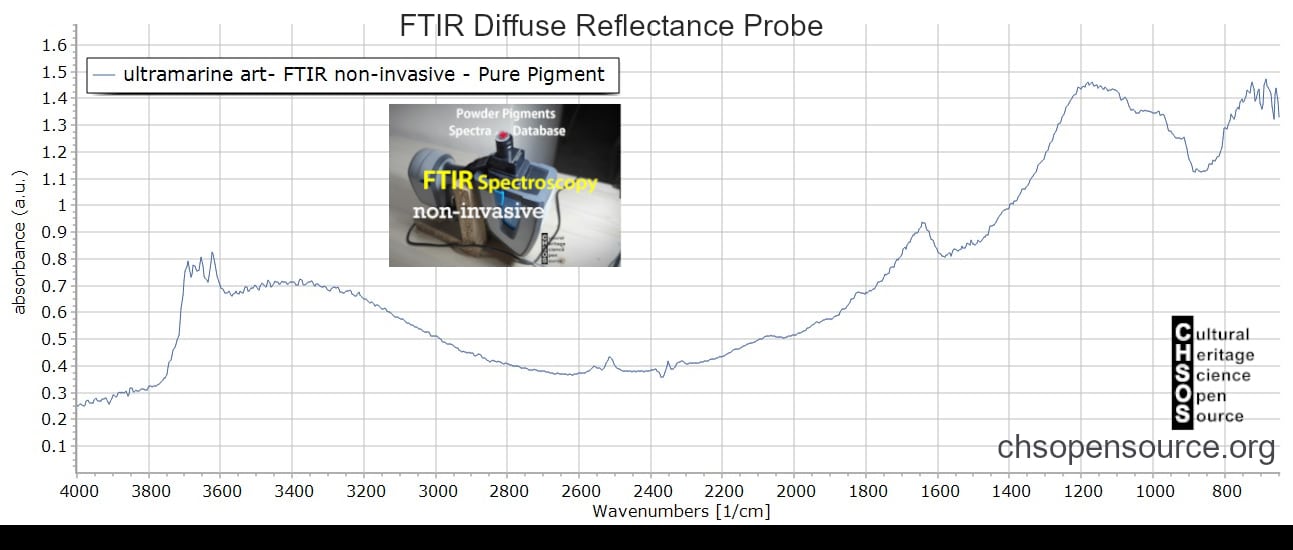
ultramarine artificial
Artificial ultramarine, in contrast with natural ultramarine, is finely divided and homogeneous.
Manufacturer / product code: Kremer / 45000
Chemical description: sodium-aluminium-silicate, containing sulfur. Kremer PDF
Color: blue
Color Index: PB 29
More info: Pigments Through The Ages Colourlex
The deep, resonant hue of ultramarine, historically derived from the semi-precious Afghan stone lapis lazuli, was once the most expensive pigment in the artist’s palette, often valued above gold. Its name, from the Latin ultramarinus (“beyond the sea”), referenced the vast distance it traveled to reach European painters during the Renaissance. Due to its prohibitive cost, natural ultramarine was strictly reserved for the most sacred figures, most famously the robes of the Virgin Mary, symbolizing sanctity and humility.
The high demand and scarcity of this brilliant blue sparked a major industrial challenge in the 19th century. In 1824, the French Société d’Encouragement pour l’Industrie Nationale offered a prize for a synthetic alternative. This challenge was met almost simultaneously in 1826 and 1828 by two chemists: Jean-Baptiste Guimet in France and Christian Gottlob Gmelin in Germany. Guimet secured the prize by synthesizing a pigment chemically identical to the natural mineral, ushering in the age of “French Ultramarine.”
This invention was a revolution for art. Overnight, the cost dropped from thousands of francs per pound to just hundreds, making the radiant blue accessible to every artist. Freed from financial constraints, 19th-century movements like Impressionism fully embraced the pigment. Artists such as Renoir and Van Gogh used synthetic ultramarine extensively, not just for focal points but for shadows and background details, contributing to the shift towards brighter, more pervasive color use that defined modern painting.
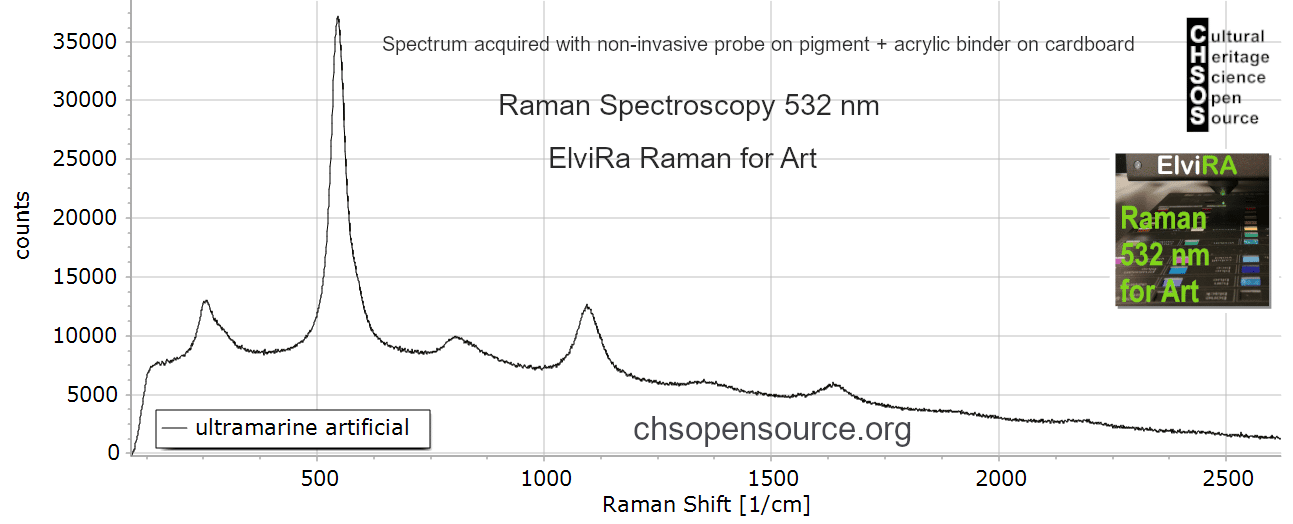
Raman Spectroscopy 532 nm – ElviRa Spectrometer for Art
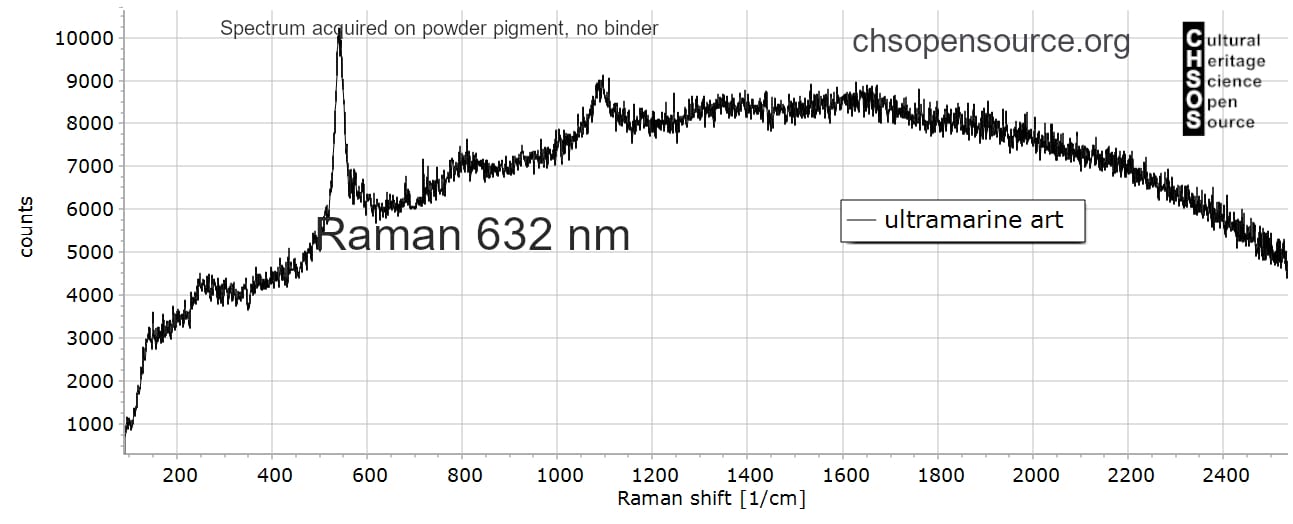
Raman spectroscopy 632 nm
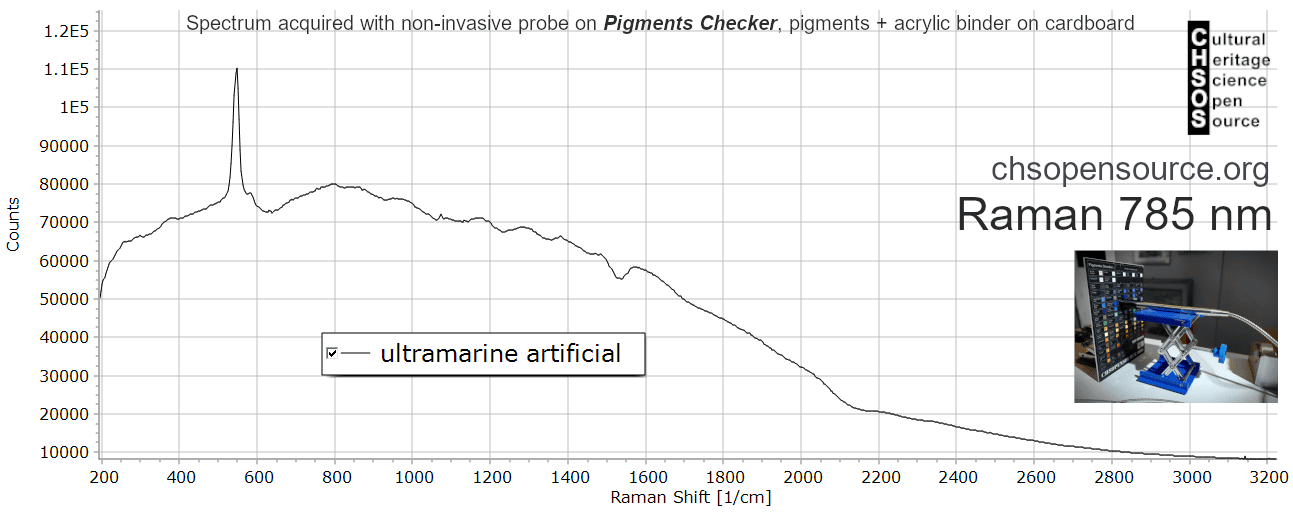
Raman spectroscopy 785 nm
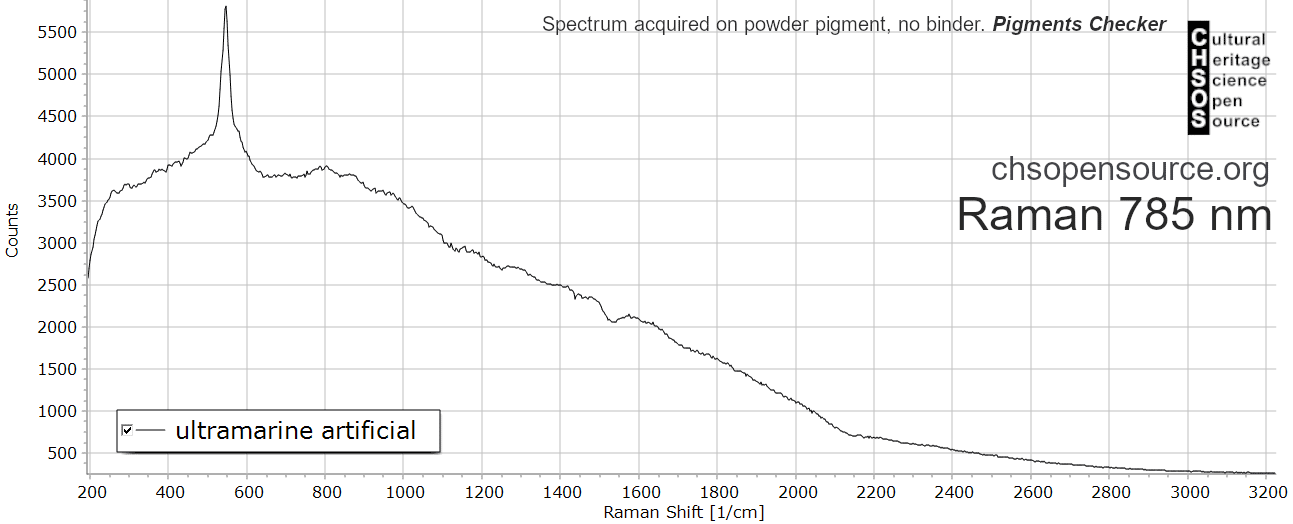
Pigments with acrylic binder (Pigments Checker)
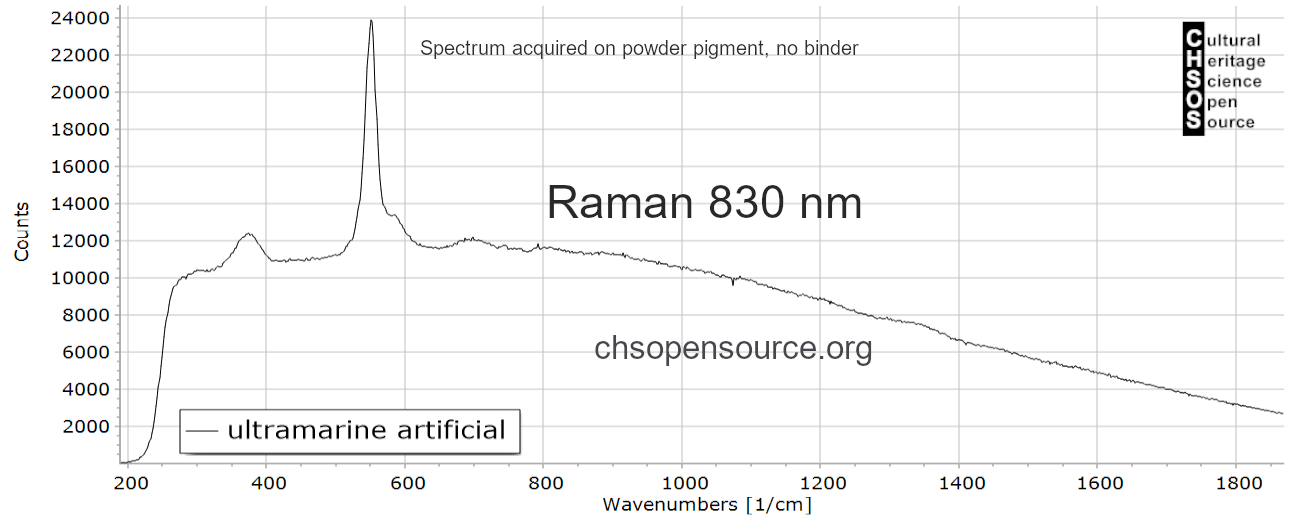
Raman spectroscopy 830 nm
Pigments (powder, no binder)
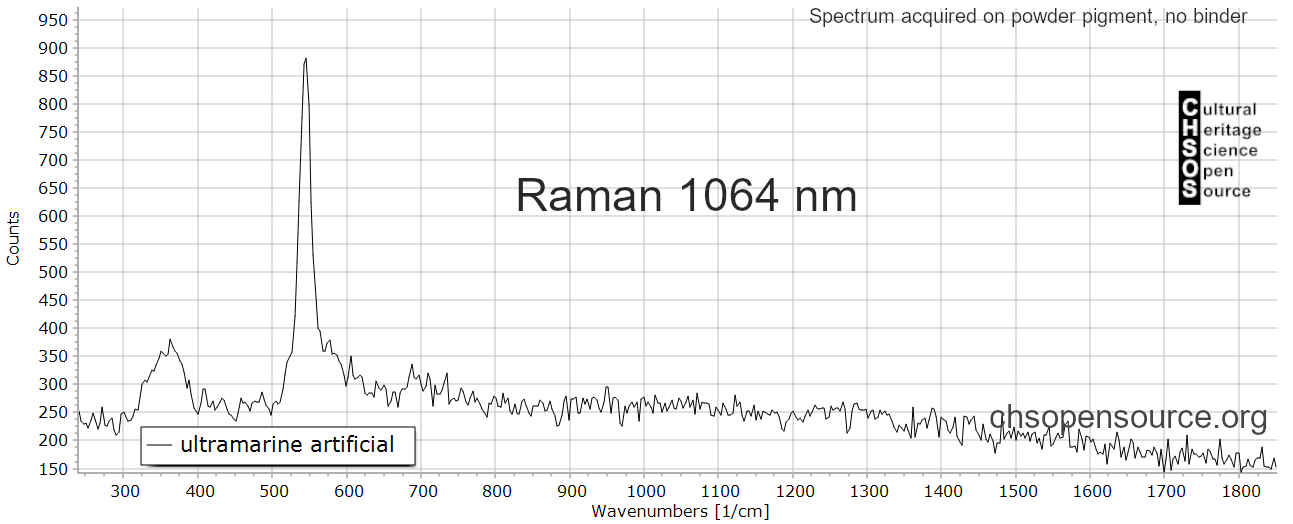
Raman spectroscopy 1064 nm
Pigments (powder, no binder)
XRF spectroscopy
Reflectance Spectroscopy (200-1000 nm) – GorgiasUV Spectrometer

Reflectance spectroscopy – Gorgias Spectrometer for Art
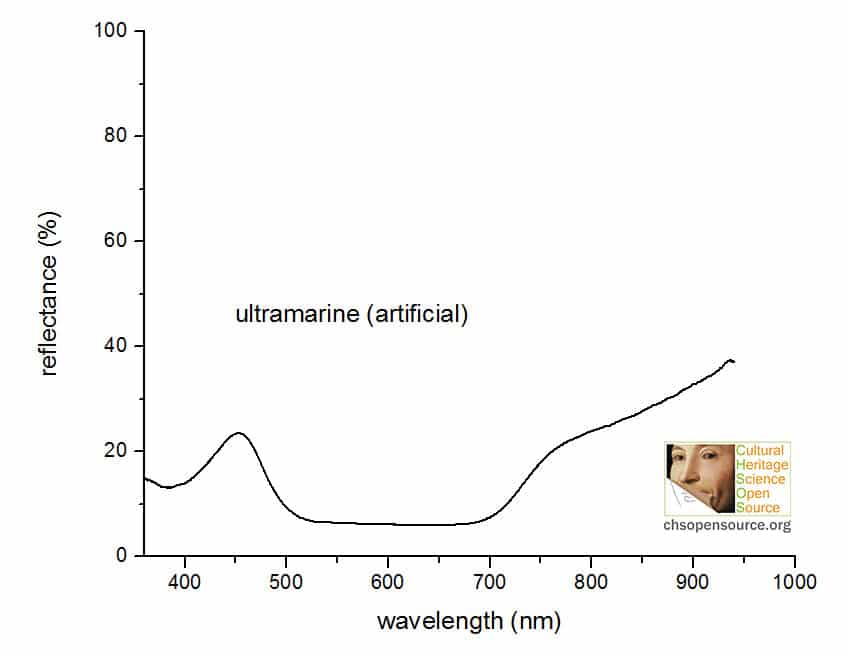
NIR Reflectance spectroscopy

FT-IR Spectroscopy (Non-invasive Diffuse Reflectance Probe)