Home » Products » Cameras for Technical Photography
Cameras for Technical Photography
Full spectrum cameras are imaging systems designed to capture light far beyond what the human eye can see, extending from ultraviolet (UV) through the visible range and into the infrared (IR). Unlike standard cameras—where internal filters restrict the sensor to visible light for accurate color reproduction—full spectrum cameras remove these limitations, allowing the sensor to record a much broader range of wavelengths.
This expanded sensitivity makes full spectrum cameras incredibly versatile tools: by simply changing external filters, the same camera can be used for infrared photography, ultraviolet imaging, or true-color capture. Whether for scientific research, cultural heritage analysis, forensic investigation, or creative exploration, full spectrum cameras open up new ways to reveal hidden details, materials, and phenomena that are invisible under normal lighting conditions.
Table of Contents
Nikon D850
The Nikon D850 is the camera we use and recommend in our technical photography kits for art examination. From its initial release, it proved to be a robust, high-resolution, and extremely reliable DSLR. With its 45.7 MP full-frame sensor, excellent dynamic range, and solid build quality, it remains—still today—a highly capable tool for ultraviolet, visible, and infrared documentation.
We recommend the D850 primarily because it has been extensively tested over many years in real conservation and diagnostic workflows. It performs consistently with our filter sets, calibrated illumination systems, and technical imaging protocols. Just as importantly, standardizing on a single model simplifies assistance and training: we know the menus, settings, and behavior of this camera in detail, allowing us to support users efficiently and confidently.
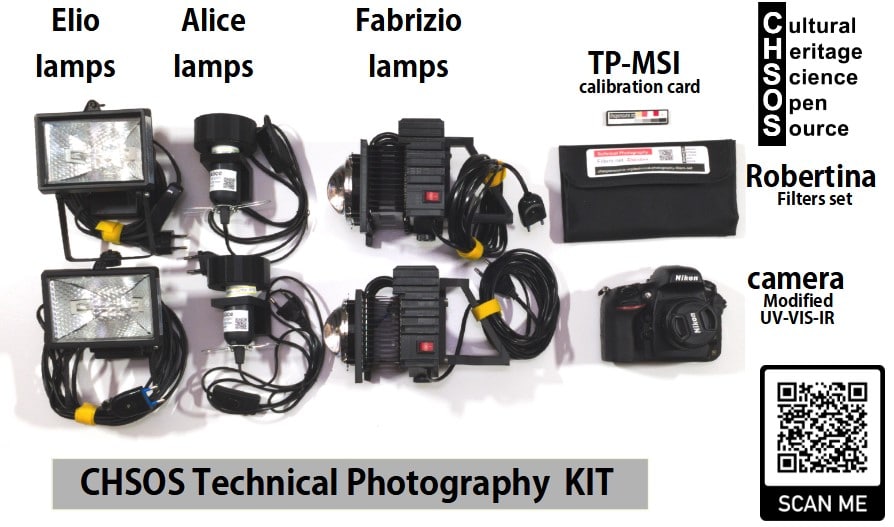
That said, any full-spectrum modified camera can be used with our Technical Photography kit. Our filters, lamps, and methodology are not brand-dependent. We recommend the D850 to streamline workflow and technical support—but the final choice remains flexible.
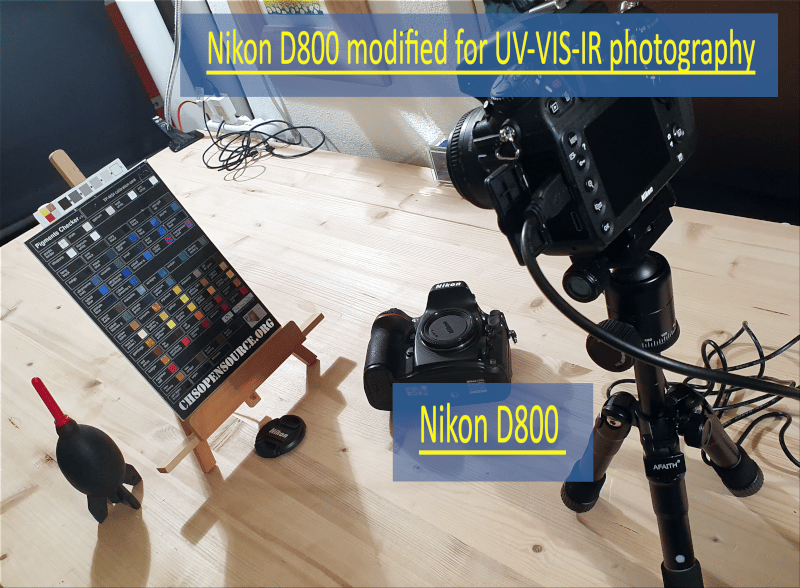
Nikon D800 (used)
As a more affordable alternative to a new Nikon D850, we also propose the used Nikon D800. This camera has been extensively tested within our technical photography workflow and has proven to be a reliable and fully compatible solution for art examination.
Although it predates the D850, the D800 offers a high-resolution full-frame sensor (36.3 MP), excellent dynamic range, and strong RAW performance—all essential characteristics for ultraviolet, visible, and infrared documentation. When modified to full spectrum, it integrates seamlessly with our filter sets, calibrated illumination systems, and standardized imaging procedures.
In practical terms, the same set of Technical Photography images can be acquired with the D800 as with the D850, with equivalent analytical results. Its spectral response, image quality, and overall consistency fully meet the requirements of conservation science, material identification, and condition assessment.
For institutions or professionals seeking a cost-effective entry into full-spectrum technical photography without compromising scientific reliability, the used D800 represents a very solid option. It allows users to maintain methodological consistency within our system while reducing initial investment costs.
How is the camera modified for UV-IR photography
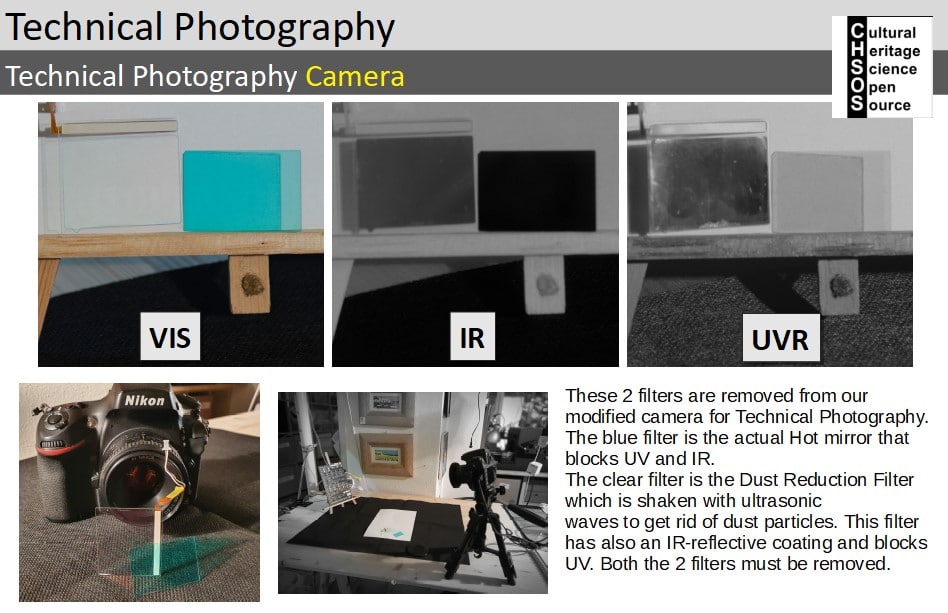
This video shows the key modification that transforms a standard digital camera into a full-spectrum imaging tool for Technical Photography. It focuses on the removal of the internal factory filter (hot mirror), the component that normally blocks ultraviolet and infrared radiation to ensure standard color reproduction.
This change allows the sensor to capture a much broader spectral range—from UV to visible to IR. This modification is essential for enabling the camera to work with our ROBERTINA filter sets and imaging protocols.
The video is intended to provide a practical understanding of what happens inside the camera and why this step is fundamental for applications such as art examination, conservation diagnostics, and material analysis.
Color Calibration
Because of differences in technologies and variations in manufacturing processes, every camera captures colors slightly differently—even two identical models from the same company can produce different results.
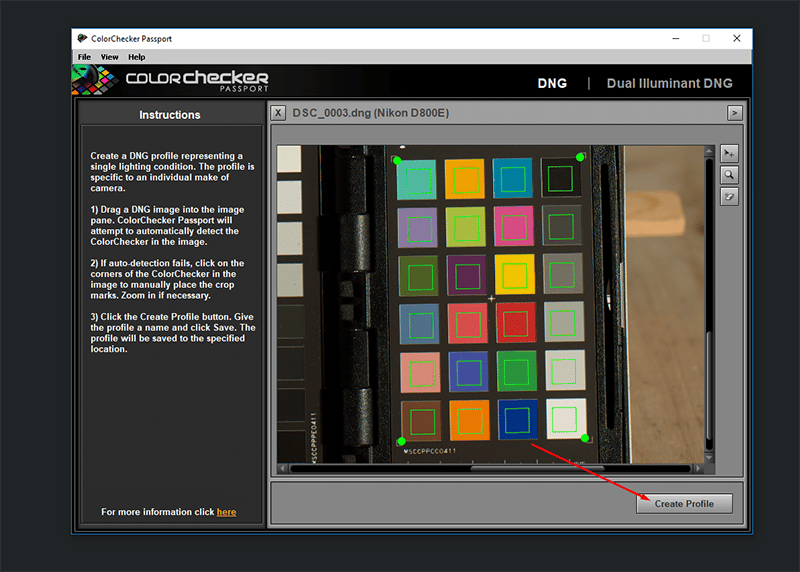
While the RAW processing software you use might already include a profile for your camera model, you can achieve even better results by creating a custom profile tailored to the RAW output of your specific camera.
That’s why we color calibrate each full-spectrum camera we deliver. Color accuracy is essential for art documentation, especially when working with paintings where subtle variations matter.
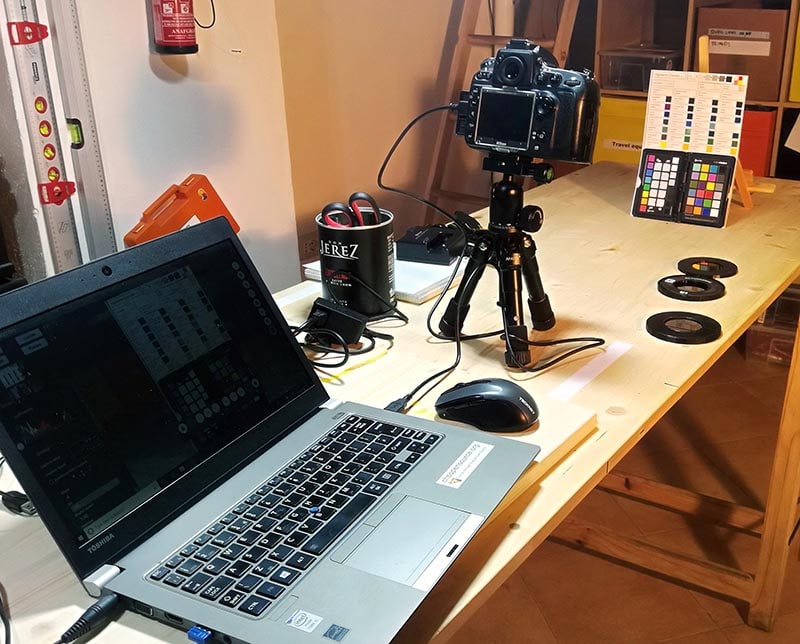
To ensure consistent results, we use the X-Rite ColorChecker Passport and its bundled software. The ColorChecker Passport Classic Target is the industry-standard color reference for creating DNG profiles and evaluating specific colors. [Read more about color calibration for DSLR cameras.]
Each calibrated camera includes a disk with its custom color calibration profile and the results of our UV, VIS, and IR photography tests.
Spectral Range Test
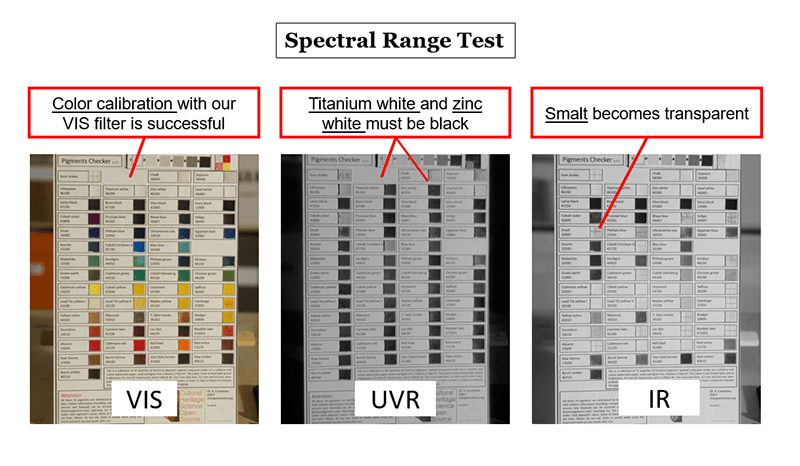
Before shipping, each camera is tested using the Robertina filter set for Technical Photography. We begin by capturing a VIS image of the Pigments Checker to evaluate the accuracy of the color profile. Next, a UVR image is taken, where titanium white and zinc white are expected to appear dark, while lead white appears bright. Finally, an IR test image demonstrates the transparency of smalt, confirming the camera’s performance across the full spectral range.
Do you really need a modified UV-VIS-IR camera?
We made the test. We shot our pigments checker with a Nikon D800 without any modification, such as one camera that you can buy in any shop. Then we shot with our Nikon D800 modified for UV-VIS photography. We kept the same conditions (aperture, shutter speed, UV and IR radiation intensity, distance camera – subject).
Learn Technical Photography for Art Examination
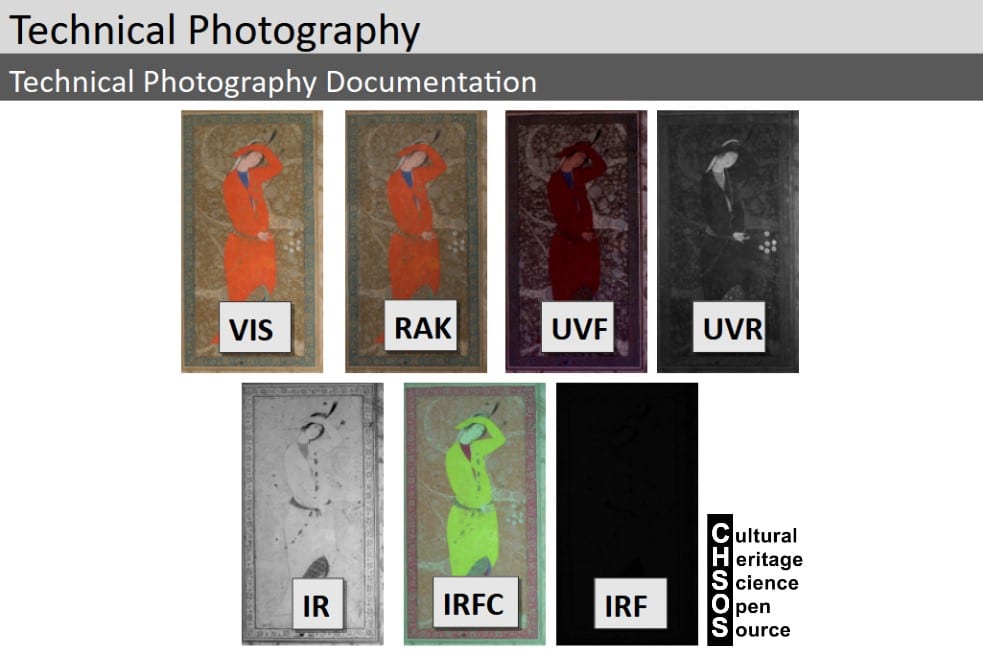
Technical Photography is one of the most powerful—and often overlooked—tools for the scientific examination of art and archaeology. If you are a conservator, scientist, or art collector and you are not yet familiar with this method, it is truly a missed opportunity. Using simple, affordable equipment and a clear methodology, Technical Photography allows you to reveal underdrawings, retouchings, material differences, and conservation issues in a completely non-invasive way. Far from being complex or inaccessible, it is an easy entry point into scientific analysis. In many cases, Technical Photography represents the first essential step toward a deeper understanding of artworks and archaeological objects.
Scientific Art Examination – Resources:
Getty Conservation Institute (GCI) – USA
The British Museum – Scientific Research Department – UK
Scientific Research Department – The Metropolitan Museum of Art, New York, USA
C2RMF (Centre de Recherche et de Restauration des Musées de France) – France
Rijksmuseum – Science Department – Netherlands