chalk
Opaque in water media, but nearly transparent in oil
Manufacturer / product code: Kremer / 58000
Chemical description: natural calcium carbonate. This product is from France. Kremer PDF
Color: white
Color Index: PW18
More info: Pigments Through The Ages
Raman Spectroscopy 532 nm – ElviRa Spectrometer for Art

Raman spectroscopy 830 nm
Pigments (powder, no binder)

Raman spectroscopy 1064 nm
Pigments (powder, no binder)

XRF spectroscopy
DOWNLOAD previous database from Pigments Checker V.3 DOWNLOAD paper: R. Larsen, N. Coluzzi, A. Cosentino “Free XRF Spectroscopy database of Pigments Checker” Intl Journal of Conservation Science.

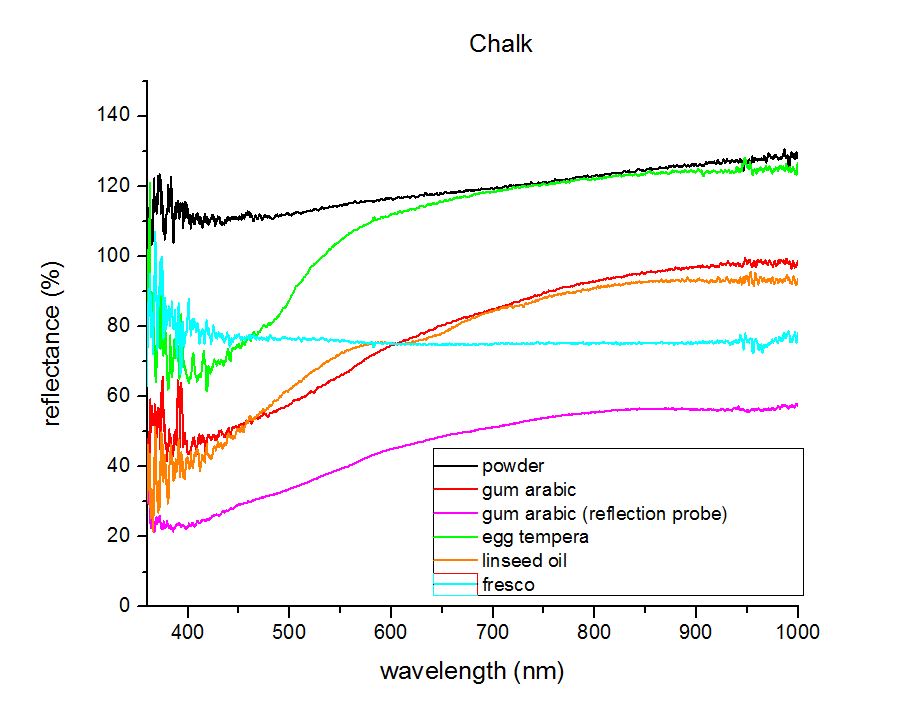
Reflectance Spectroscopy (200-1000 nm) – GorgiasUV Spectrometer

Reflectance spectroscopy – Gorgias Spectrometer for Art
NIR Reflectance spectroscopy

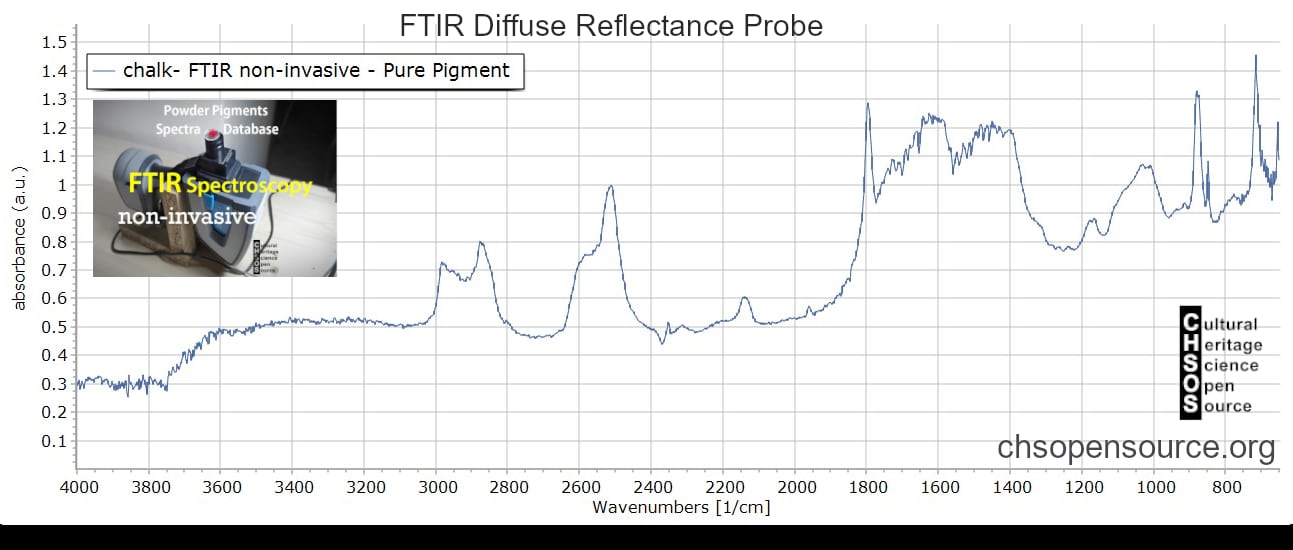
FT-IR Spectroscopy (Non-invasive Diffuse Reflectance Probe)