cobalt blue
One of the most stable blue pigments.
Manufacturer / product code: Zecchi / C0953
Chemical description: cobalt aluminate
Color: blue
Color Index: PB28
More info: Pigments Through The Ages Colourlex
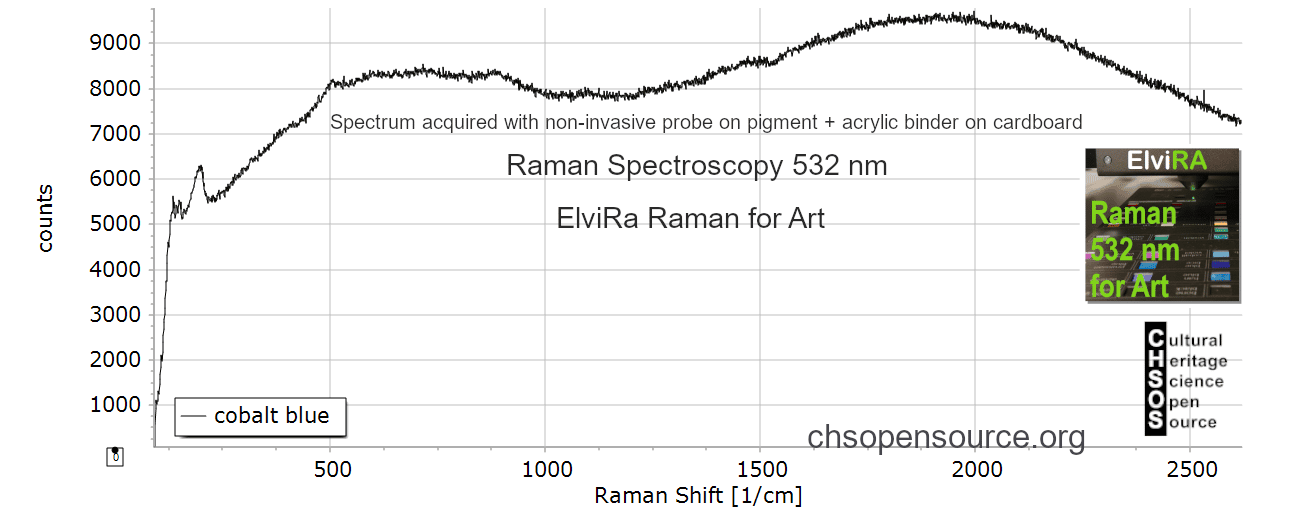
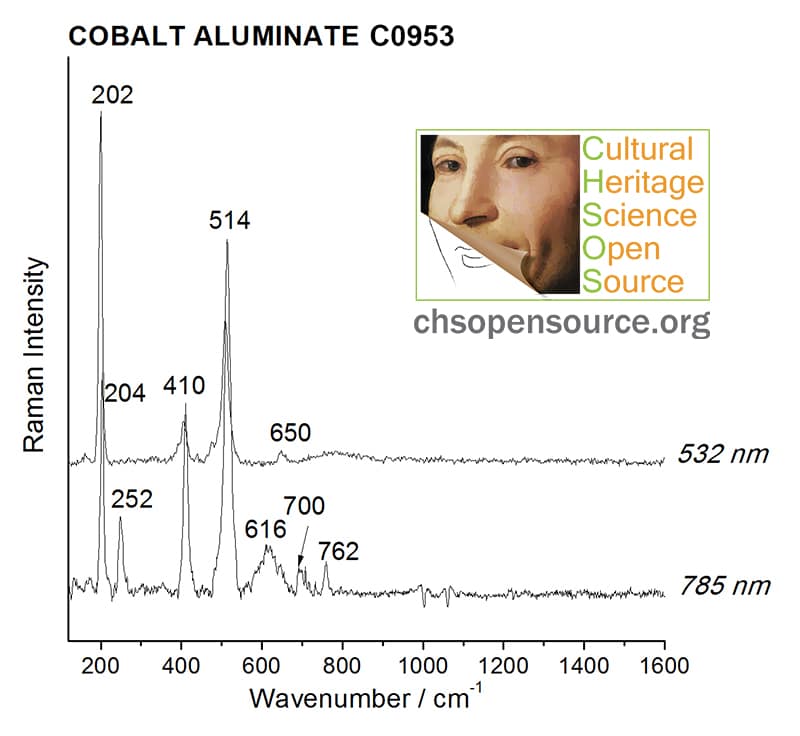
Raman Spectroscopy 532 nm – ElviRa Spectrometer for Art
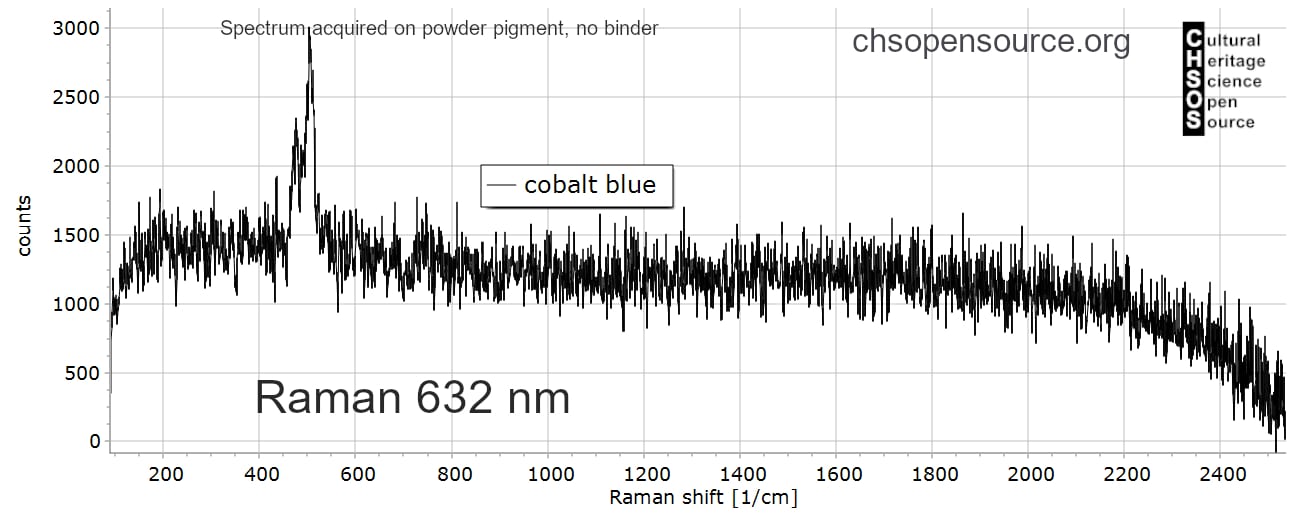
Raman spectroscopy 632 nm
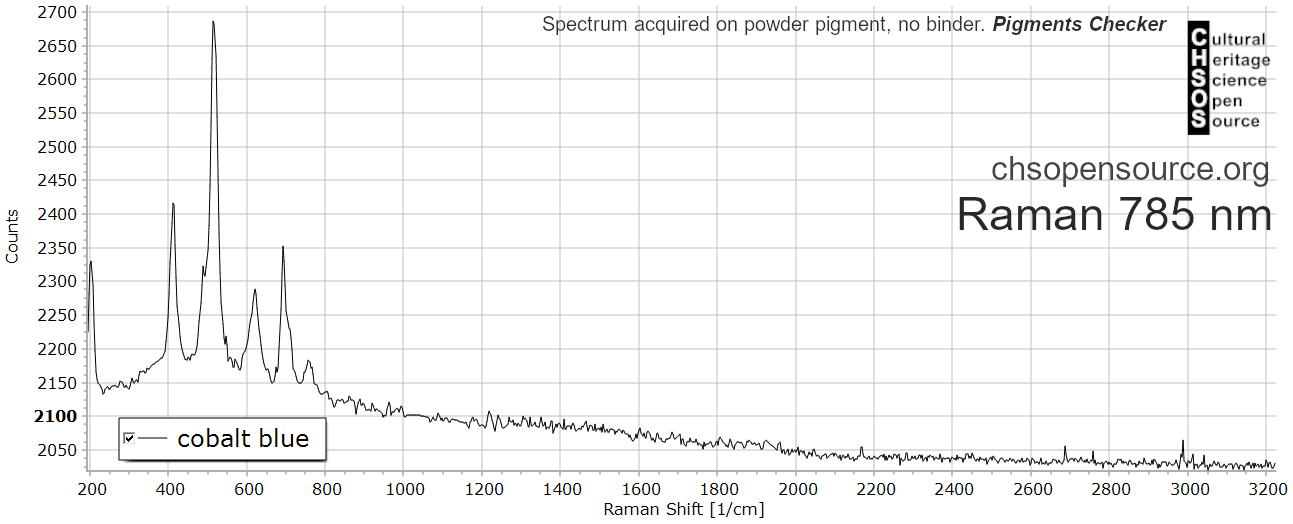
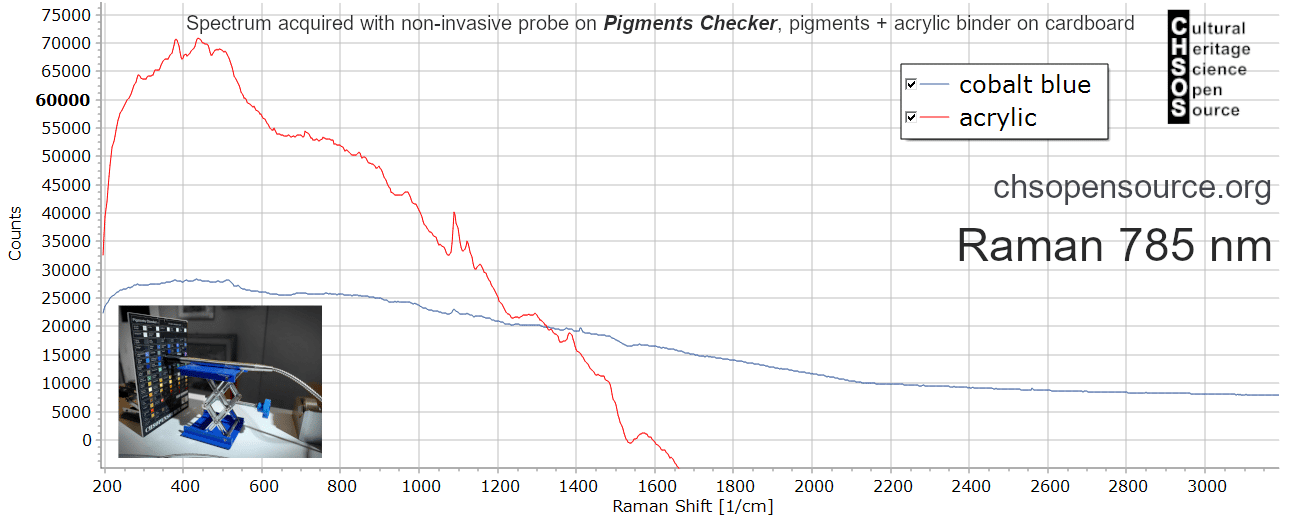
Raman spectroscopy 785 nm
Pigments (powder, no binder)
Pigments with acrylic binder (Pigments Checker)
Pure pigments (no binder, just powder)
DOWNLOAD paper: “Pigments Checker version 3.0, a handy set for conservation scientists: A free online Raman spectra database”
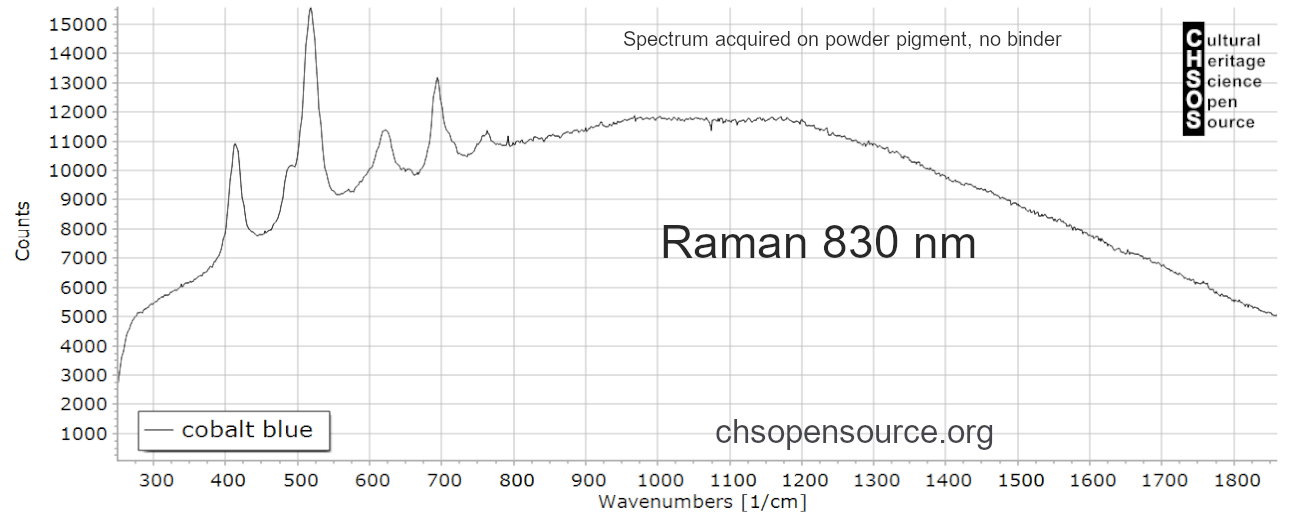
Raman spectroscopy 830 nm
Pigments (powder, no binder)
XRF spectroscopy
DOWNLOAD paper: R. Larsen, N. Coluzzi, A. Cosentino “Free XRF Spectroscopy database of Pigments Checker” Intl Journal of Conservation Science.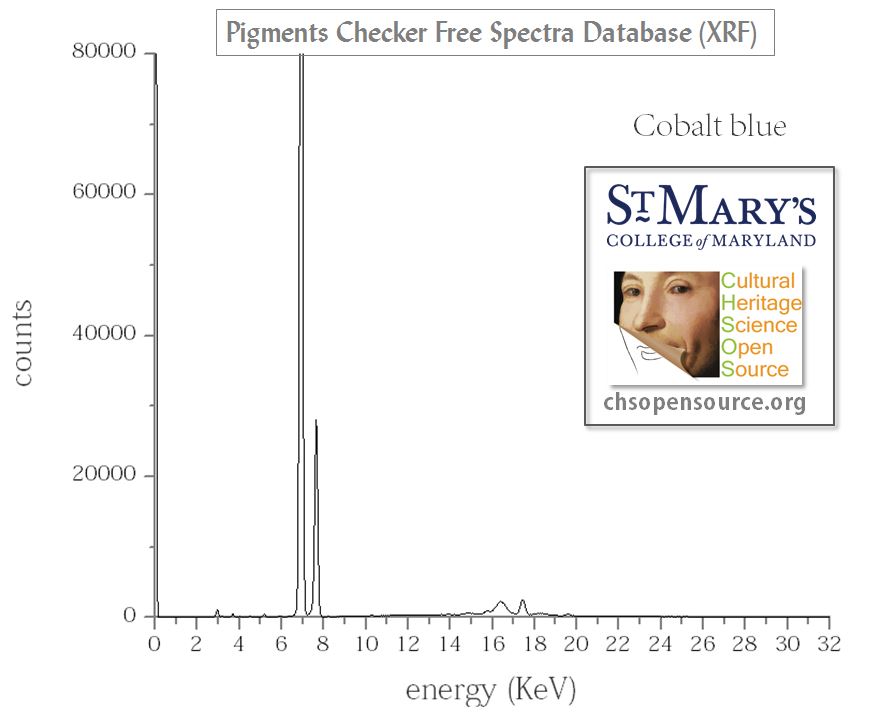
Reflectance Spectroscopy (200-1000 nm) – GorgiasUV Spectrometer

Reflectance spectroscopy – Gorgias Spectrometer for Art
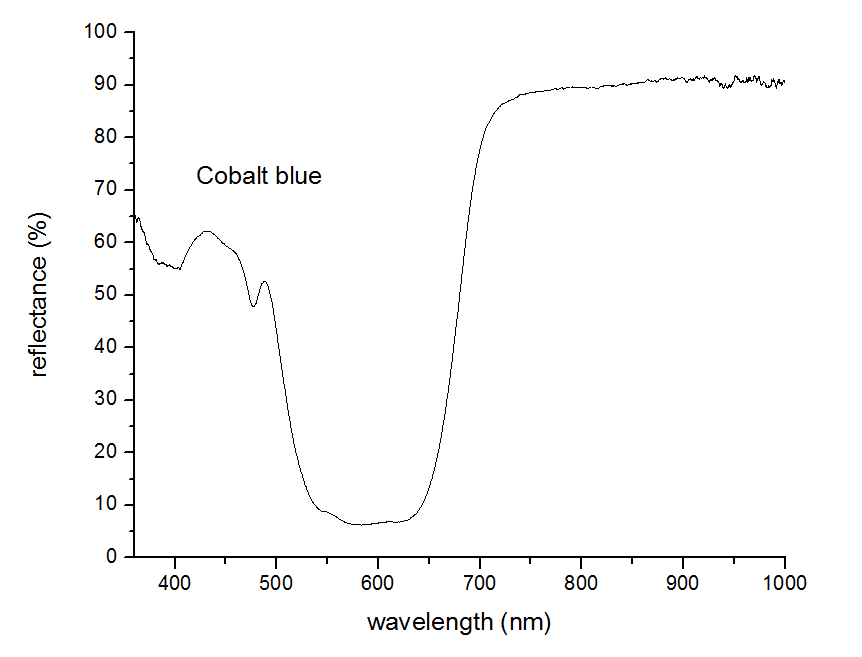
NIR Reflectance spectroscopy

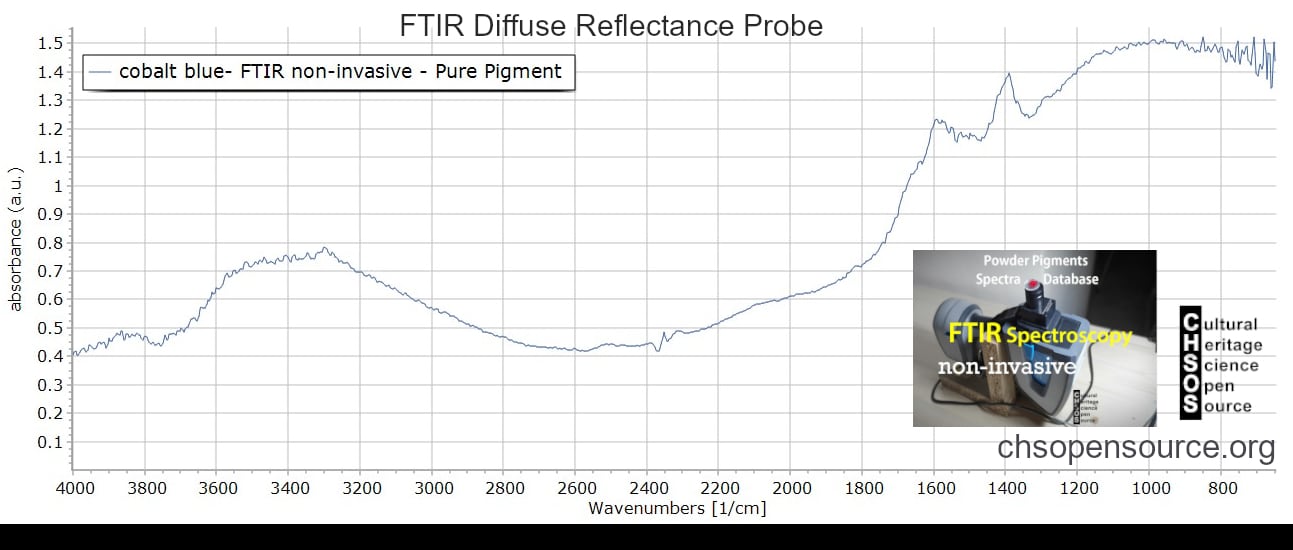
FT-IR Spectroscopy (Non-invasive Diffuse Reflectance Probe)