burnt sienna
The traditional source of siennas have been the quarries near Siena in Italy.
Manufacturer / product code: Kremer / 40430
Chemical description: made by calcining Italian raw sienna. Calcined iron oxide and hydrated iron oxide Kremer PDF
Color: brown
Color Index: PR101
More info: Colourlex
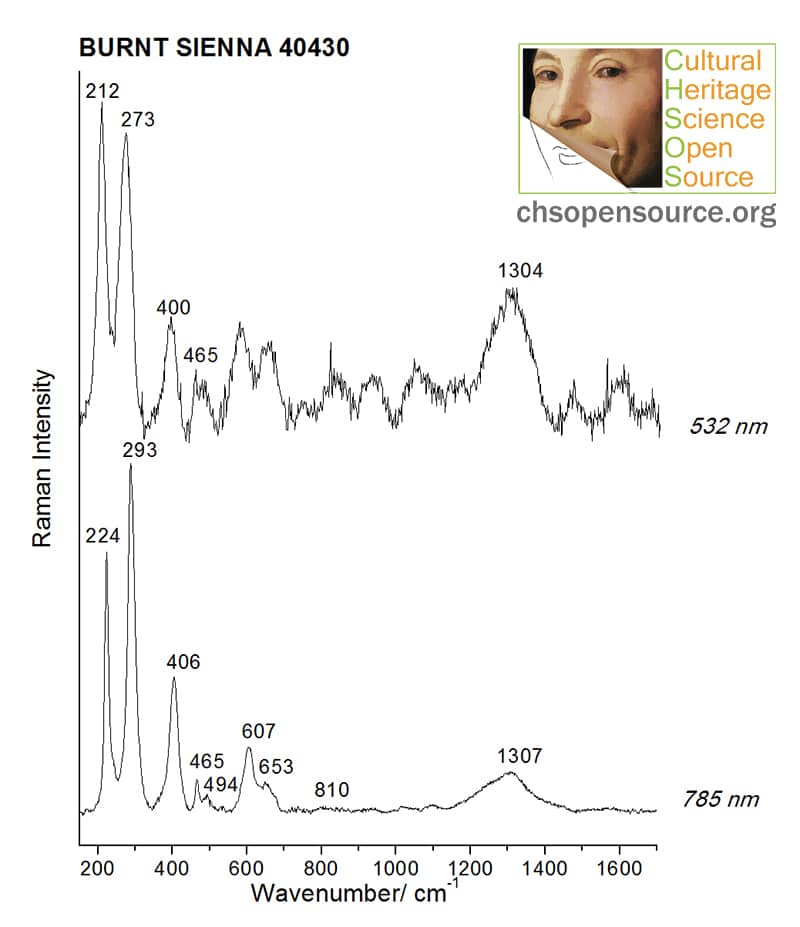
Raman spectroscopy
Pigments (powder, no binder)

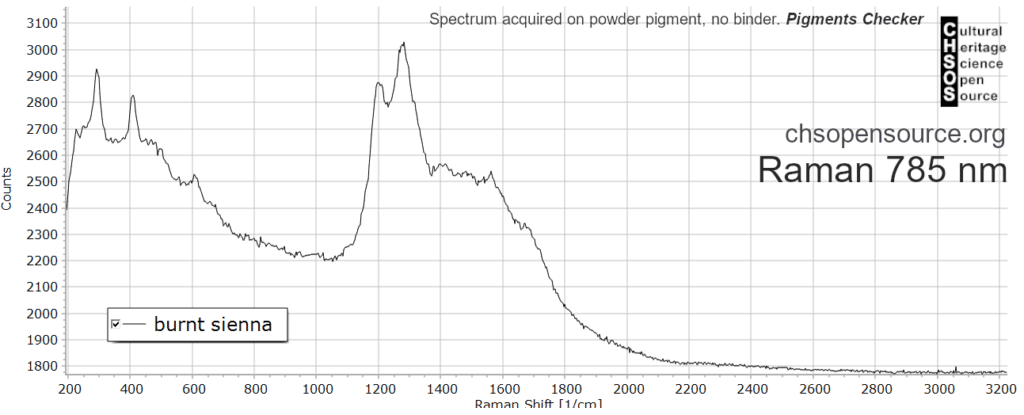
Pigments with acrylic binder (Pigments Checker)
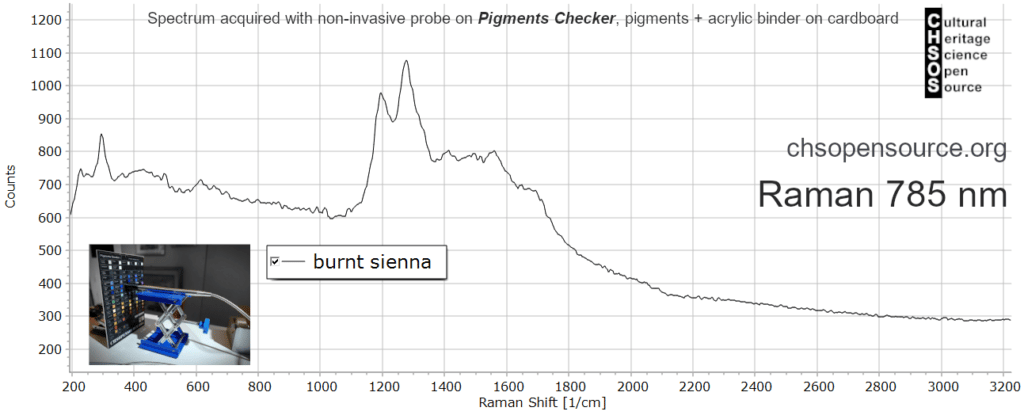
Pure pigments (no binder, just powder)
DOWNLOAD paper: “Pigments Checker version 3.0, a handy set for conservation scientists: A free online Raman spectra database”
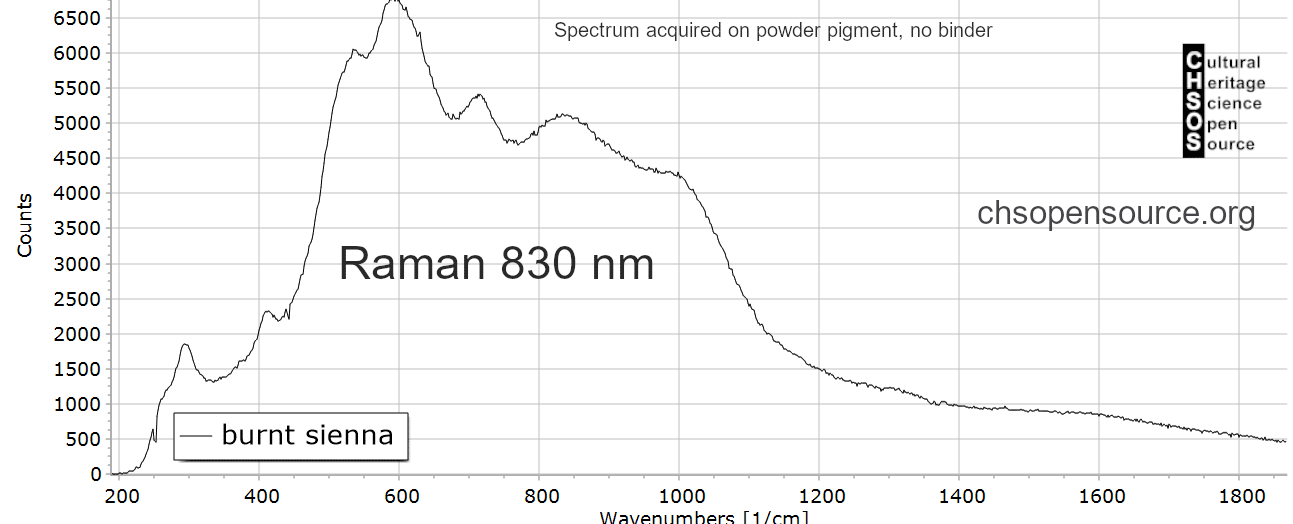
Raman spectroscopy 830 nm
Pigments (powder, no binder)
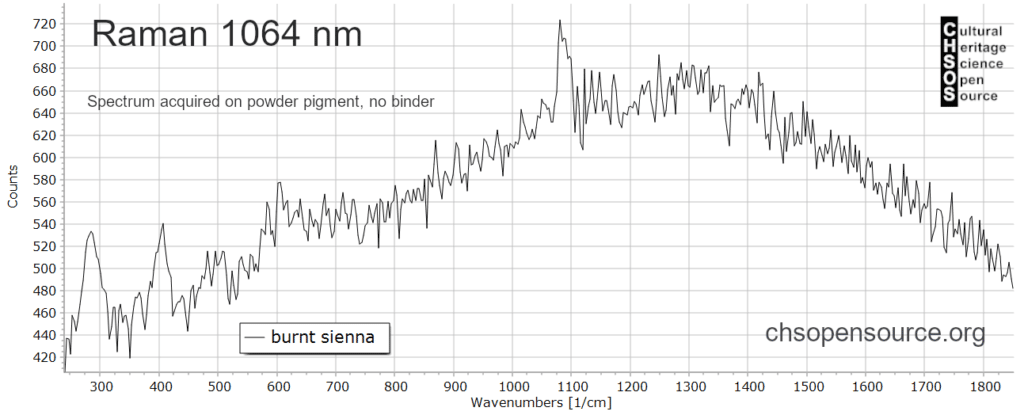
Raman spectroscopy 1064 nm
Pigments (powder, no binder)
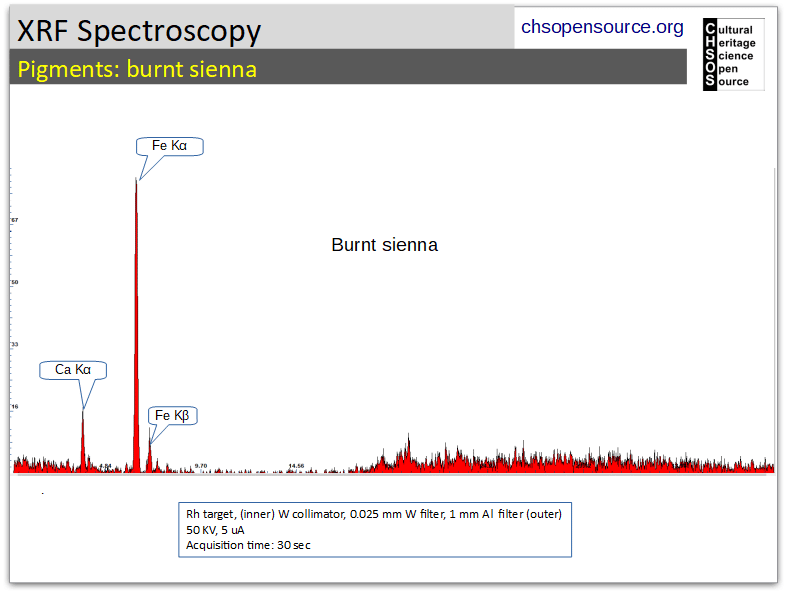
XRF spectroscopy
DOWNLOAD previous database from Pigments Checker V.3 DOWNLOAD paper: R. Larsen, N. Coluzzi, A. Cosentino “Free XRF Spectroscopy database of Pigments Checker” Intl Journal of Conservation Science.
Reflectance Spectroscopy (200-1000 nm) – GorgiasUV Spectrometer
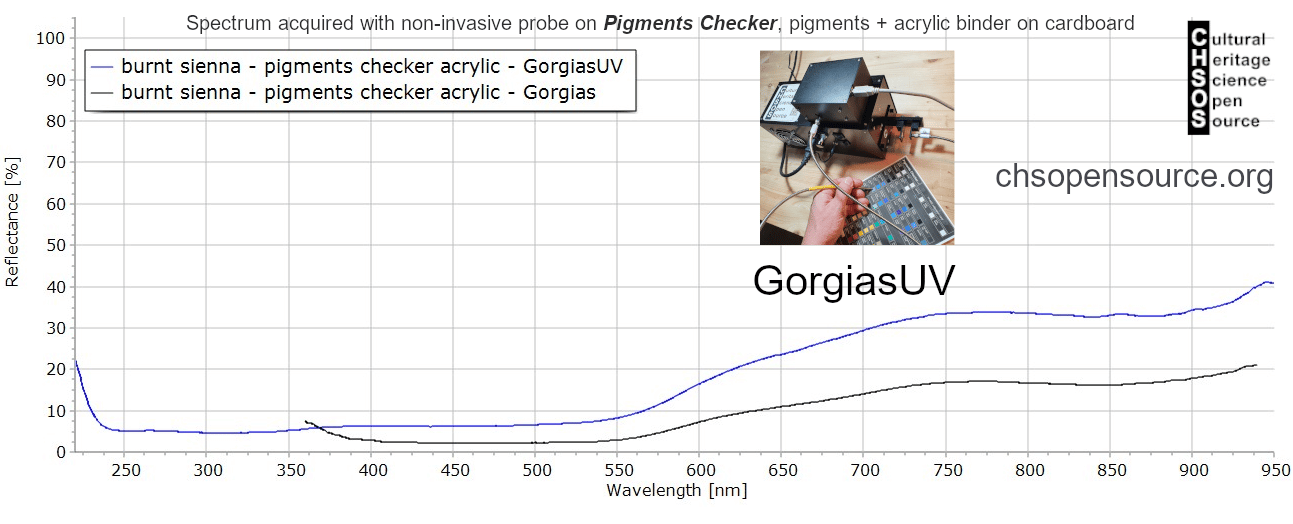
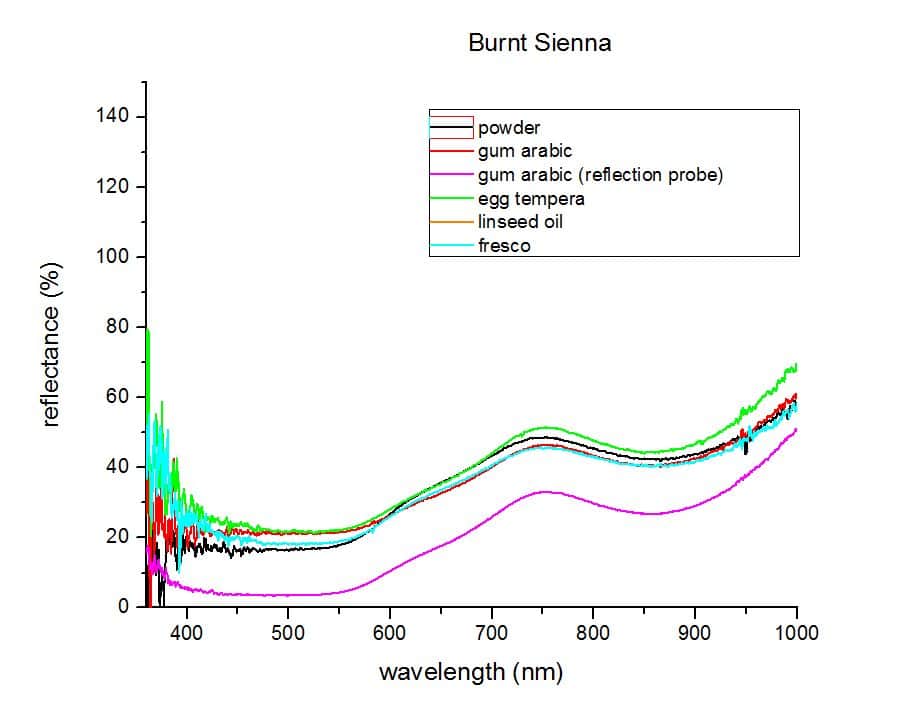
Reflectance spectroscopy -Gorgias spectrometer for Art
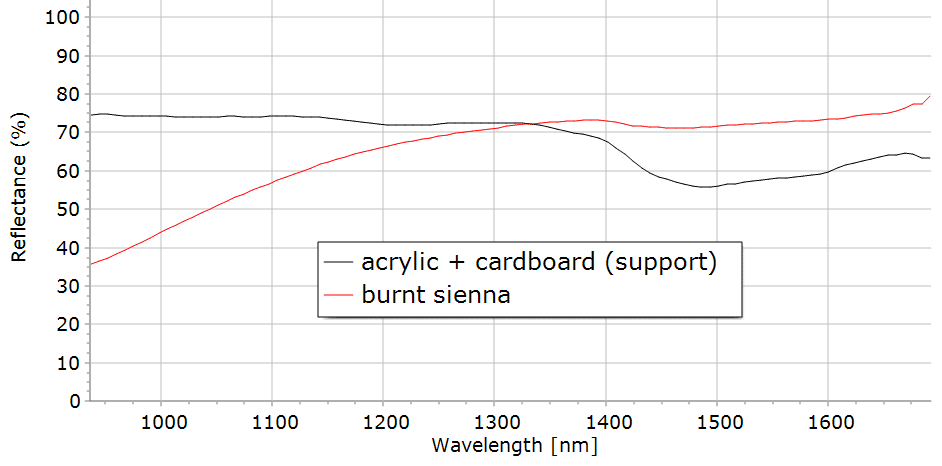
NIR Reflectance spectroscopy
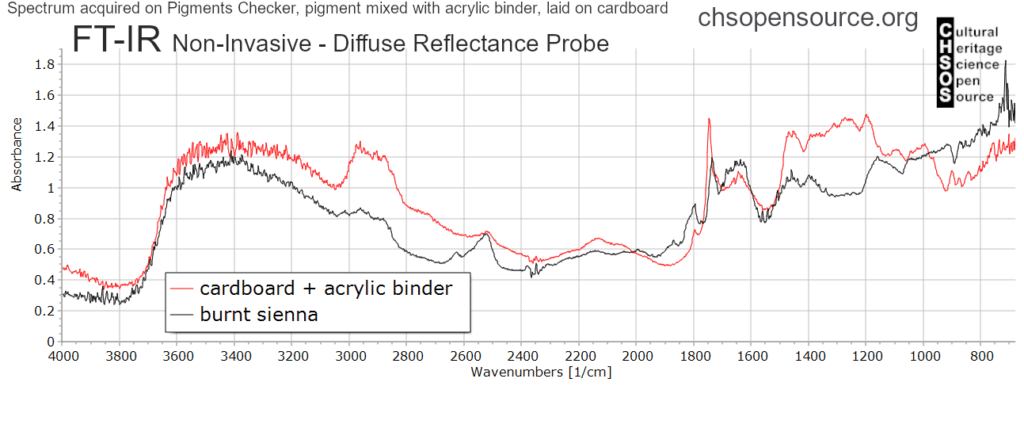
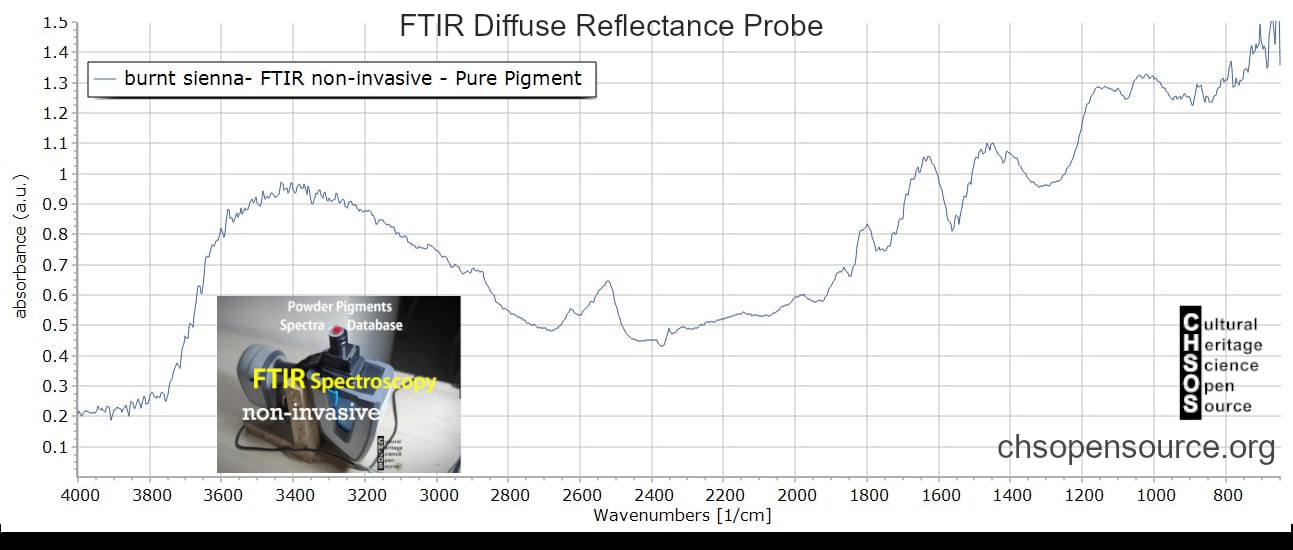
FT-IR Spectroscopy (Non-invasive Diffuse Reflectance Probe)