Home » Case Studies » 16th-century woodcut leaf from the Romische Historie
16th-century woodcut leaf from the Romische Historie
This case study is a 16th-century woodcut leaf from the Römische Historie, a 16th-century work chronicling the history of ancient Rome, reflecting the Renaissance revival of classical learning. Often richly illustrated, such editions combined historical narrative with artistic craftsmanship, serving both as educational texts and as symbols of humanist scholarship and admiration for Rome’s political and cultural legacy. Published mainly in German-speaking regions, they translated and adapted classical sources such as Livy, Plutarch, and Suetonius. By recounting the deeds of emperors and heroes, these works conveyed moral and political lessons that linked ancient virtues to Renaissance ideals, bridging the world of antiquity with early modern European thought and art.
CHSOS Collection – item #9
Technical Photography
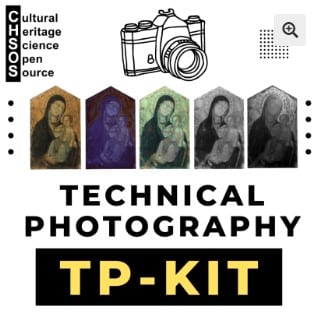
The power of technical photography lies in capturing a wide range of images: while many may reveal little, some can uncover useful details. In this case study of a woodcut print, the UVR image highlights the distribution of a ground preparation applied to the woodcut to ready the paper for painting. Under UVF imaging, this preparation displays a distinct pale orange fluorescence, making its presence barely visible.


Learn Technical Photography for Art Examination
Technical Photography is one of the most powerful—and often overlooked—tools for the scientific examination of art and archaeology. If you are a conservator, scientist, or art collector and you are not yet familiar with this method, it is truly a missed opportunity. Using simple, affordable equipment and a clear methodology, Technical Photography allows you to reveal underdrawings, retouchings, material differences, and conservation issues in a completely non-invasive way. Far from being complex or inaccessible, it is an easy entry point into scientific analysis. In many cases, Technical Photography represents the first essential step toward a deeper understanding of artworks and archaeological objects.
Scientific Art Examination – Resources:
Getty Conservation Institute (GCI) – USA
The British Museum – Scientific Research Department – UK
Scientific Research Department – The Metropolitan Museum of Art, New York, USA
C2RMF (Centre de Recherche et de Restauration des Musées de France) – France
Rijksmuseum – Science Department – Netherlands