Category: Artists

artists scientific examinations

Our comprehensive research draws upon a wealth of references to uncover the specific pigments and painting techniques utilized by renowned painters throughout history. By synthesizing findings from scholarly publications, archival documents, and scientific analyses, we have gained valuable insights into the materials and methods employed by these artists.

For instance, our investigation into the works of Leonardo da Vinci is informed by seminal texts such as “Leonardo’s Notebooks” and “Leonardo da Vinci: The Complete Paintings and Drawings.” These references provide detailed descriptions of da Vinci’s experiments with pigments and binders, shedding light on his innovative approaches to color mixing and application.

For instance, our examination of Rembrandt’s oeuvre is supported by authoritative sources such as “Rembrandt: The Painter at Work” by Ernst van de Wetering and “Rembrandt’s Paintings Revisited” by Ernst van de Wetering and Karin Groen. These publications offer in-depth analyses of Rembrandt’s painting techniques, including his use of impasto and glazing to achieve dramatic effects of light and shadow.

Furthermore, our study of Impressionist painters like Claude Monet is grounded in seminal works such as “Monet or the Triumph of Impressionism” by Daniel Wildenstein and “Claude Monet: Life and Art” by Paul Hayes Tucker. These references illuminate Monet’s innovative use of color and light, as well as his distinctive plein air painting techniques.

By synthesizing insights from a diverse array of references, our research provides a nuanced understanding of the materials and techniques employed by iconic painters. This interdisciplinary approach enriches our appreciation of art history and cultural heritage while advancing scholarship in the field.

Our scientific methods enable us to identify and analyze various materials and techniques used by painters throughout history. By employing advanced technologies such as multispectral imaging, X-ray fluorescence (XRF), Raman spectroscopy, and infrared (IR) imaging, we can delve into the composition and application of pigments, binders, and other materials utilized in artworks. These methods allow us to uncover hidden layers, detect alterations, and they help to authenticate artworks, providing valuable insights into the studied artists’ processes and historical contexts.

Picasso

Pablo Picasso. Technical Art Examination References.

Technical Art examination of Picasso has been more numerous than other 20th century painters. There are reliable resources on the internet from renowned institutions, such as the Art Institute Chicago [1], MoMA [2] and V&A [3].  Other information on the painting materials Picasso used throughout his life are found in scientific journals [4-7] and conservation
Read More »
Scientific Technical Photography

Michelangelo Merisi da Caravaggio. Technical Art Examination.

It‘s always thrilling to work on the attribution of such an important name. When authenticating a Caravaggio a lot depends on incisions. Caravaggio is known for the presence of incisions in many of his paintings which were supposedly made on the wet gesso with the back of his brush. There are a couple of hypothesis

Read More »
Munch

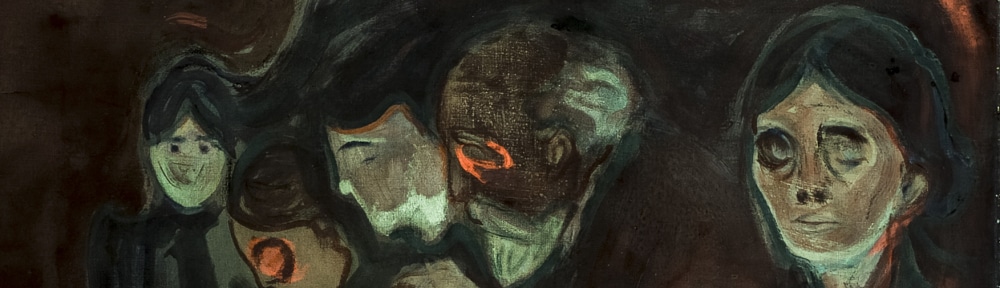
Edvard Munch. Technical Art Examination.

The KODE museum in Bergen (Norway) has an astonishing collection of Edvard Munch paintings.  It is the third Munch’s largest collection in the world and boasts Munch’s main works. Though,  I enjoy their collection especially for their Munch’s early paintings. Read more about Edvard Munch and his works on Artsy. For this museum I did

Read More »
Dahl

Johan Christian Dahl. Technical Art Examination.

Last year I did the multispectral imaging documentation of 52 J.C Dahl paintings at the KODE museum in Bergen, Norway. Dahl was a romantic Norwegian painter, recognized as the father of Norwegian landscape painting.   As usual, I post here my research on published technical art examination material on this artist, which is actually really

Read More »
modigliani

Amedeo Modigliani. Technical Art Examination.

There isn’t that much literature on technical examination of Amedeo Modigliani’s paintings. Last year I worked on a drawing attributed to Modigliani and I could find few references. The most important study is the one accomplished in the occasion of a rare Modigliani exhibition held in Paris in 1981 [1]. It compares Multispectral images of the paintings gathered for

Read More »