PIRR – Stitching with PTGUI

This lesson introduces the image stitching process for panoramic infrared reflectography (PIRR) using PTGui, a powerful panorama stitching software widely used to assemble overlapping images into a single seamless high-resolution mosaic.

After acquiring a sequence of overlapping infrared frames with your Valeria panoramic head and an InGaAs camera, the next essential step is to combine them into a coherent panoramic image. The video in this lesson walks you through the typical PTGui workflow: importing the acquired frames, aligning them based on shared features, and generating control points to ensure precise registration. Using PTGui’s tools and interactive panorama editor, you can refine the alignment and handle multi-row scans to produce a detailed, continuous reflectogram of the entire work.

PTGui supports a variety of projections and formats and is designed for robust performance even with large image sets. By following the steps shown in the video, you’ll learn how to leverage PTGui’s stitching capabilities to create high-quality panoramic infrared images from your PIRR captures, turning a sequence of close-up shots into a unified reflectographic representation ready for analysis and documentation.

PIRR – Stitching with PTGUI

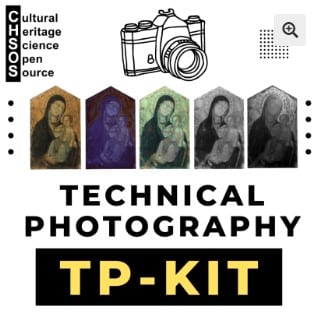
Learn Technical Photography for Art Examination

Technical Photography is one of the most powerful—and often overlooked—tools for the scientific examination of art and archaeology. If you are a conservator, scientist, or art collector and you are not yet familiar with this method, it is truly a missed opportunity. Using simple, affordable equipment and a clear methodology, Technical Photography allows you to reveal underdrawings, retouchings, material differences, and conservation issues in a completely non-invasive way. Far from being complex or inaccessible, it is an easy entry point into scientific analysis. In many cases, Technical Photography represents the first essential step toward a deeper understanding of artworks and archaeological objects.


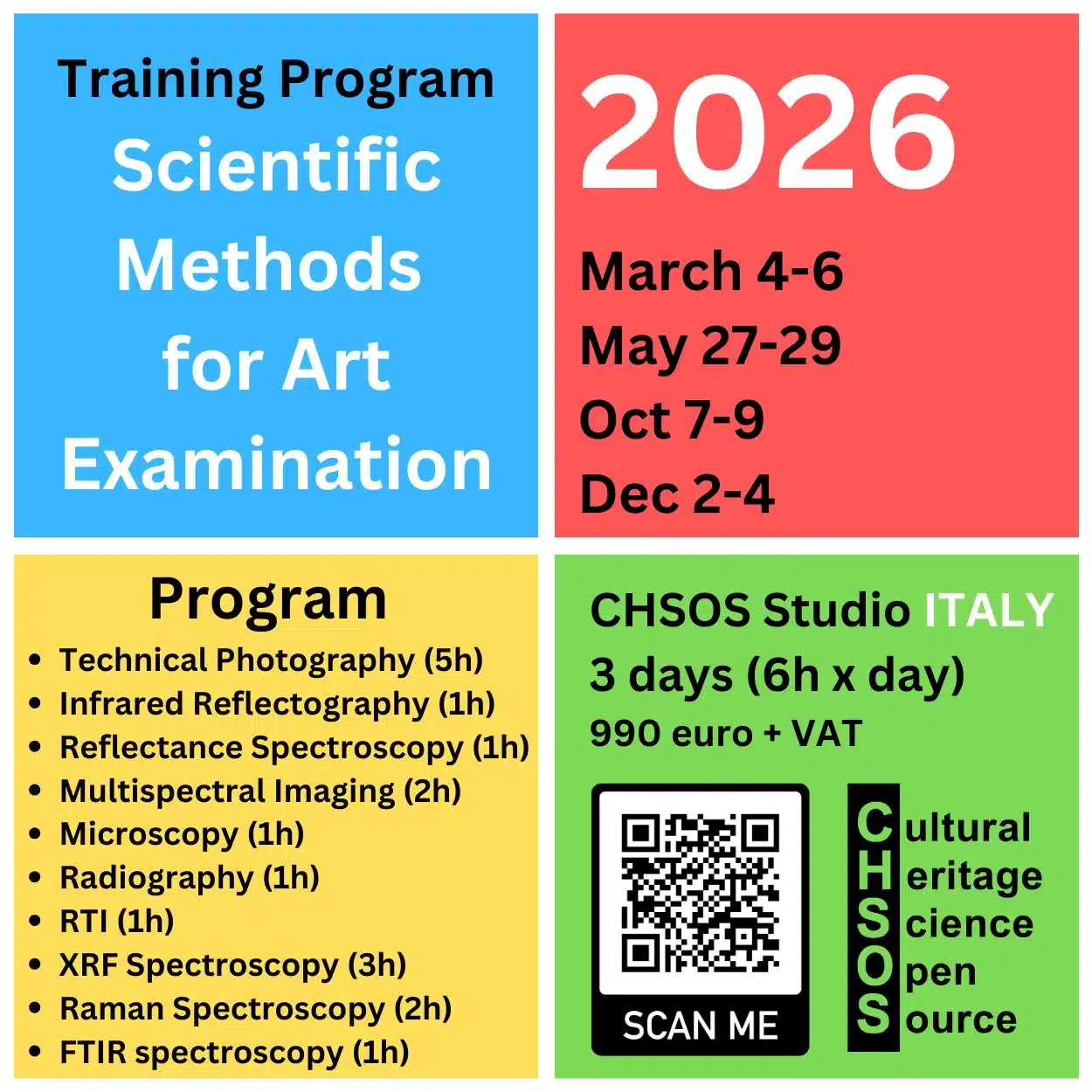
Training 2026

Scientific Art Examination – Resources:
Getty Conservation Institute (GCI) – USA
The British Museum – Scientific Research Department – UK
Scientific Research Department – The Metropolitan Museum of Art, New York, USA
C2RMF (Centre de Recherche et de Restauration des Musées de France) – France
Rijksmuseum – Science Department – Netherlands