This lesson guides you through the installation and setup of the Gorgias reflectance spectroscopy system, providing you with everything needed to begin acquiring high-quality spectral data. Reflectance spectroscopy is a versatile analytical method that reveals how materials interact with light across different wavelengths, making it valuable in fields ranging from cultural heritage and materials science to geology and conservation. To work effectively with this technique, a properly installed and calibrated system is essential.
In this video and accompanying materials, we walk you step by step through unboxing the Gorgias hardware, installing the required software, and configuring system settings so that your equipment communicates correctly with your computer. You will learn how to mount and position probes or sensors, establish stable connections, install software, and verify that your setup is ready for spectral acquisition. Clear instructions and video guidance ensure that even users new to reflectance spectroscopy can follow along confidently.
Once Gorgias is installed and operational, you will be prepared to explore a range of real-world applications where reflectance spectroscopy provides insight into material composition and condition. For examples of how the technique is used in practice, be sure to visit the RS Applications page, where case studies and project examples demonstrate the power of spectral analysis across diverse materials and contexts. By the end of this lesson, your Gorgias system will be ready to capture reproducible spectral measurements for scientific examination and research.
- Video “Intro to Gorgias”. A short video intro to your Gorgias Spectrometer.
2. Video “Setup and Calibration“. This video illustrates how to setup and calibrate your Gorgias.
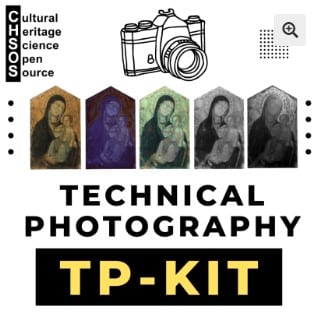
Learn Technical Photography for Art Examination
Technical Photography is one of the most powerful—and often overlooked—tools for the scientific examination of art and archaeology. If you are a conservator, scientist, or art collector and you are not yet familiar with this method, it is truly a missed opportunity. Using simple, affordable equipment and a clear methodology, Technical Photography allows you to reveal underdrawings, retouchings, material differences, and conservation issues in a completely non-invasive way. Far from being complex or inaccessible, it is an easy entry point into scientific analysis. In many cases, Technical Photography represents the first essential step toward a deeper understanding of artworks and archaeological objects.
Scientific Art Examination – Resources:
Getty Conservation Institute (GCI) – USA
The British Museum – Scientific Research Department – UK
Scientific Research Department – The Metropolitan Museum of Art, New York, USA
C2RMF (Centre de Recherche et de Restauration des Musées de France) – France
Rijksmuseum – Science Department – Netherlands