TP-IRF applications

Infrared Fluorescence (IRF) is one of the most powerful techniques in technical photography for the non-invasive examination of works of art. By capturing images beyond the visible spectrum, IRF reveals features that are otherwise hidden. This makes it an indispensable tool for conservators, curators, researchers, and imaging specialists seeking deeper insight into the creation and history of paintings, manuscripts, and other heritage objects.

On this page, we collect a curated set of applications and case examples that demonstrate how IRF photography has been successfully used in real-world investigations. Each application highlights not just the images themselves, but the questions being asked and the information revealed — whether it is understanding an artist’s process, documenting condition issues, or distinguishing original work from later interventions. These examples show how IRF contributes to conservation decision-making, material analysis, and scholarly interpretation.

By exploring this collection, you will gain a broader appreciation of the capabilities and versatility of Infrared Fluorescence photography, and see how it fits into larger technical photography workflows. Whether you are new to IRF or already experienced, these applications provide inspiration, context, and practical understanding of what IRF can reveal when applied thoughtfully to cultural heritage imaging.

Table of Contents

Infrared Fluorescence Photography for mapping different inks

We can distinguish and map different inks, see this experiment!

How to find CADMIUM RED pigment in paintings with Infrared Fluorescence Photography

This video shows how to use Infrared Fluorescence Photography to detect and map cadmium red.

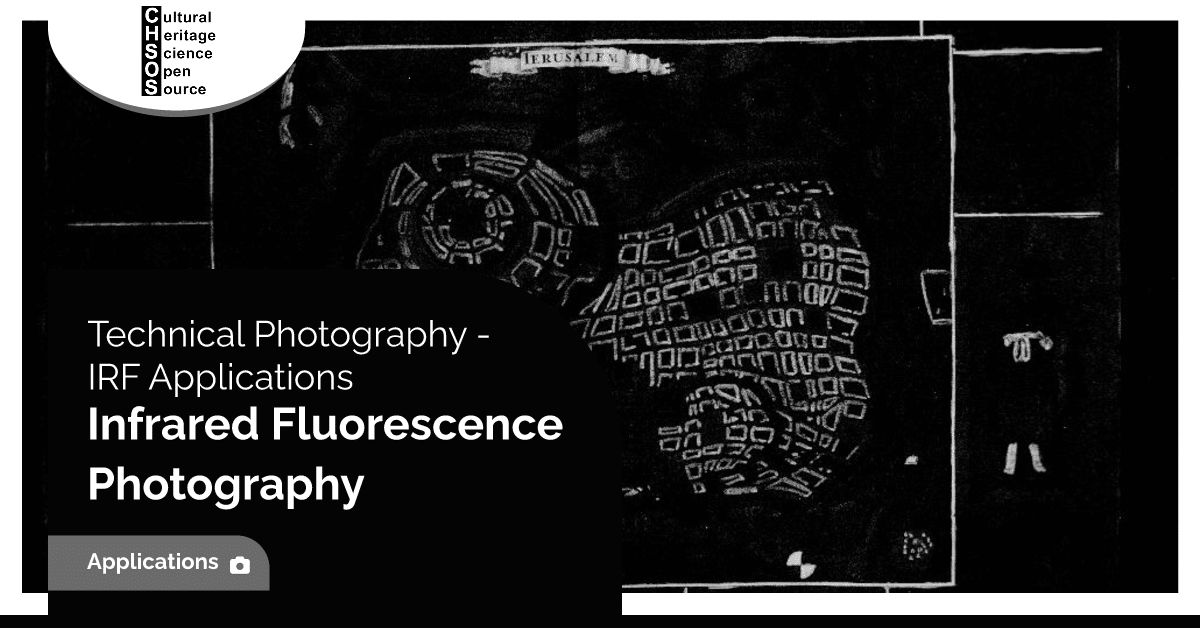
How to Date colors of an early 18th-century map of Jerusalem with Infrared Fluorescence Photography

This video shows how to use Infrared Fluorescence Photography to detect and map cadmium red on a historical map.

Identify more pigments with ADVANCED Infrared Fluorescence Photography

Discover the power of ADVANCED Infrared Fluorescence Photography with ANTONELLO, The Multispectral Imaging System. Our 6 Infrared filters allow you to identify more pigments.


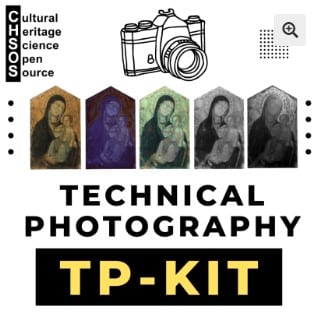
Learn Technical Photography for Art Examination

Technical Photography is one of the most powerful—and often overlooked—tools for the scientific examination of art and archaeology. If you are a conservator, scientist, or art collector and you are not yet familiar with this method, it is truly a missed opportunity. Using simple, affordable equipment and a clear methodology, Technical Photography allows you to reveal underdrawings, retouchings, material differences, and conservation issues in a completely non-invasive way. Far from being complex or inaccessible, it is an easy entry point into scientific analysis. In many cases, Technical Photography represents the first essential step toward a deeper understanding of artworks and archaeological objects.


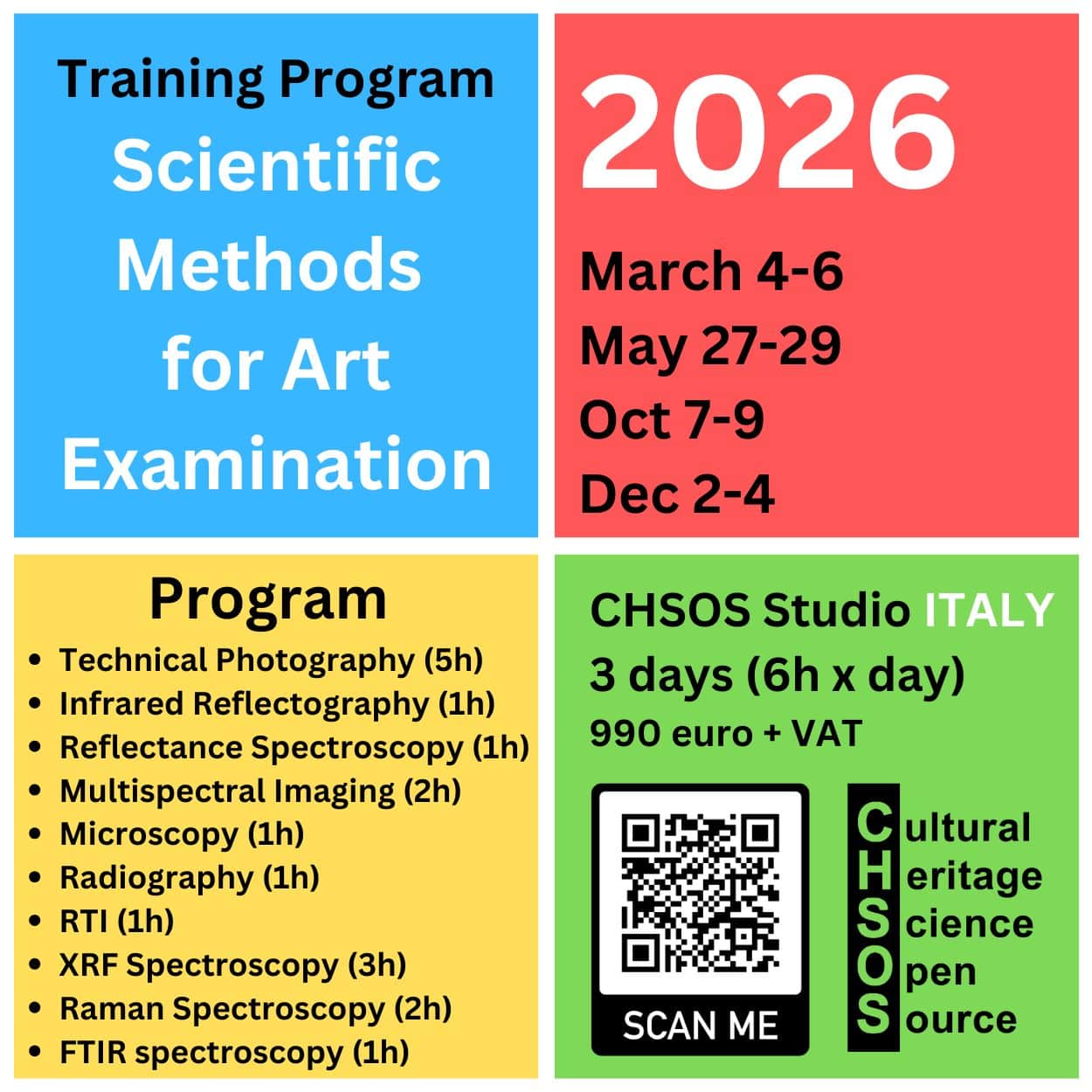
Training 2026

Scientific Art Examination – Resources:
Getty Conservation Institute (GCI) – USA
The British Museum – Scientific Research Department – UK
Scientific Research Department – The Metropolitan Museum of Art, New York, USA
C2RMF (Centre de Recherche et de Restauration des Musées de France) – France
Rijksmuseum – Science Department – Netherlands