Polarized Light Photography
Polarized Light Photography is a powerful imaging technique used in the scientific examination of paintings to control surface reflections and enhance the visual response of pigments. When light reflects from a painted surface, varnish layers and uneven brushwork often generate specular glare that obscures color information. By placing a polarizing filter on the light source and a second, cross-oriented polarizer on the camera lens, these reflections can be selectively suppressed.
This configuration, known as cross-polarization, allows only diffusely reflected light from the paint layers to reach the sensor. As a result, colors appear more saturated, brushwork becomes clearer, and subtle chromatic variations between pigments are easier to observe. This makes polarized light photography particularly useful for documenting paint surfaces, studying layering techniques, and supporting pigment comparison during conservation and technical art history studies.
Polarized imaging is primarily a visible-light technique. The Pitty Polarized Light Kit is optimized for use in the visible spectral range and is therefore ideal for standard photographic documentation and pigment saturation enhancement. It is not suitable for infrared or ultraviolet photography, as polarizing materials are generally ineffective outside the visible range and UV/IR imaging relies on different optical principles and filters.
When used correctly, polarized light photography provides a simple, non-invasive method to significantly improve the readability of painted surfaces and color information.
How Polarized Light Photography For Art Works And Increases Pigments Saturation
Can I use Pitty -Polarized light kit- for infrared and UV photography?
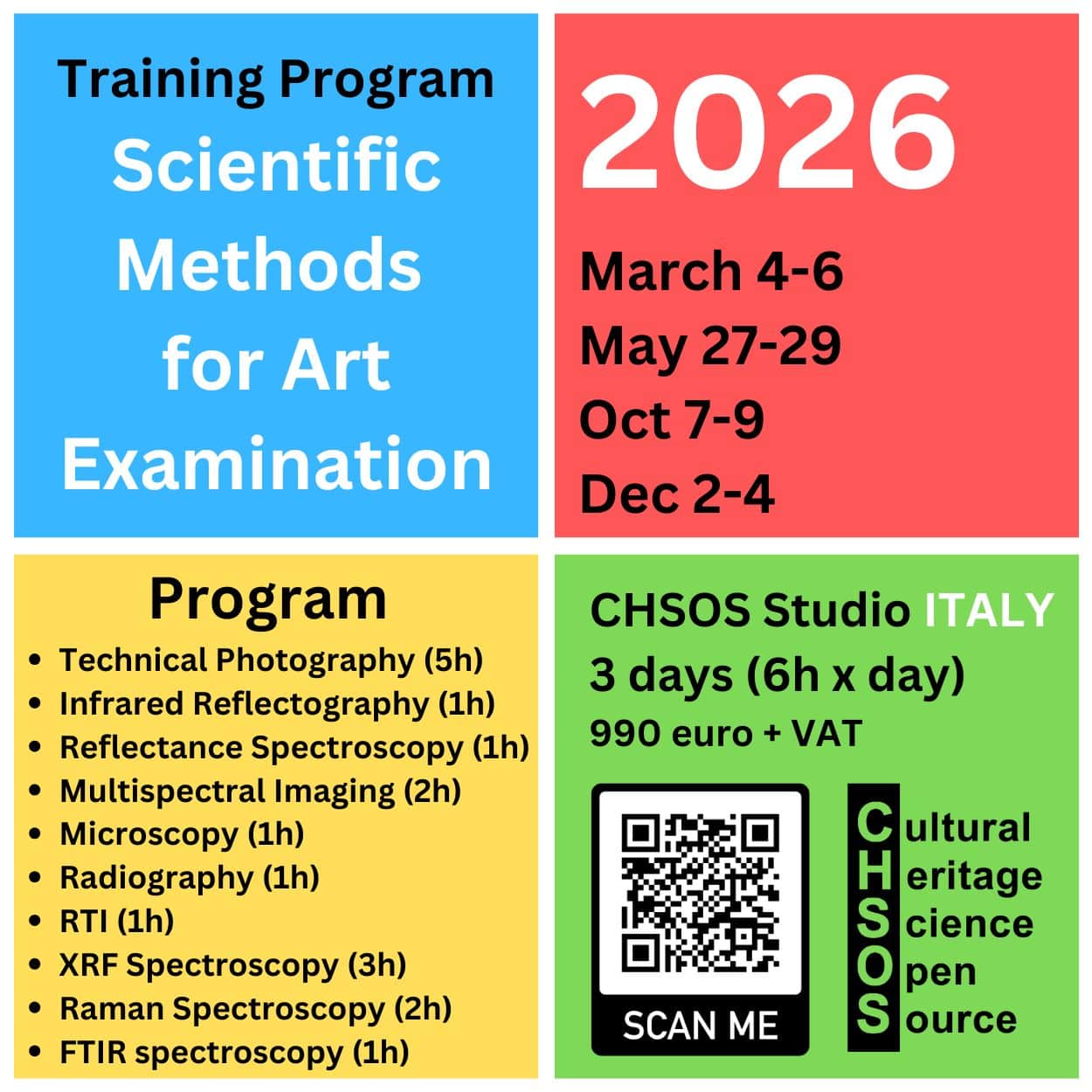
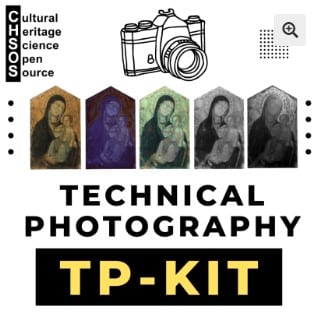
Learn Technical Photography for Art Examination
Technical Photography is one of the most powerful—and often overlooked—tools for the scientific examination of art and archaeology. If you are a conservator, scientist, or art collector and you are not yet familiar with this method, it is truly a missed opportunity. Using simple, affordable equipment and a clear methodology, Technical Photography allows you to reveal underdrawings, retouchings, material differences, and conservation issues in a completely non-invasive way. Far from being complex or inaccessible, it is an easy entry point into scientific analysis. In many cases, Technical Photography represents the first essential step toward a deeper understanding of artworks and archaeological objects.
Scientific Art Examination – Resources:
Getty Conservation Institute (GCI) – USA
The British Museum – Scientific Research Department – UK
Scientific Research Department – The Metropolitan Museum of Art, New York, USA
C2RMF (Centre de Recherche et de Restauration des Musées de France) – France
Rijksmuseum – Science Department – Netherlands