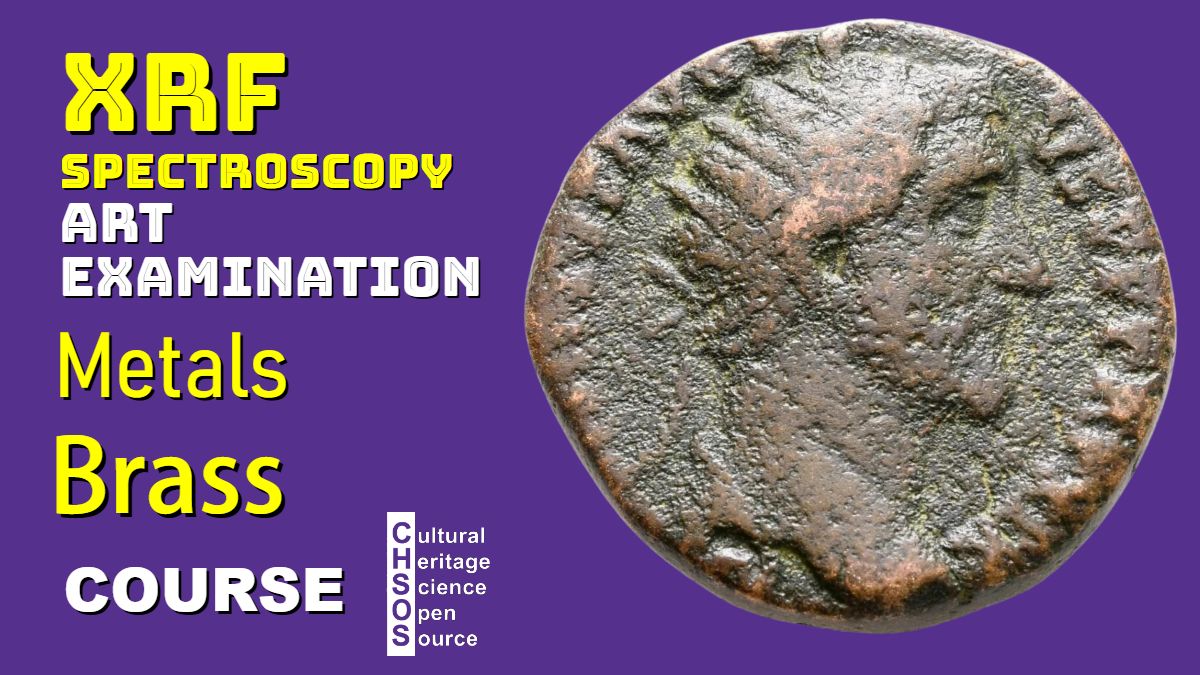
This lesson explores brass, one of the most significant copper alloys used in coinage since antiquity. Known as orichalcum by the Romans, brass played a crucial role in monetary systems and continues to appear in modern coinage.
Objectives
-
Understand the composition and historical development of brass as a coinage alloy.
-
Recognize the technological limitations on zinc content in antiquity versus later periods.
-
Compare examples of Roman and modern brass coins.
Materials
-
Sample Roman coins (dupondius of Antoninus Pius, sestertius of Commodus).
-
Modern brass coins (Italian 5 cents, 1939; Yugoslav 10 para, 1976).
Lesson Plan
-
Introduce brass as an alloy of copper and zinc, contrasting it with billon (copper + silver) and other alloys.
-
Discuss the Roman concept of orichalcum and the typical zinc content (10–20%).
-
Examine Roman brass coins, noting low zinc, small amounts of lead, and tin typical of the period.
-
Contrast with modern brass coins, highlighting technological advances that allowed higher zinc content (30–40%).
-
Conclude with a comparative discussion of Roman versus modern brass composition.


To reinforce the concepts discussed here, we also provide a video lesson that visually walks through the key points of this topic. Watching the video alongside the text can help you better understand and apply these ideas in practice.


The course XRF Spectroscopy for Art Examination introduces conservators, art historians, and scientists with interest in Art to the principles and practical applications of X-ray fluorescence (XRF) spectroscopy in the examination of artworks. The course starts with basic principles of XRF and gradually explores its role in identifying materials and methods used in the creation and conservation of art.
Course Objectives
- Understand the fundamentals of XRF spectroscopy and how it applies to the analysis of art.
- Learn the key features and limitations of XRF for examining art and archaeology.
- Gain skills in interpreting XRF spectra to identify specific elements in paint layers, inks and metals.