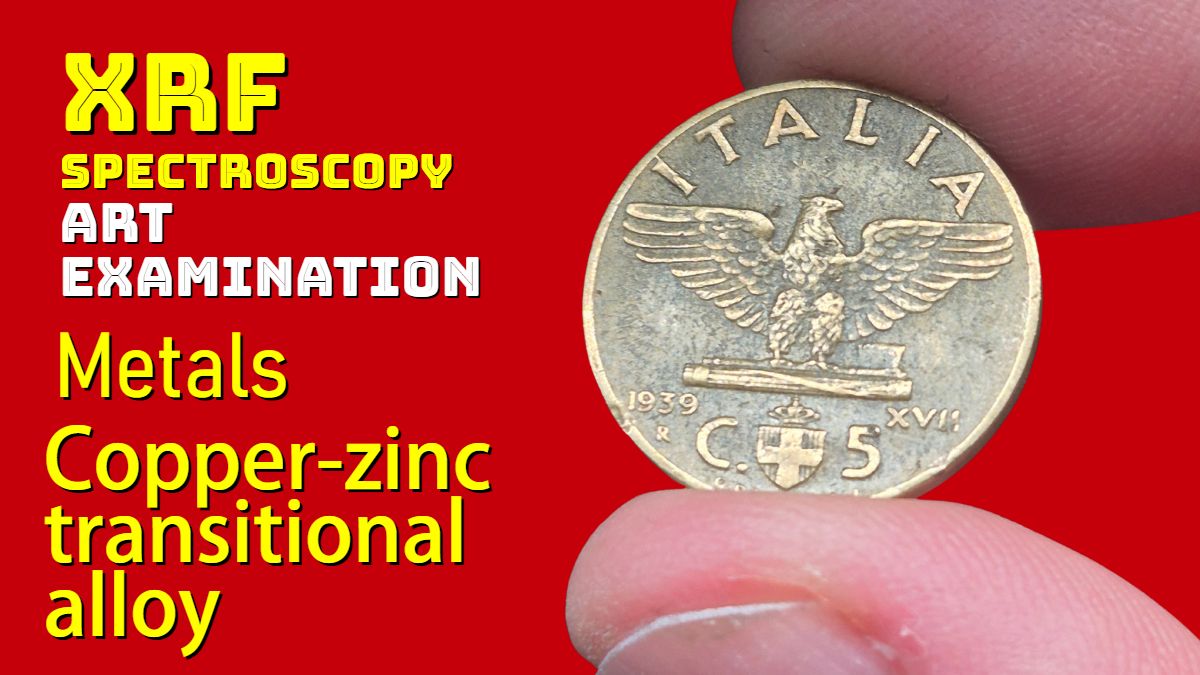
This lesson explores copper–zinc alloys, focusing on the compositional transition from copper to brass. Students will analyze how varying zinc content affects classification and how these differences appear in XRF spectra. Three coins from different periods and countries illustrate this transition, helping students recognize spectral variations linked to composition.
Objectives
-
Differentiate copper–zinc transitional alloys from standard brass.
-
Correlate zinc concentration with XRF spectral features.
-
Interpret characteristic peaks of copper and zinc to estimate alloy proportions.
Materials
-
Yugoslavian 10 para coin (1970)
-
U.S. Lincoln Memorial cent (1960s)
-
Italian 5 centesimi coin (1939)
Lesson Plan
-
Introduce the concept of copper-based alloys and define transitional alloys with less than 5% zinc.
-
Examine the Yugoslavian coin (≈30% Zn) as standard brass and note the relative intensity of copper and zinc peaks.
-
Analyze the Lincoln cent (≈5% Zn) to identify the borderline case between copper and brass.
-
Compare with the Italian 5 centesimi coin (≈1% Zn) to observe minimal zinc signal.
-
Discuss how spectral peak ratios (Cu Kβ vs Zn Kα) indicate alloy composition and transitions across samples.

To reinforce the concepts discussed here, we also provide a video lesson that visually walks through the key points of this topic. Watching the video alongside the text can help you better understand and apply these ideas in practice.


The course XRF Spectroscopy for Art Examination introduces conservators, art historians, and scientists with interest in Art to the principles and practical applications of X-ray fluorescence (XRF) spectroscopy in the examination of artworks. The course starts with basic principles of XRF and gradually explores its role in identifying materials and methods used in the creation and conservation of art.
Course Objectives
- Understand the fundamentals of XRF spectroscopy and how it applies to the analysis of art.
- Learn the key features and limitations of XRF for examining art and archaeology.
- Gain skills in interpreting XRF spectra to identify specific elements in paint layers, inks and metals.