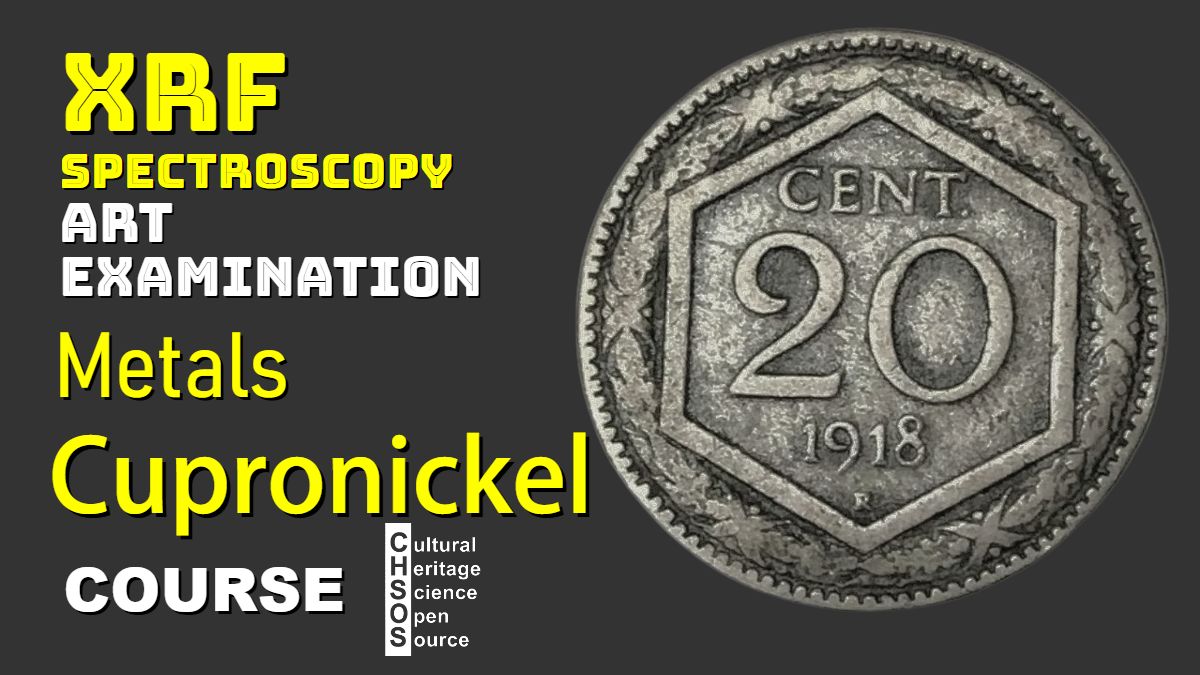
Cupronickel is a modern copper-based alloy composed of copper and nickel. First used for coinage in 1850, it has maintained a standard composition of 75% copper and 25% nickel. Its silvery appearance made it a durable and attractive choice for coins worldwide.
Objectives
-
Understand the composition and historical introduction of cupronickel.
-
Compare cupronickel with other copper alloys such as brass, bronze, and billon.
-
Analyze XRF spectra of different coins to observe consistency in alloy composition.
Materials
-
Samples of coins: Italian 20 cents (1918), U.S. 5 cents (1993), Euro coin (2008).
Lesson Plan
-
Introduce the concept of cupronickel as part of the broader family of copper alloys.
-
Present historical background and first use in coinage.
-
Examine coin samples across different periods and countries.
-
Compare XRF spectra to highlight the consistent alloy composition (75% Cu, 25% Ni).


To reinforce the concepts discussed here, we also provide a video lesson that visually walks through the key points of this topic. Watching the video alongside the text can help you better understand and apply these ideas in practice.


The course XRF Spectroscopy for Art Examination introduces conservators, art historians, and scientists with interest in Art to the principles and practical applications of X-ray fluorescence (XRF) spectroscopy in the examination of artworks. The course starts with basic principles of XRF and gradually explores its role in identifying materials and methods used in the creation and conservation of art.
Course Objectives
- Understand the fundamentals of XRF spectroscopy and how it applies to the analysis of art.
- Learn the key features and limitations of XRF for examining art and archaeology.
- Gain skills in interpreting XRF spectra to identify specific elements in paint layers, inks and metals.