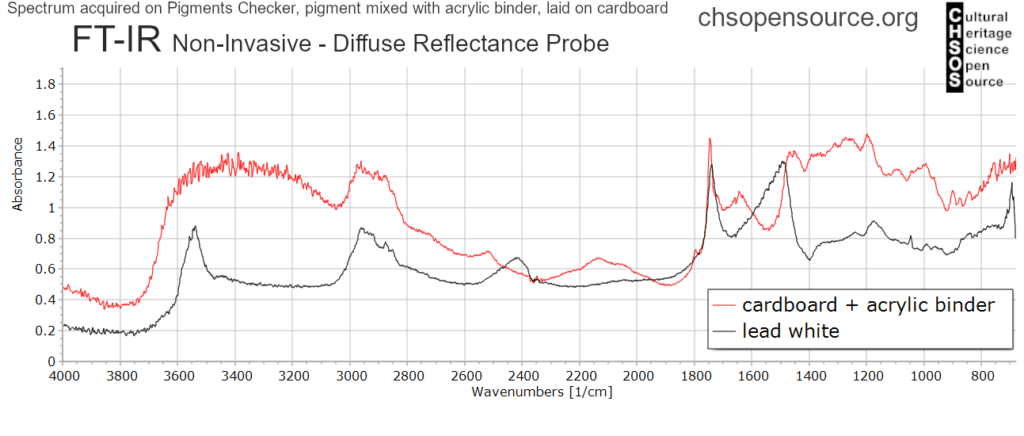
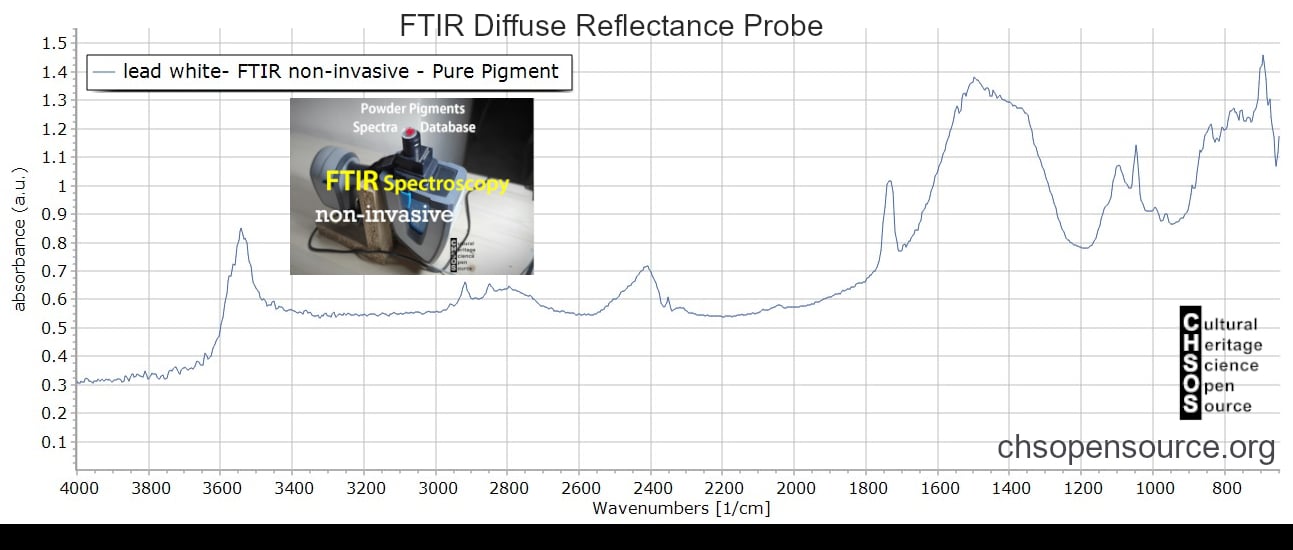
lead white
It was in use since antiquity and it was the only white used in European easel paintings until the 19th century
Manufacturer / product code: Kremer / 46000
Chemical description: basic lead carbonate
Color: white
Color Index: PW1
More info: Pigments Through The Ages
Lead white is one of the oldest and most influential pigments in the history of art, used for over two millennia across cultures and techniques. Known since antiquity, it was produced through the “stack process,” in which metallic lead was exposed to vinegar and warmth, gradually transforming into basic lead carbonate. This method, already described by Pliny the Elder, remained essentially unchanged until the industrial era. Lead white became indispensable to Greek and Roman painters, who valued its opacity and bright, warm tone. It continued to dominate throughout the Middle Ages, especially in manuscript illumination and tempera painting.
During the Renaissance, lead white reached its height of importance. Masters like Titian, Rembrandt, and Vermeer relied on it not only for highlights but also for creating subtle flesh tones and building underlying layers thanks to its excellent drying properties in oil. Its role extended into the Baroque and Neoclassical periods, where it remained the primary white pigment for artists across Europe.
Only in the 19th and early 20th centuries did lead white begin to decline, replaced gradually by zinc white, lithopone, and later titanium white due to health concerns and tightening regulations.
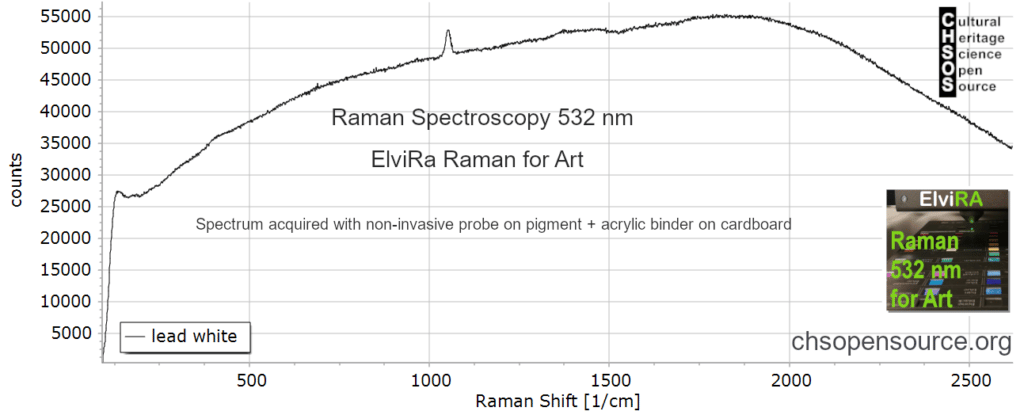
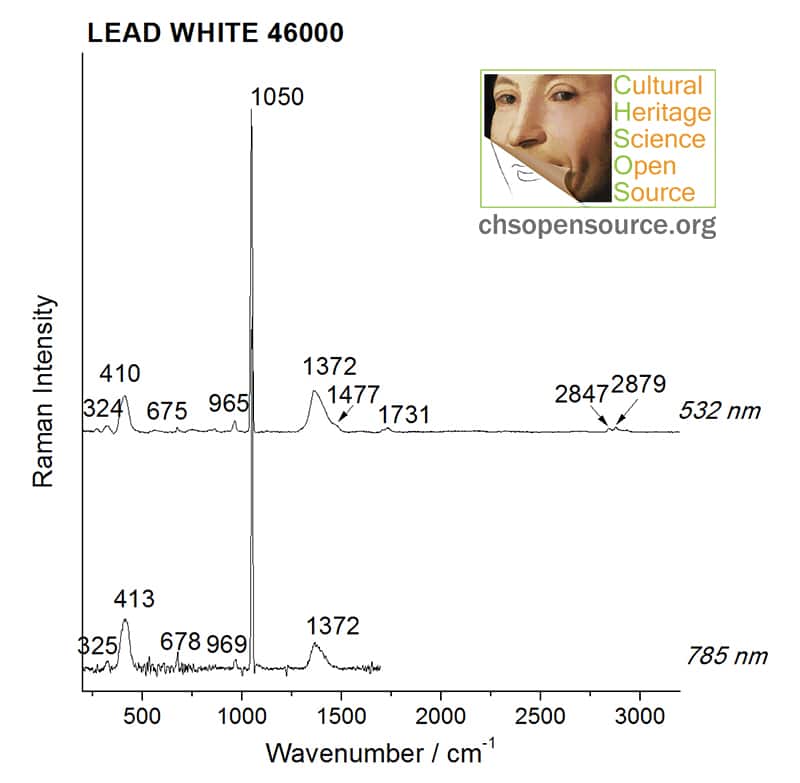
Raman Spectroscopy 532 nm – ElviRa Spectrometer for Art
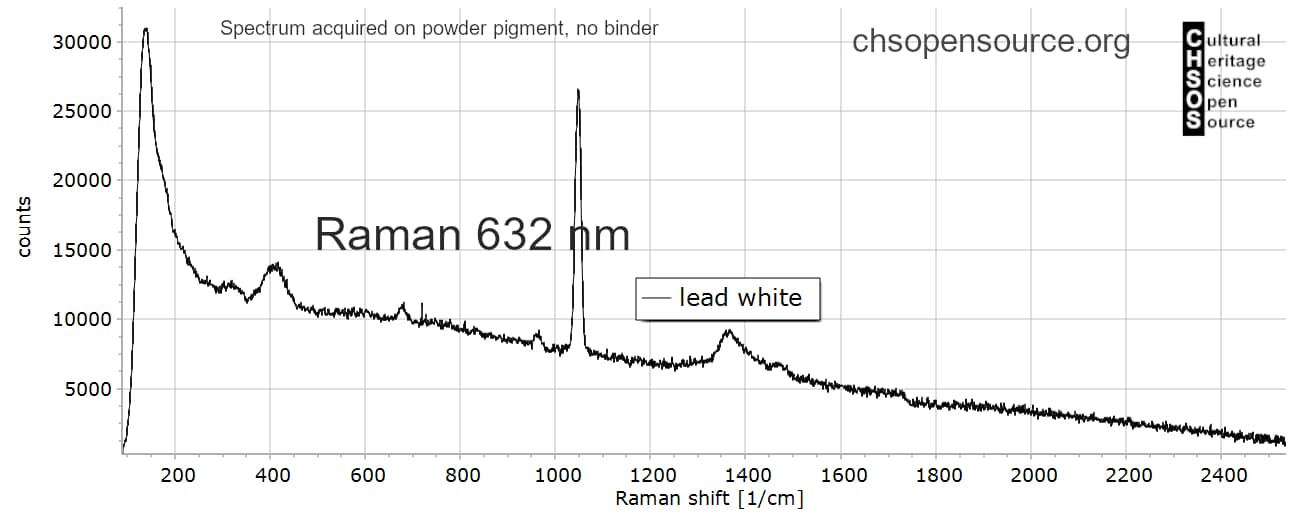
Raman spectroscopy 632 nm
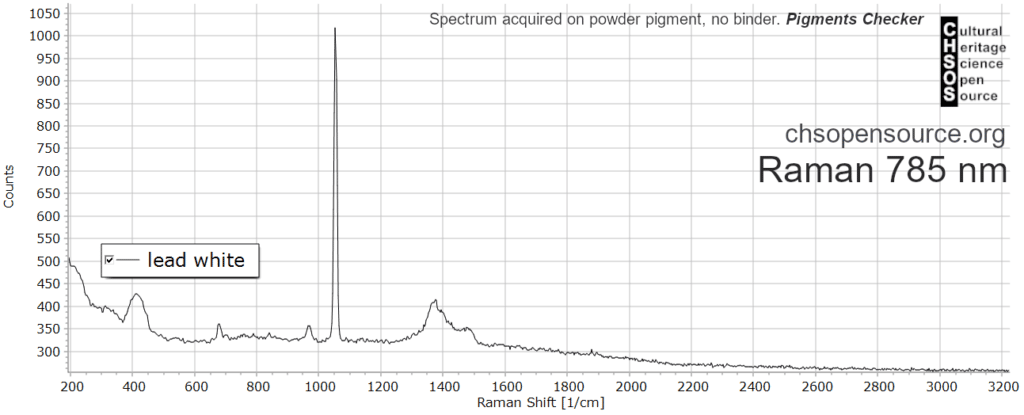
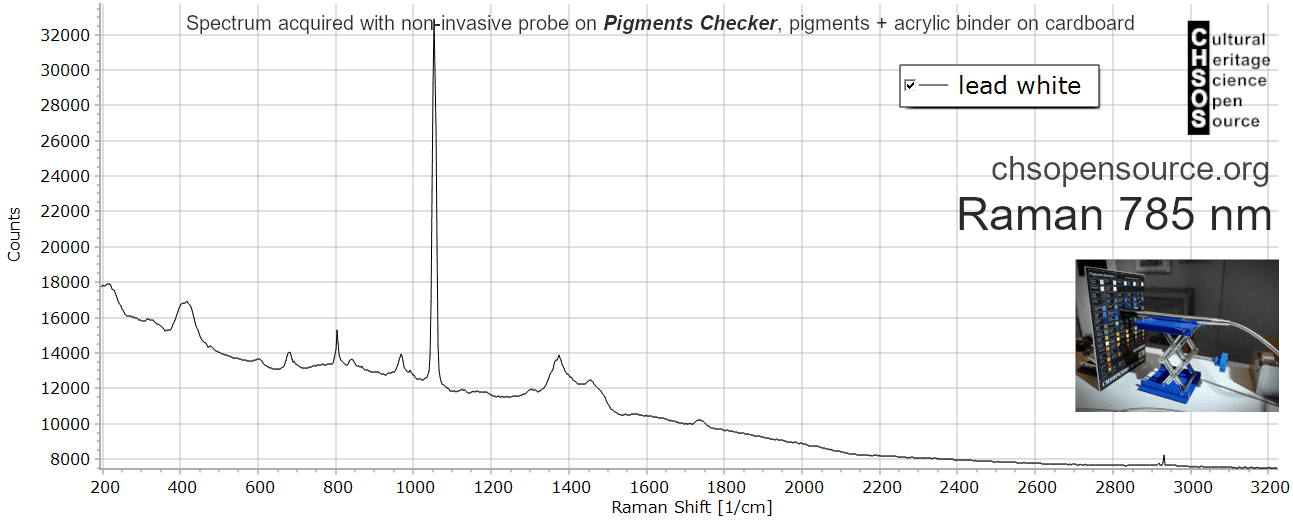
Raman spectroscopy 785 nm
Pigments (powder, no binder)
Pigments with acrylic binder (Pigments Checker)
Pure pigments (no binder, just powder)
DOWNLOAD paper: “Pigments Checker version 3.0, a handy set for conservation scientists: A free online Raman spectra database”
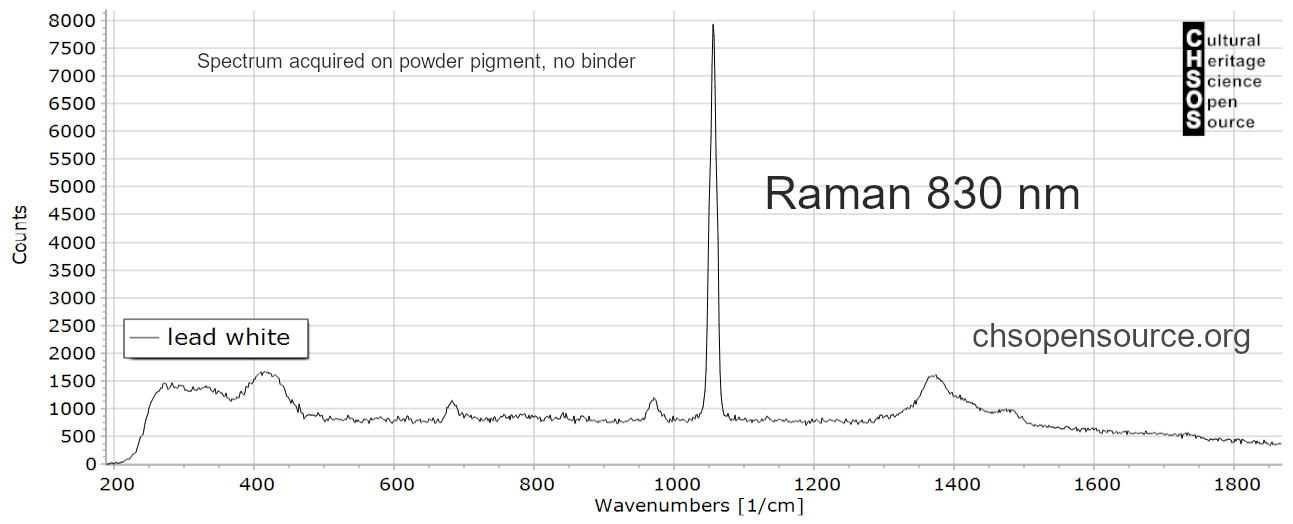
Raman spectroscopy 830 nm
Pigments (powder, no binder)
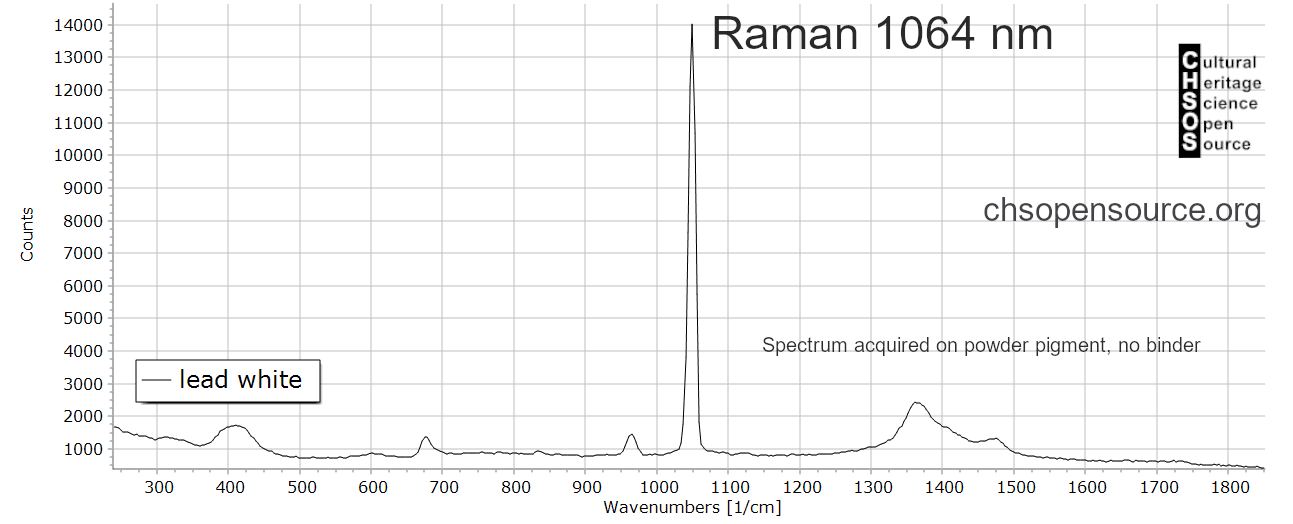
Raman spectroscopy 1064 nm
Pigments (powder, no binder)
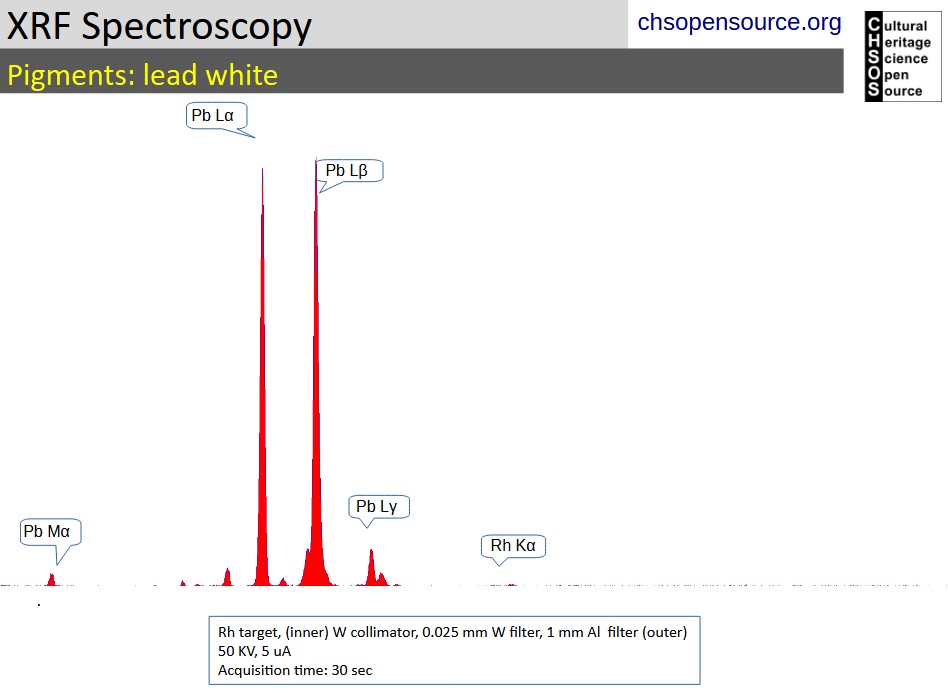
XRF spectroscopy
Reflectance Spectroscopy (200-1000 nm) – GorgiasUV Spectrometer
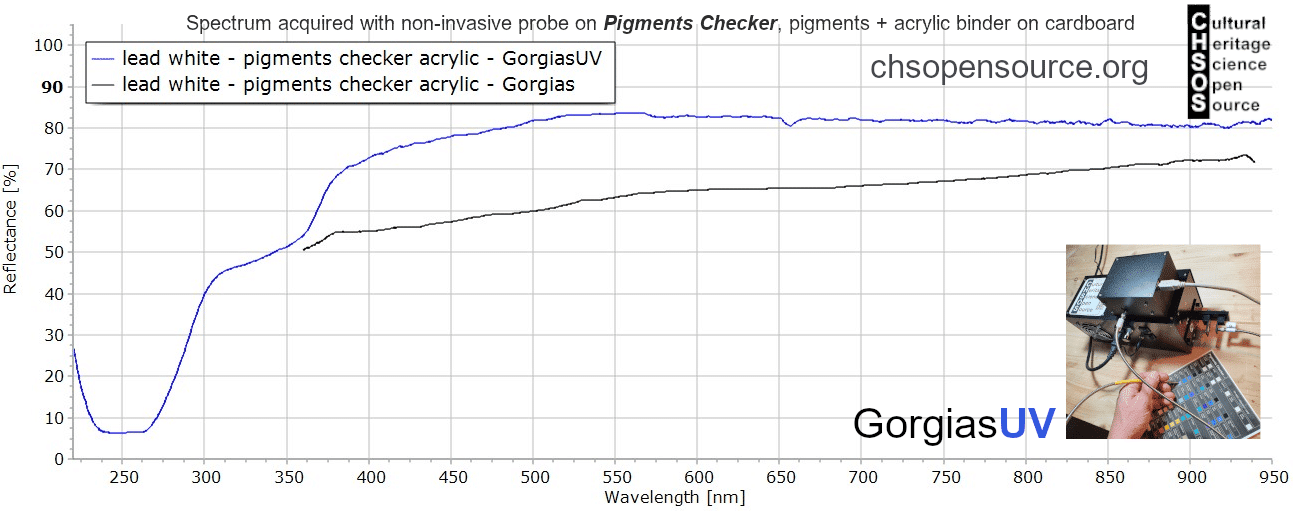
Reflectance spectroscopy – Gorgias Spectrometer for Art
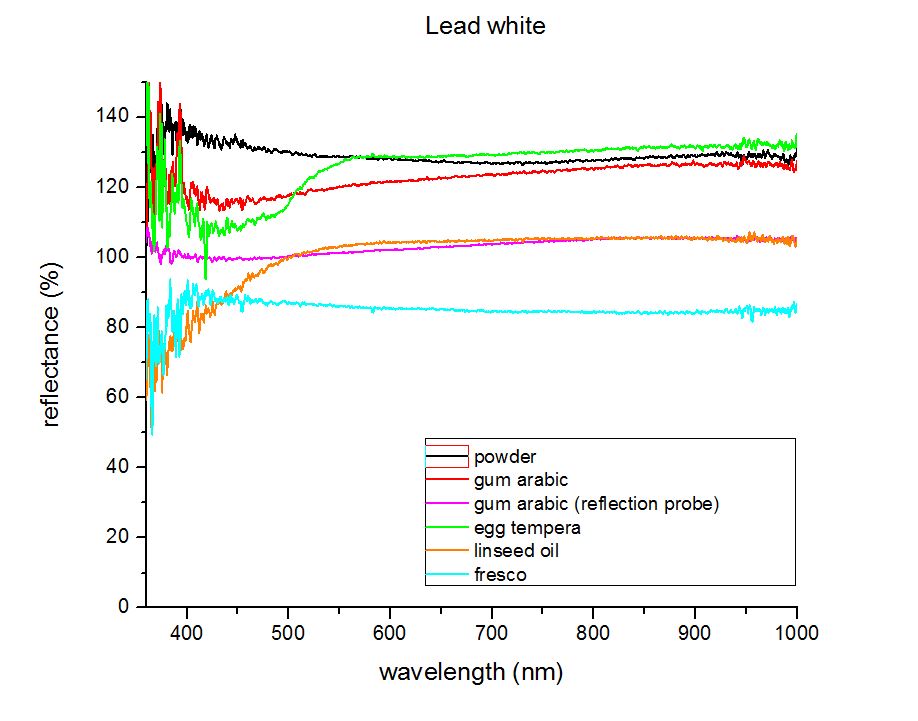
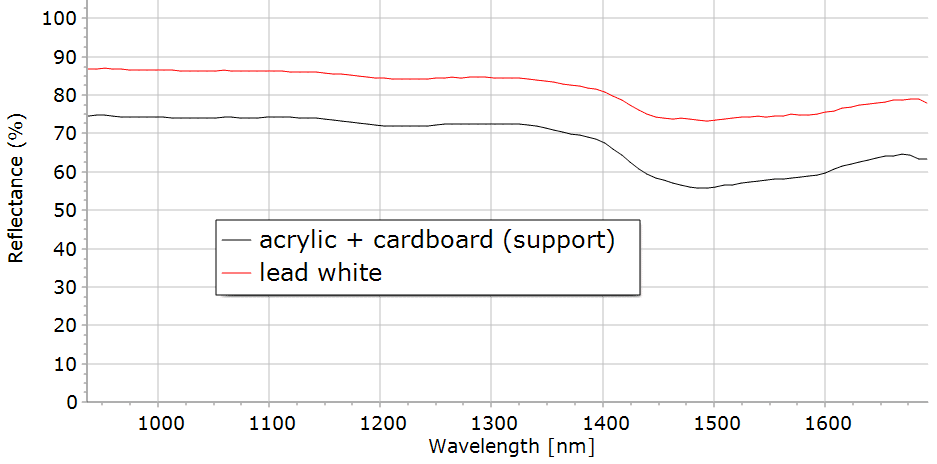
NIR Reflectance spectroscopy
FT-IR Spectroscopy (Non-invasive Diffuse Reflectance Probe)