Alizarine
Alizarine is the artificial form of madder lake, developed in 1869, it was the first natural pigment duplicated artificially
Alizarine, also known as artificial madder lake, is a synthetic pigment first reproduced in 1869, becoming the earliest natural dye to be industrially duplicated.
Originating from the centuries-old tradition of madder-derived pigments, alizarin—which occurs naturally in the roots of Rubia tinctorum—crafted vivid reds in ancient textiles and artworks
The breakthrough by German chemists Carl Gräbe and Carl Liebermann enabled affordable and consistent production of this brilliant red pigment, transforming artistic materials and textile industries alike.
Alizarine delivers a deep, transparent crimson shade prized in painting and textiles.
Alizarin was the first natural dye to be successfully synthesized; this synthetic version perfectly replicated the color properties of natural madder lake, but with far greater consistency, availability, and lower cost. Artificial alizarin quickly replaced plant-derived madder in textile dyeing, printing, and artist pigments. In the art world, it offered a brilliant, transparent red ideal for glazes and subtle color mixing.
Manufacturer / product code: Kremer / 23611
Chemical description: organic compound, anthraquinone. Kremer PDF
Color: red
Color Index: PR 83
More info: CAMEO
Use: Alizarin was developed in 1869 and it showed to be superior to madder lake slowly replacing it.
Raman Spectroscopy 532 nm – ElviRa Spectrometer for Art

Raman spectroscopy 785 nm
Pigments (powder, no binder)

Pigments with acrylic binder (Pigments Checker)

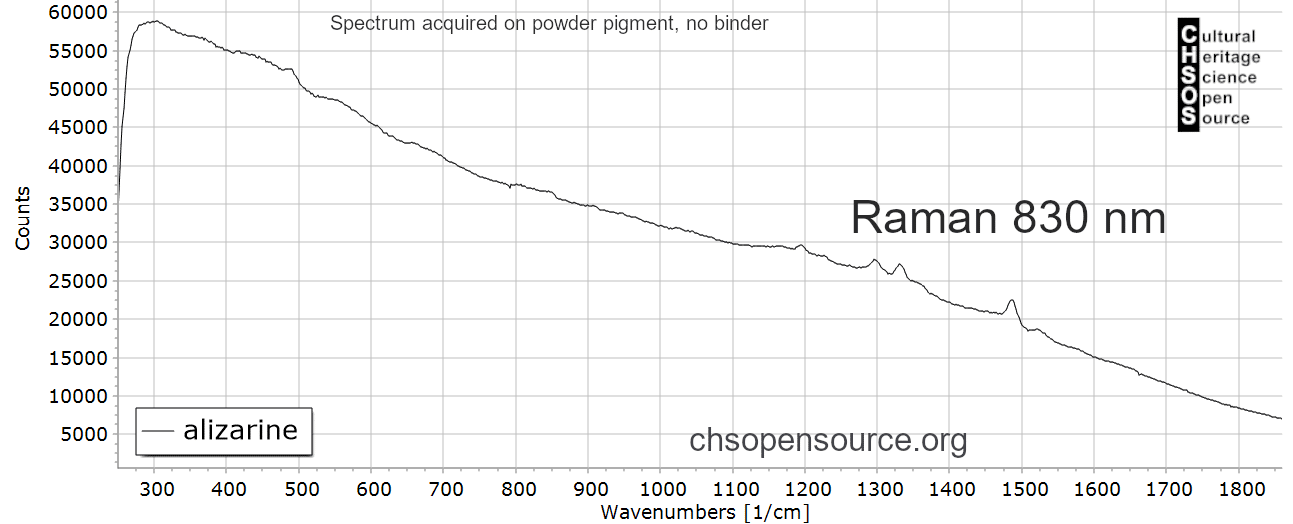
Raman spectroscopy 830 nm
Pigments (powder, no binder)
Raman spectroscopy 1064 nm
Pigments (powder, no binder)

Reflectance Spectroscopy (200-1000 nm) – GorgiasUV Spectrometer

Reflectance spectroscopy – Gorgias Spectrometer for Art

NIR Reflectance spectroscopy

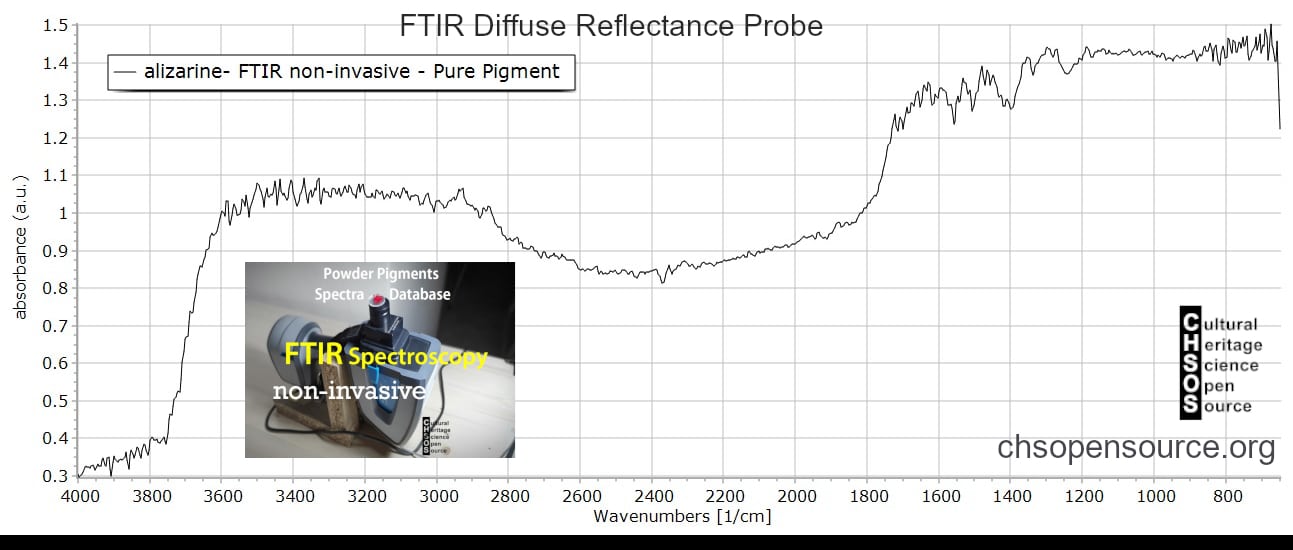
FT-IR Spectroscopy (Non-invasive Diffuse Reflectance Probe)