cadmium green
Cadmium yellow is sometimes mixed with phthalocyanine blue to give a bright green mixture called cadmium green. It’s used in art conservation.
Manufacturer / product code: Kremer / 44510
Chemical description: mixture of barium sulfate, cadmium yellow, phthalocyanine blue
Color: green
Color Index: PW 21, PY 35, PB 15
Raman Spectroscopy 532 nm – ElviRa Spectrometer for Art

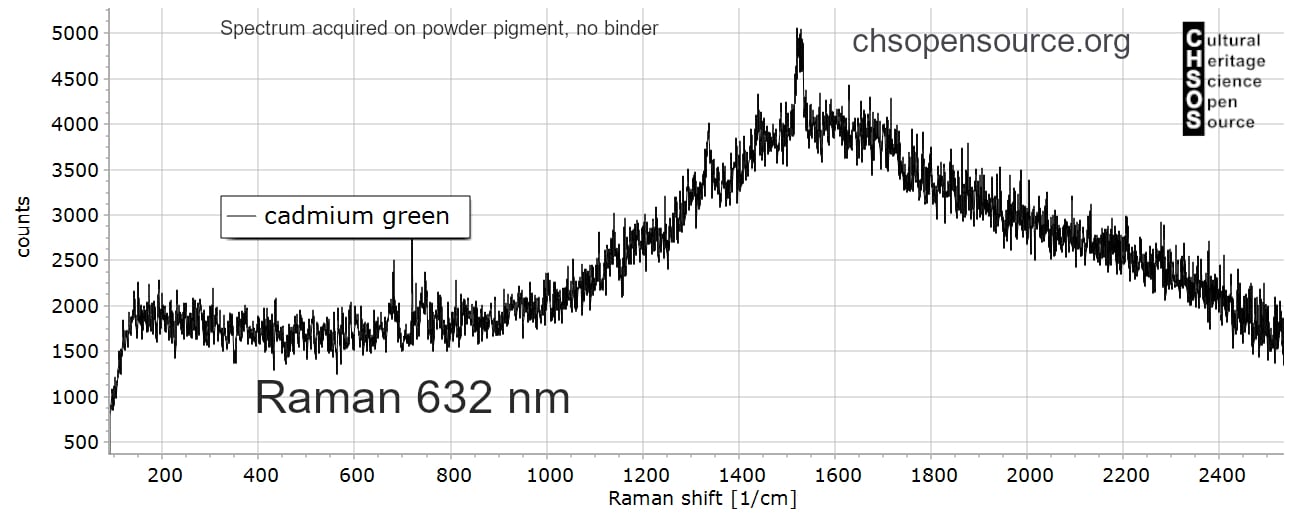
Raman Spectroscopy 632 nm – ElviRa Spectrometer for Art
Raman spectroscopy 785 nm
Pigments (powder, no binder)

Pigments with acrylic binder (Pigments Checker)

Pure pigments (no binder, just powder)
DOWNLOAD paper: “Pigments Checker version 3.0, a handy set for conservation scientists: A free online Raman spectra database”

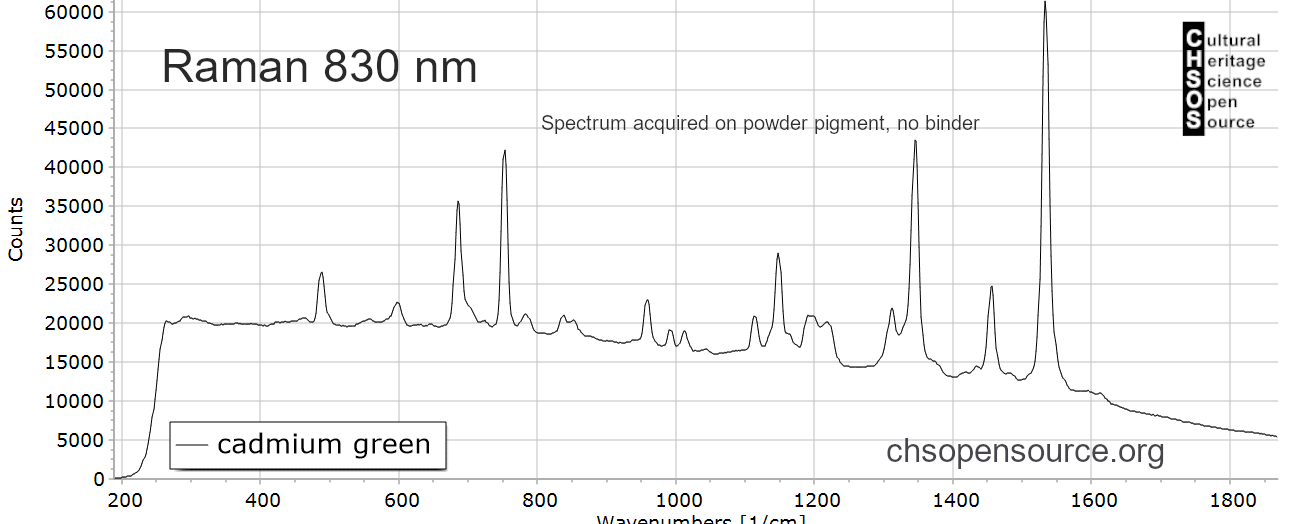
Raman spectroscopy 830 nm
Pigments (powder, no binder)
Raman spectroscopy 1064 nm
Pigments (powder, no binder)

XRF spectroscopy
DOWNLOAD previous database from Pigments Checker V.3 DOWNLOAD paper: R. Larsen, N. Coluzzi, A. Cosentino “Free XRF Spectroscopy database of Pigments Checker” Intl Journal of Conservation Science.

Reflectance Spectroscopy (200-1000 nm) – GorgiasUV Spectrometer

Reflectance spectroscopy – Gorgias Spectrometer for Art
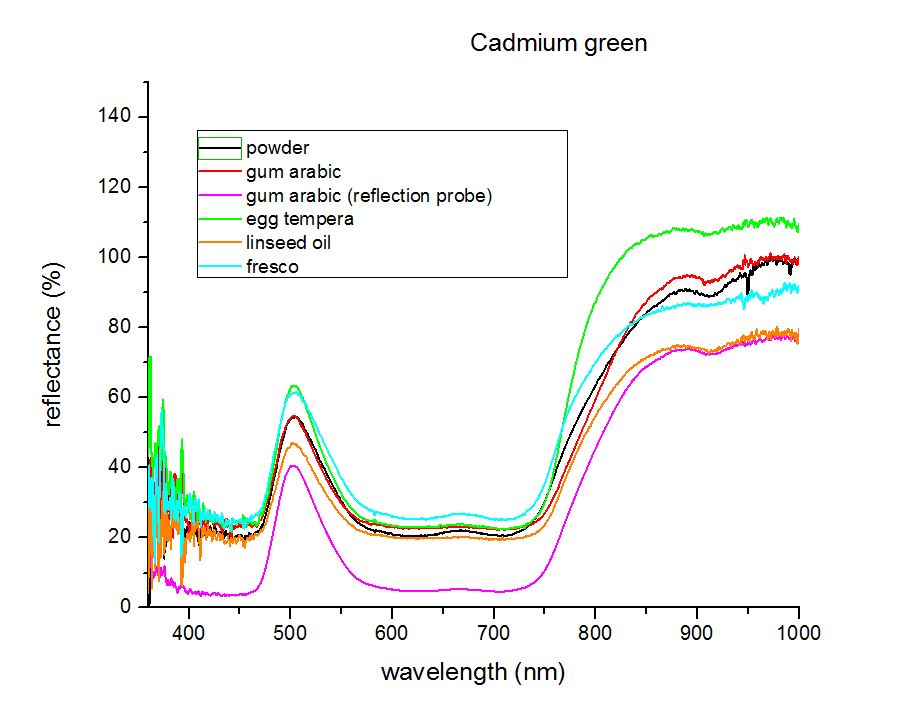
NIR Reflectance spectroscopy

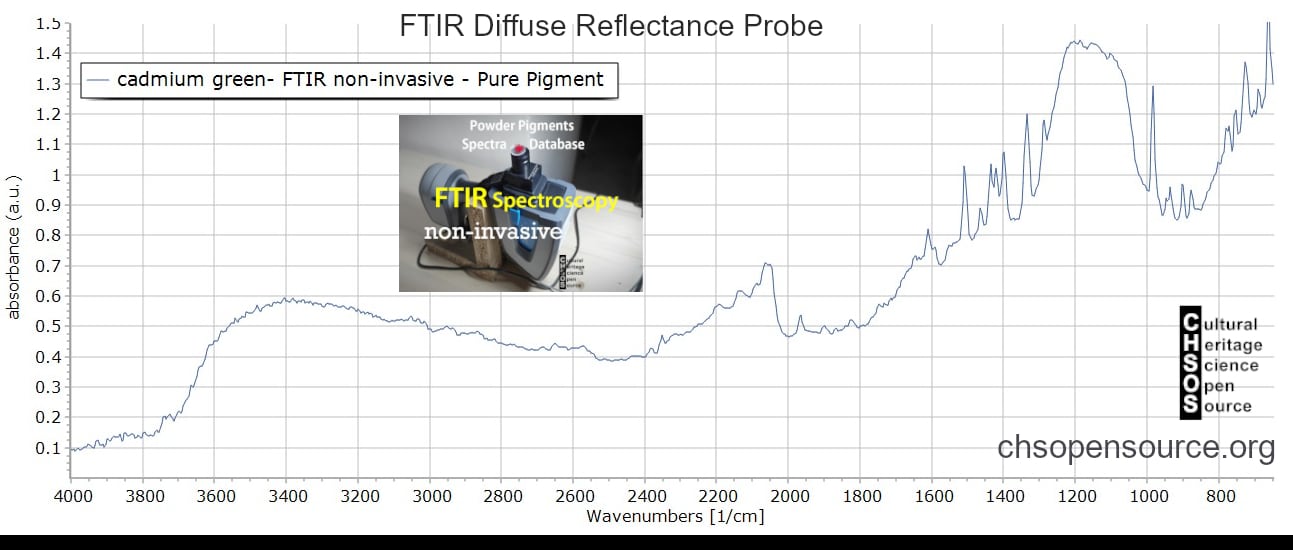
FT-IR Spectroscopy (Non-invasive Diffuse Reflectance Probe)