Matisse recounts that he attempted, unsuccessfully, to persuade Renoir to adopt a “cadmium red” in place of the traditional cinnabar.
Manufacturer / product code: Kremer / 21120
Chemical description: cadmium selenosulfide;. Kremer PDF
Color: red
Color Index: PR108
More info: Pigments Through The Ages
Cadmium Red is a vivid, high-impact red pigment prized for its intensity, opacity, and exceptional permanence. Chemically based on cadmium sulfoselenide, it was introduced in the early 20th century and quickly became a cornerstone of modern artists’ palettes. Cadmium red is available in a range of hues—from light, slightly orange-leaning reds to deep, bluish crimson tones—allowing painters fine control over chromatic expression. One of its defining qualities is its strong covering power, which makes it ideal for bold passages, highlights, and confident brushwork. Unlike many earlier red pigments, it exhibits outstanding lightfastness and chemical stability, retaining its brilliance over decades when properly applied. For this reason, cadmium red has been widely used in oil, acrylic, and watercolor painting, as well as in industrial and design applications. Despite concerns related to cadmium toxicity that have led to regulated use, its optical performance continues to set a benchmark against which alternative red pigments are measured.
Raman spectroscopy 632 nm


XRF spectroscopy
XRF Spectroscopy Pigments-Checker Database (102501 downloads )
DOWNLOAD previous database from Pigments Checker V.3 DOWNLOAD paper: R. Larsen, N. Coluzzi, A. Cosentino “Free XRF Spectroscopy database of Pigments Checker” Intl Journal of Conservation Science.

Reflectance Spectroscopy (200-1000 nm) – GorgiasUV Spectrometer
Reflectance Spectroscopy (200-1000 nm) (GorgiasUV) Pigments-Checker Database (105253 downloads )

Reflectance spectroscopy – Gorgias Spectrometer for Art
Reflectance Spectroscopy (350-950 nm) (Gorgias) Pigments-Checker Database (110856 downloads )

NIR Reflectance spectroscopy
NIR-Reflectance Spectroscopy (930-1690 nm) Pigments-Checker Database (99672 downloads )

FT-IR Spectroscopy (Non-invasive Diffuse Reflectance Probe)

FTIR Diffuse Reflectance Spectroscopy Pigments-Checker Database (88387 downloads )

FTIR non-invasive Spectroscopy Pigments (pure, no binder) Database (91261 downloads )
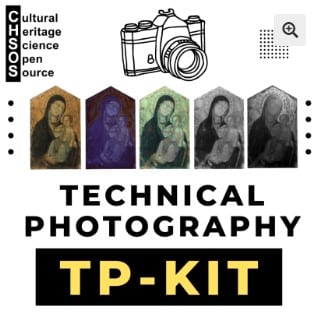
Learn Technical Photography for Art Examination
Technical Photography is one of the most powerful—and often overlooked—tools for the scientific examination of art and archaeology. If you are a conservator, scientist, or art collector and you are not yet familiar with this method, it is truly a missed opportunity. Using simple, affordable equipment and a clear methodology, Technical Photography allows you to reveal underdrawings, retouchings, material differences, and conservation issues in a completely non-invasive way. Far from being complex or inaccessible, it is an easy entry point into scientific analysis. In many cases, Technical Photography represents the first essential step toward a deeper understanding of artworks and archaeological objects.


Scientific Art Examination – Resources:
Getty Conservation Institute (GCI) – USA
The British Museum – Scientific Research Department – UK
Scientific Research Department – The Metropolitan Museum of Art, New York, USA
C2RMF (Centre de Recherche et de Restauration des Musées de France) – France
Rijksmuseum – Science Department – Netherlands