pitty polarized light kit

Polarized Light Photography Kit – Pitty

Pitty - Polarized Light Kit

Polarized light photography is an accessible imaging technique for the documentation and study of artworks and archaeological materials. By controlling the polarization state of illumination and capture, this method selectively suppresses specular reflections from glossy or uneven surfaces, allowing the camera to record light scattered from within the material itself. The result is a clearer visualization of surface color, texture, and fine detail that is often obscured in conventional visible-light photography.

In art and archaeology, polarized photography is especially valuable for examining painted surfaces, varnishes, metals, ceramics, stone, and glass. Cross-polarized setups—where the polarization of the light source is oriented perpendicular to that of the camera filter—effectively remove surface glare, revealing underlying brushwork, pigment distribution, craquelure, and subtle chromatic variations. This makes the technique an essential tool for condition reporting, high-quality documentation, and comparative studies.

Beyond reflection control, polarized light photography can also provide material insights. Changes in surface response under polarization may help distinguish between original paint and later retouching, identify overpaints, or highlight differences between matte and glossy binders. In archaeological contexts, it enhances legibility of inscriptions, tool marks, and surface wear on objects with complex or reflective finishes, such as polished stone, metal artifacts, or glazed ceramics.

Importantly, polarized light photography is non-invasive, repeatable, and compatible with standard photographic equipment, making it well suited for fieldwork, laboratories, and museum environments. When integrated with other technical imaging methods—such as ultraviolet fluorescence, infrared reflectography, and X-radiography—it contributes to a more complete understanding of an object’s material structure and conservation history. As such, polarized light photography has become a fundamental component of modern technical documentation in art and archaeological research.

Table of Contents

Features

Polarizer Filters set Pitty – PDF (1609 downloads )

Pitty is the polarized light photography kit for our halogen lamp ELIO. It contains all you need to perform Polarized Light Photography: circular polarizer filter for the camera, LEDs lamps to be mounted on ELIO frames, linear polarizer screens for ELIO frames. Pitty transforms the general purpose halogen lamp Elio into a flawless linear polarized light source for effective polarized light photos.

Pitty – Polarized Light Photo KIT. Pitty comes in a pouch and fits two of our halogen lamps ELIO.

Pitty makes ELIO a flawless source of polarized light.  Pitty is suitable for 2 of our Halogen lamps ELIO. Pitty contains 2 LEDs lamps to replace the halogen lamps and 2 linear polarizer screen sheets.

Pitty - Polarized Light Photo KIT. Pitty comes in a pouch and fits two of our halogen lamps ELIO.
Pitty - Polarized Light KIT
Pitty - Polarized Light Photo KIT

Components

LEDs

Voltage

AC 110 or 220 V;  Power: 5 W.

Size and shape

R7S LED, 78 mm, aluminum PBC.

LEDs specs

cold white (6000K)


Learn Technical Photography for Art Examination

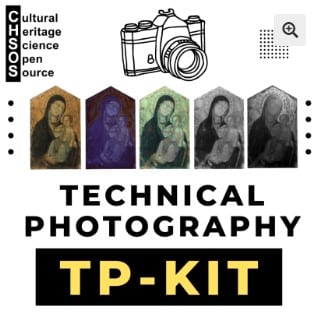
Technical Photography is one of the most powerful—and often overlooked—tools for the scientific examination of art and archaeology. If you are a conservator, scientist, or art collector and you are not yet familiar with this method, it is truly a missed opportunity. Using simple, affordable equipment and a clear methodology, Technical Photography allows you to reveal underdrawings, retouchings, material differences, and conservation issues in a completely non-invasive way. Far from being complex or inaccessible, it is an easy entry point into scientific analysis. In many cases, Technical Photography represents the first essential step toward a deeper understanding of artworks and archaeological objects.


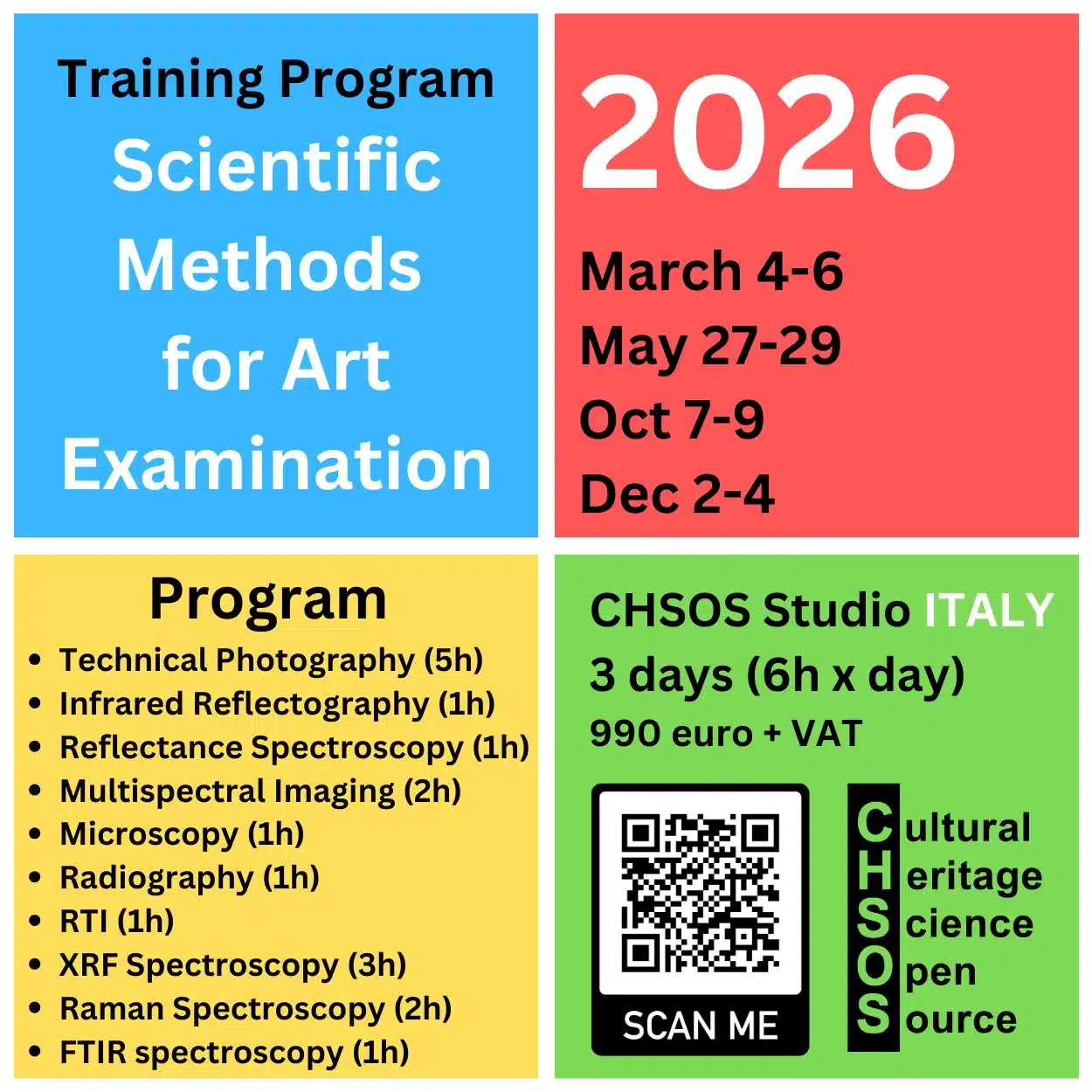
Training 2026

Scientific Art Examination – Resources:
Getty Conservation Institute (GCI) – USA
The British Museum – Scientific Research Department – UK
Scientific Research Department – The Metropolitan Museum of Art, New York, USA
C2RMF (Centre de Recherche et de Restauration des Musées de France) – France
Rijksmuseum – Science Department – Netherlands