Home » Products » Ultraviolet Lamp » Fabrizio UV Lamp – Applications
Using a FABRIZIO UV lamp for art examination can reveal a wealth of information about the artwork, from its condition to its authenticity. Here are a few ideas on how to utilize the UV lamp effectively in this context:
Identify Restorations: UV light can help reveal areas where the painting has been restored or touched up. Restorative materials often fluoresce differently than the original materials, allowing you to see the extent and location of repairs.
Distinguish Between Old and New Paint: Newly applied paint may appear differently under UV light compared to the original paint, helping to identify areas of recent intervention.
Check Authenticity: Use the UV lamp to examine signatures, dates, and inscriptions on the artwork. Authentic signatures often fluoresce differently than forgeries or later additions.
Hidden Inscriptions: UV light can sometimes reveal hidden or faded inscriptions that are not visible under normal lighting conditions.
Varnish Condition: UV light can highlight areas where varnish has deteriorated or been applied unevenly. Variations in the fluorescence of the varnish layer can indicate its age and condition.
Identify Different Layers: Examining the surface under UV light can help distinguish between various layers of varnish, glaze, or other coatings applied to the artwork.
Previous Repairs: UV light can reveal old repairs, such as filled cracks or patched holes, which may not be visible to the naked eye.
Water Damage: Areas affected by water damage may fluoresce differently, indicating past exposure to moisture.
Materials Analysis: Different pigments and materials fluoresce in unique ways under UV light. By analyzing these fluorescence patterns, you can verify if the materials used are consistent with the period and style of the artist.
Detect Forgeries: Forgeries often use modern materials that fluoresce differently than historical ones, aiding in the identification of non-authentic works.
Reveal Hidden Details: UV light can sometimes reveal underdrawings or preliminary sketches made by the artist that are not visible under normal light. These can provide insight into the artist’s process and techniques.
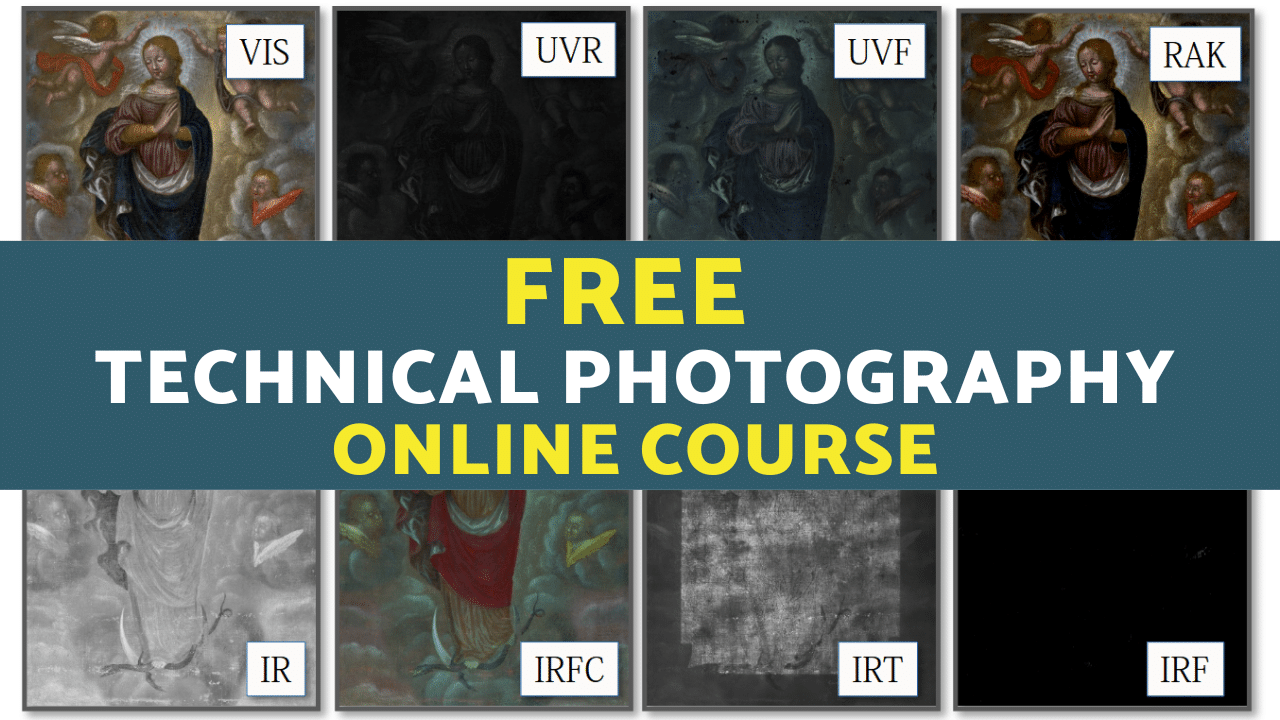
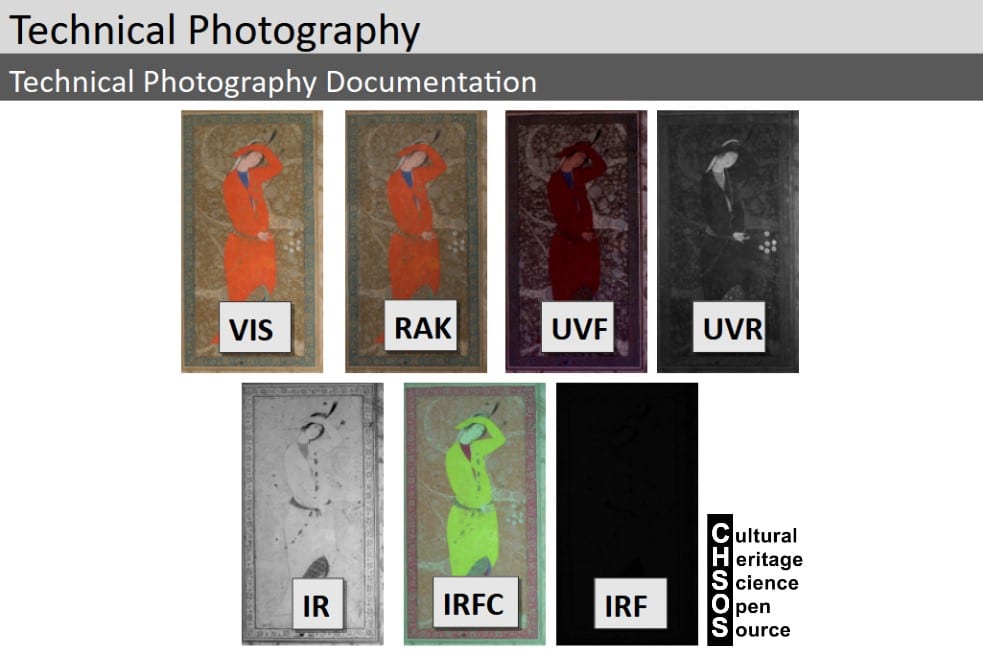
Technical Photography is one of the most powerful—and often overlooked—tools for the scientific examination of art and archaeology. If you are a conservator, scientist, or art collector and you are not yet familiar with this method, it is truly a missed opportunity. Using simple, affordable equipment and a clear methodology, Technical Photography allows you to reveal underdrawings, retouchings, material differences, and conservation issues in a completely non-invasive way. Far from being complex or inaccessible, it is an easy entry point into scientific analysis. In many cases, Technical Photography represents the first essential step toward a deeper understanding of artworks and archaeological objects.
Scientific Art Examination – Resources:
Getty Conservation Institute (GCI) – USA
The British Museum – Scientific Research Department – UK
Scientific Research Department – The Metropolitan Museum of Art, New York, USA
C2RMF (Centre de Recherche et de Restauration des Musées de France) – France
Rijksmuseum – Science Department – Netherlands