Raman spectroscopy equipment

Raman Spectroscopy

Raman Spectroscopy

Raman spectroscopy is a useful method for the examination of works of art and archaeology. We provide this analysis on tiny samples using lab Raman instruments. Raman allows to identify a large number of pigments.

Table of Contents

Instruments

In our studio we operate six Raman spectroscopy systems equipped with different laser wavelengths, allowing us to optimize analytical conditions for each specific material. By selecting the most suitable excitation wavelength, we can significantly reduce or overcome fluorescence interference, enhancing spectral clarity and reliability. This flexibility is particularly important when examining complex artistic materials, aged binders, varnishes, and sensitive pigments. Our instrumentation includes both macro-Raman systems for in situ, non-invasive analysis of artworks and micro-Raman microscopes for high-magnification investigation of minute samples and cross-sections. This combined capability ensures precise molecular identification across a wide range of cultural heritage materials.

Resources

Publications on Raman Spectroscopy
M.C. Caggiani, A. Cosentino, A. Mangone “Pigments Checker version 3.0, a handy set for conservation scientists: A free online Raman spectra database” Microchemical Journal 129, 123–132, 2016..


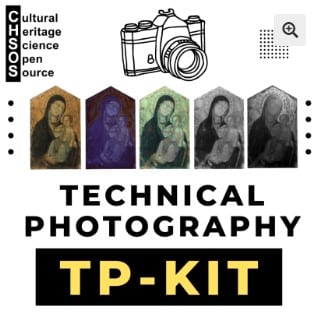
Learn Technical Photography for Art Examination

Technical Photography is one of the most powerful—and often overlooked—tools for the scientific examination of art and archaeology. If you are a conservator, scientist, or art collector and you are not yet familiar with this method, it is truly a missed opportunity. Using simple, affordable equipment and a clear methodology, Technical Photography allows you to reveal underdrawings, retouchings, material differences, and conservation issues in a completely non-invasive way. Far from being complex or inaccessible, it is an easy entry point into scientific analysis. In many cases, Technical Photography represents the first essential step toward a deeper understanding of artworks and archaeological objects.


Training 2026

Scientific Art Examination – Resources:
Getty Conservation Institute (GCI) – USA
The British Museum – Scientific Research Department – UK
Scientific Research Department – The Metropolitan Museum of Art, New York, USA
C2RMF (Centre de Recherche et de Restauration des Musées de France) – France
Rijksmuseum – Science Department – Netherlands