Home » Case Studies » 19th-century North Indian Manuscript
19th-century North Indian Manuscript
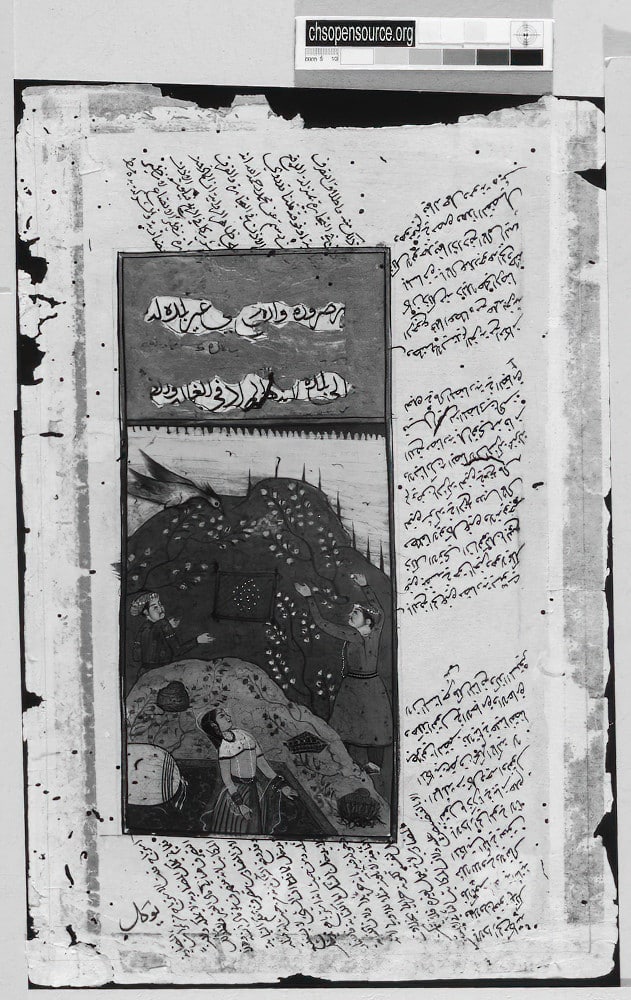
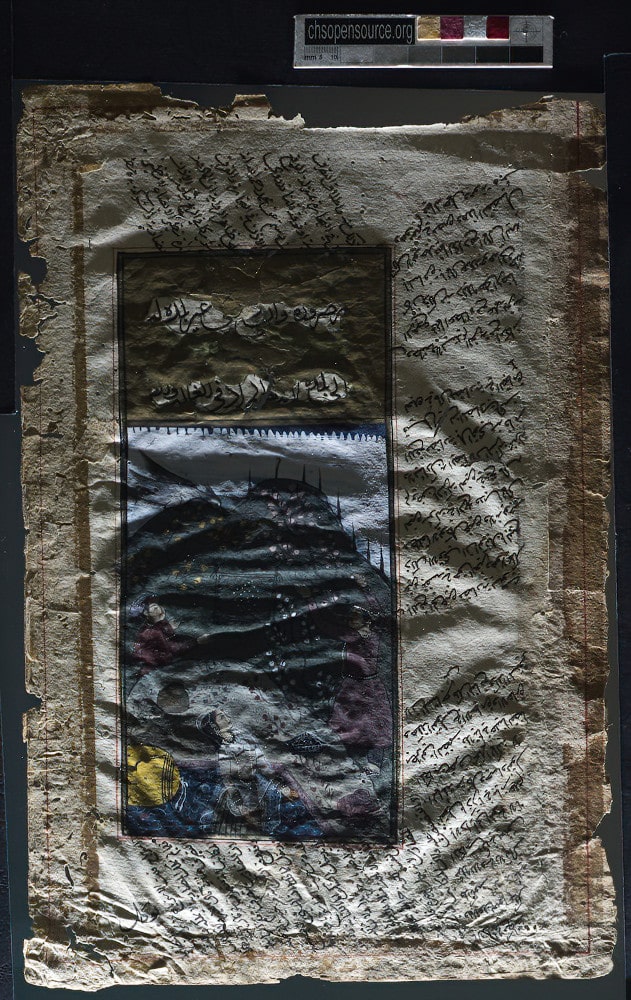
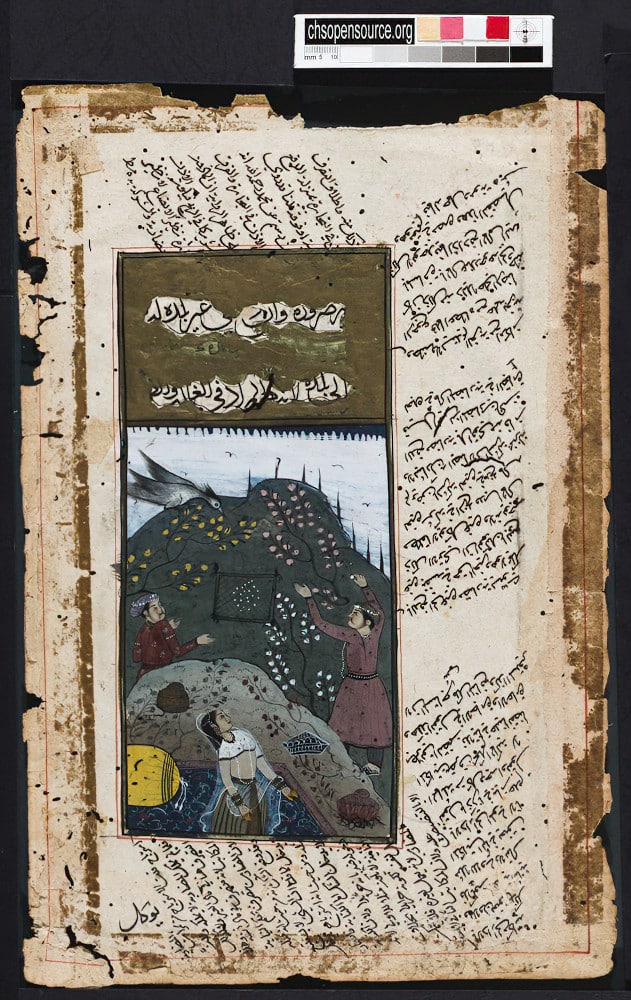
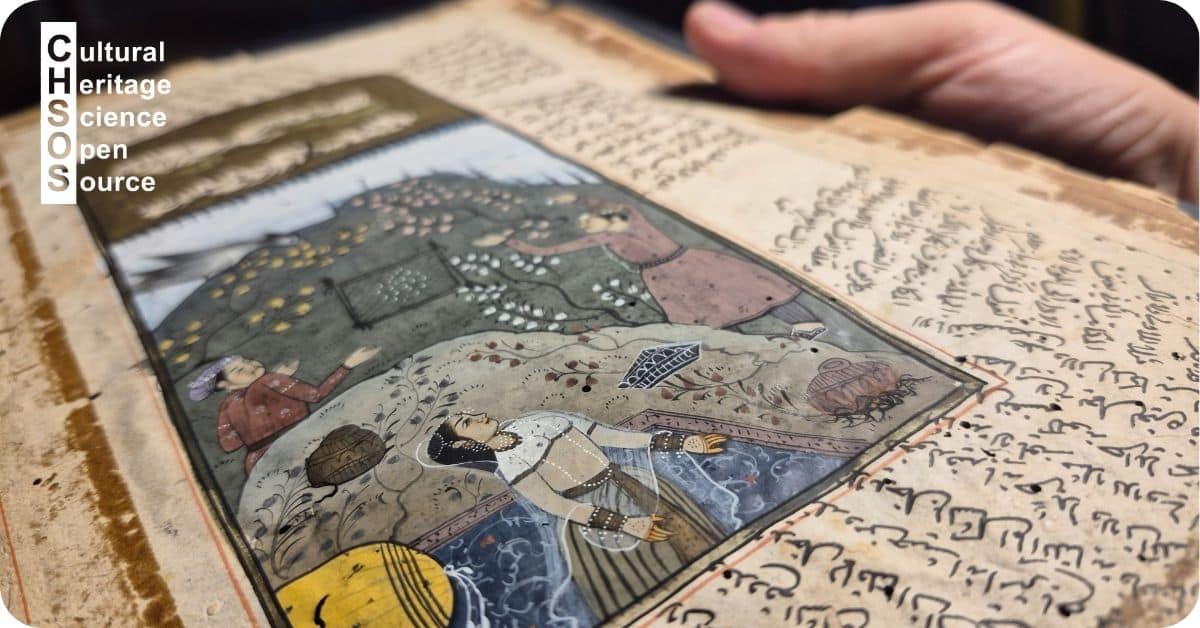
This manuscript leaf contains a miniature painting framed within blocks of Persian text. The folio has been reused or supplemented with additional commentary, as demonstrated by text written diagonally and around the borders. The illustration, executed in opaque watercolor, shows a hilly landscape with flowering trees, birds in flight, and three human figures. Two male figures gesture toward the hillside, while a female figure appears near a body of water in the foreground, possibly representing a scene from a poetic or mystical narrative. The upper panel contains additional text on an olive-green painted ground.
The painting displays characteristics of late Mughal and provincial Indian schools, with strong outlining, stylized vegetation, and the elongated eyes typical of Rajasthani or Deccani miniature traditions. The presence of Persian text suggests that the folio originates from a Persian-language literary manuscript produced in India, possibly illustrating a romance, epic poem, or Sufi allegorical tale.
The leaf shows significant signs of age and handling, including edge losses, abrasions, stains, and pigment flaking. The upper text panel displays areas of loss and overpaint. Ink corrosion spots and paper wear are evident along the margins. Despite the damage, the miniature retains rich color and clear narrative detail.
CHSOS Collection – item #50
Table of Contents
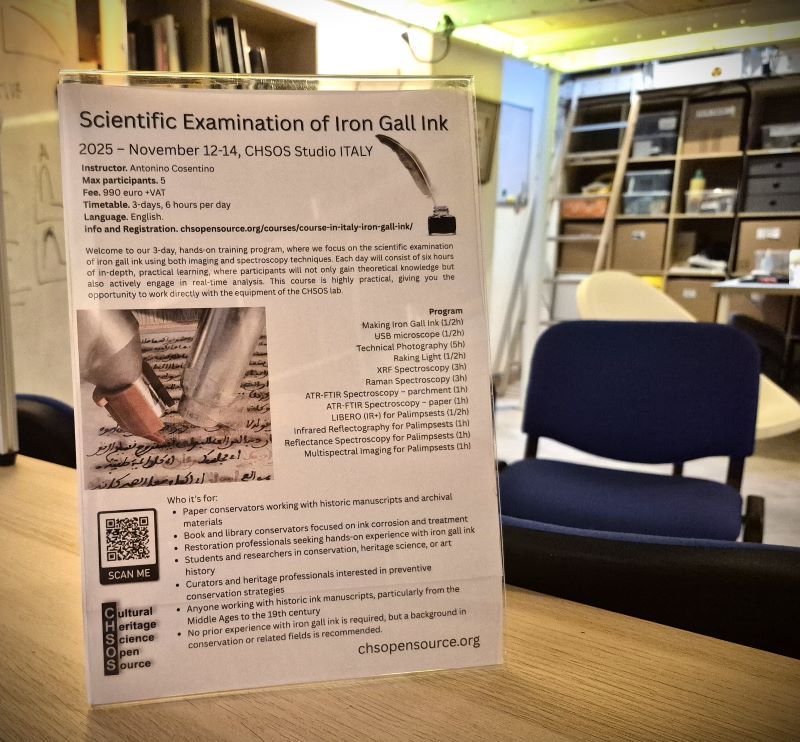
Training: Scientific Examination of Iron Gall Ink
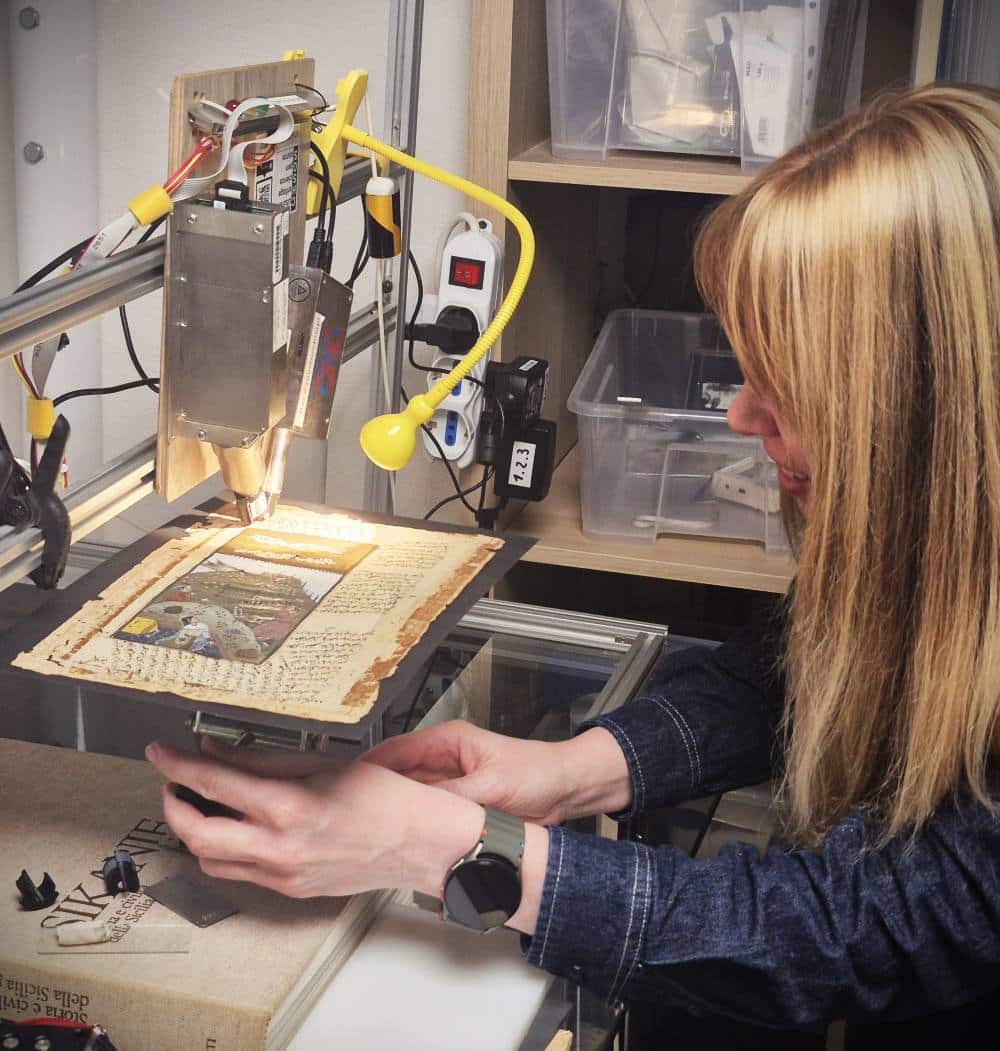
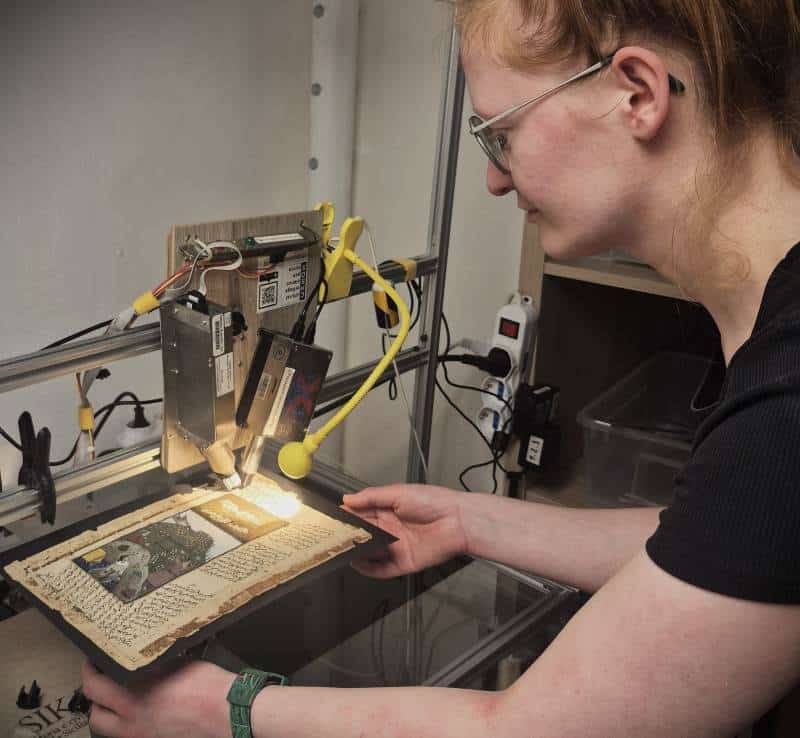
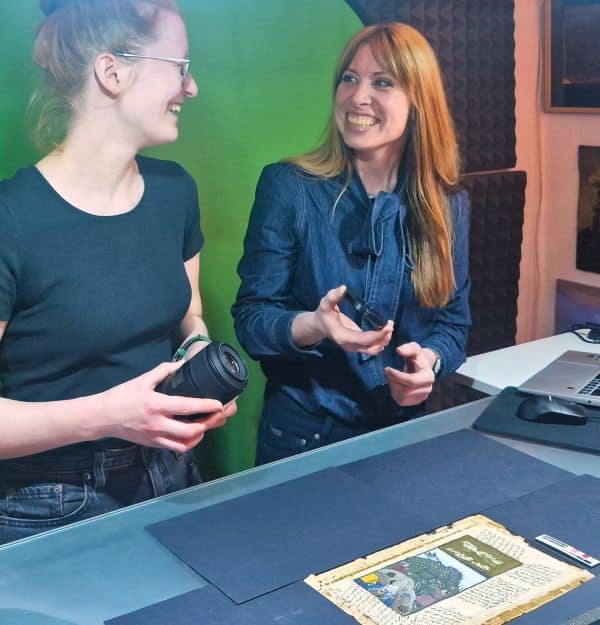
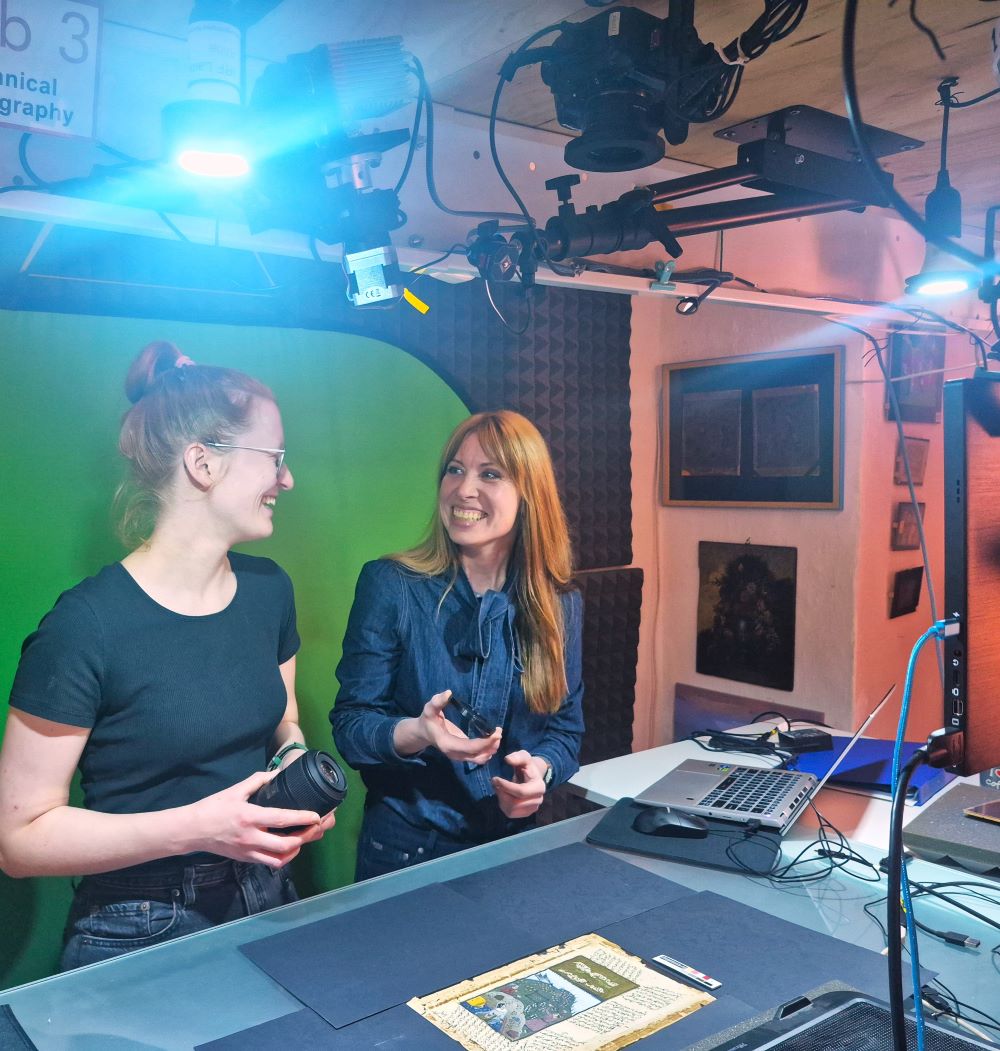
This item was analyzed as a case study during the 3-day Training Program on the Scientific Examination of Iron Gall Ink hold in 2025. I would like to thank the participants, Egle, paper conservator based in Lithuania and Natalija from Ink Lab University Library in Basel Switzerland, for conducting the examination and for sharing their expertise in paper conservation while practicing the scientific analysis methods.
Registration open for the Next Training Program!
Technical Photography
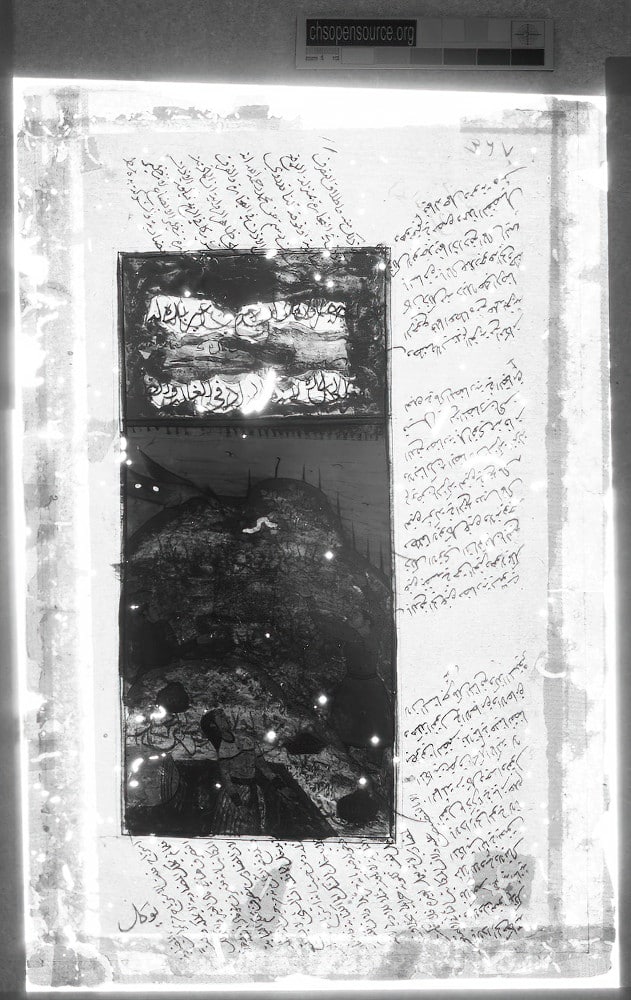
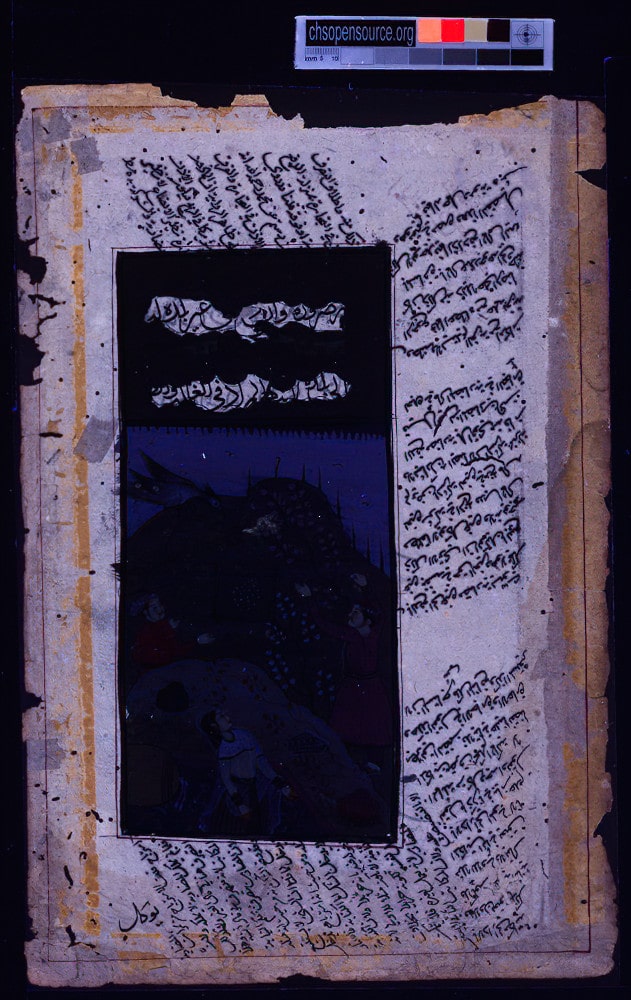
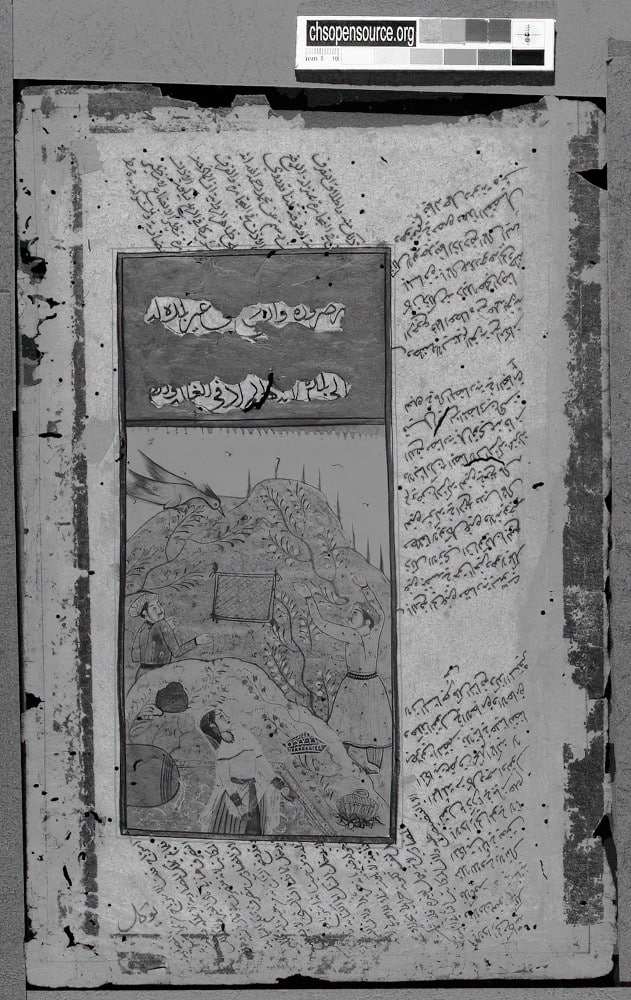
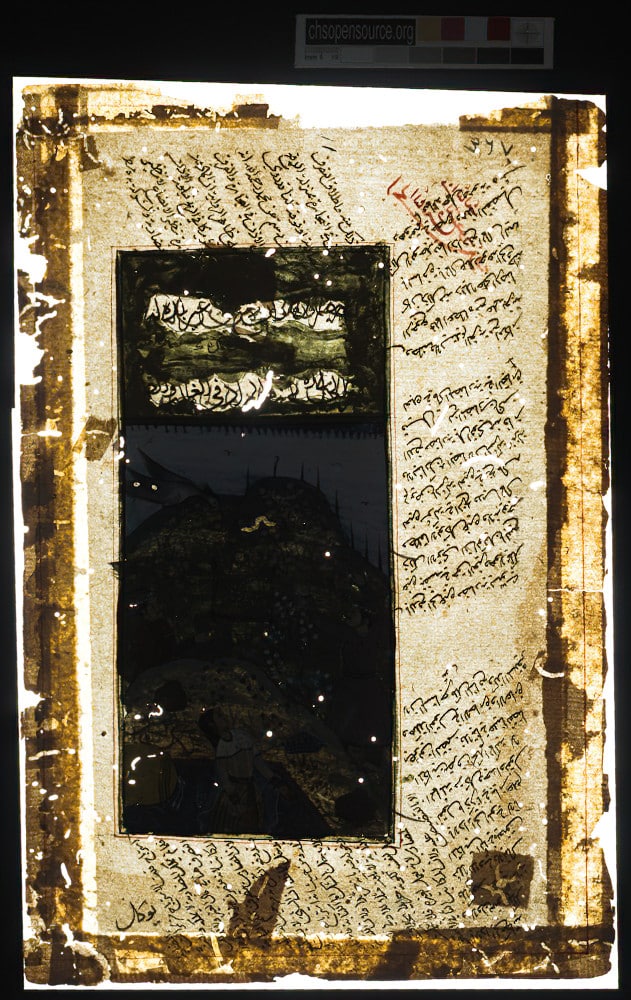
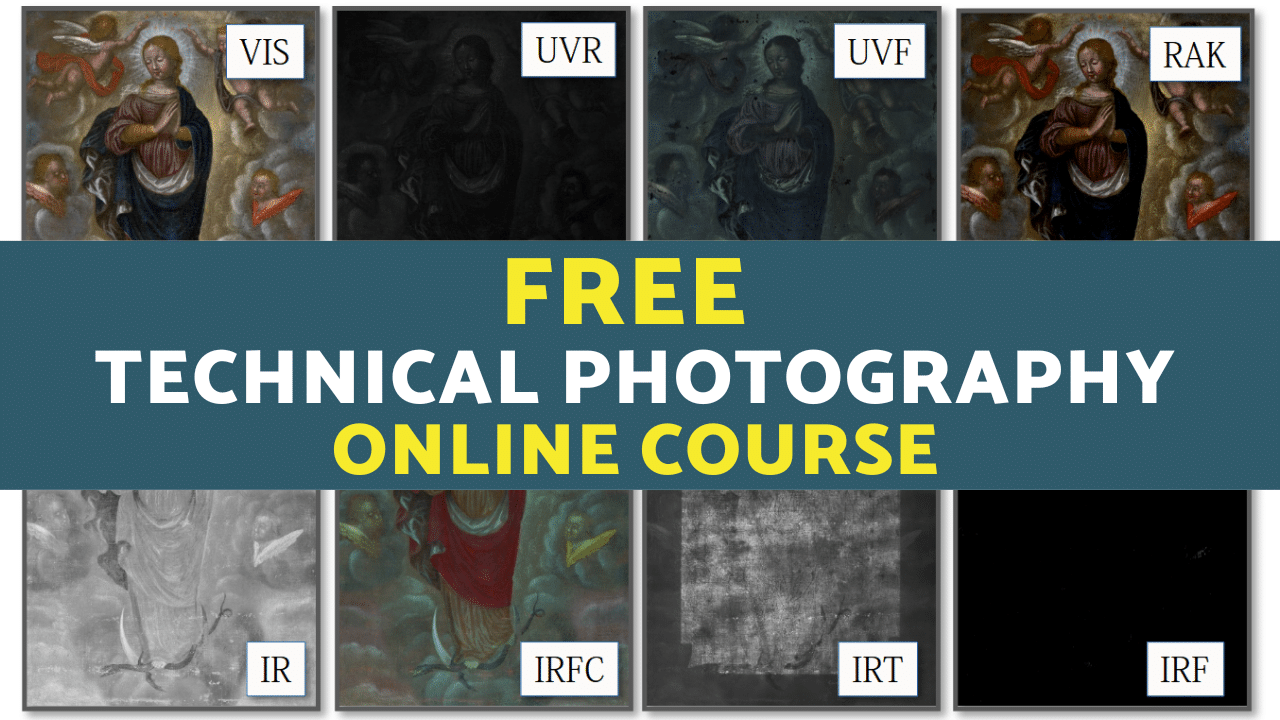
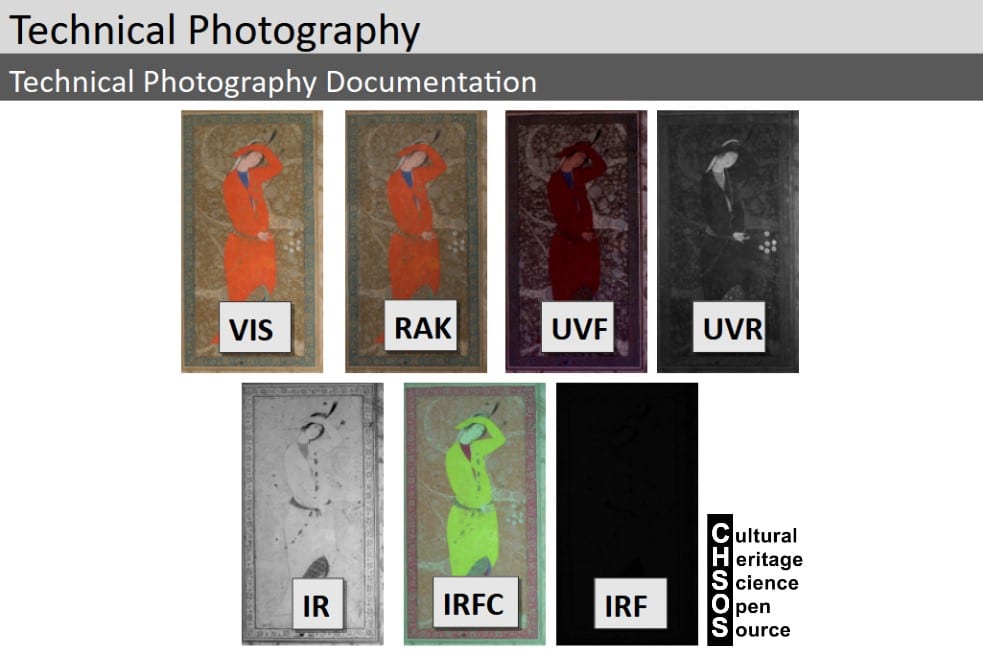
The most revealing technique for this item is Transmitted Infrared (IRT) imaging. Part of the manuscript text is obscured by the miniature painting. While standard Infrared (IR) photography does not penetrate the paint layers enough to show the writing beneath, the IRT image successfully enhances the visibility of the hidden text, as expected.

XRF Spectroscopy
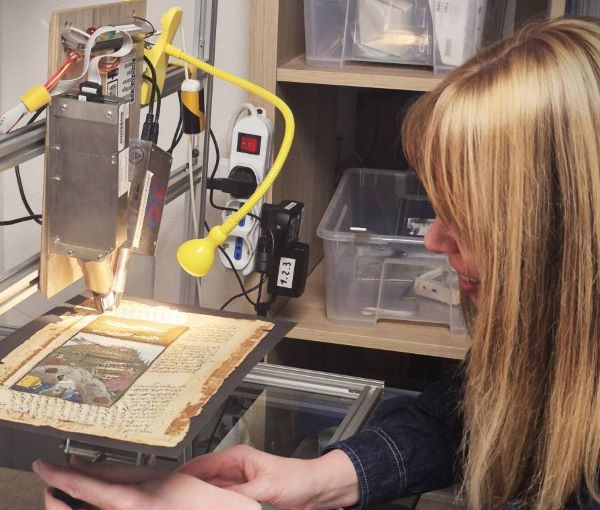
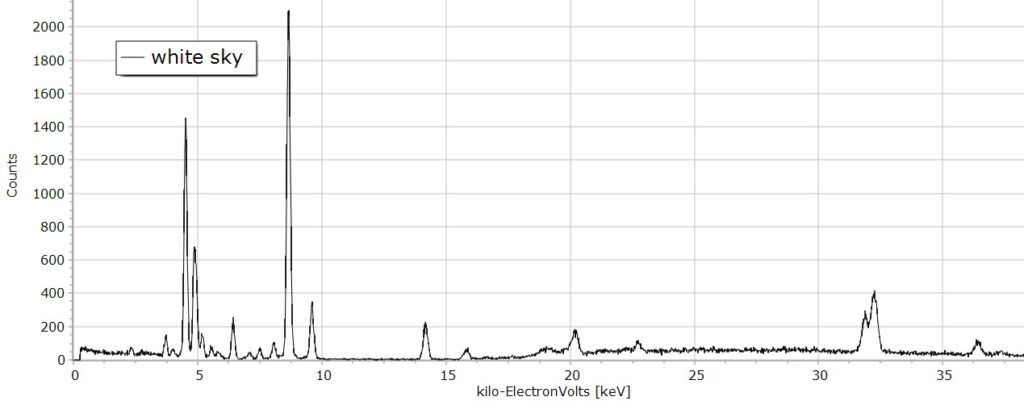
Among the colors analyzed, the most interesting was the white used in the sky. The XRF spectrum shows the presence of barium, titanium, and zinc, suggesting that the white color is a mixture of the most common late-19th-century whites: barium sulfate, titanium white, and zinc white. This combination was typical of the period, when manufacturers were seeking safer alternatives to toxic lead white. Color producers experimented with blends of established substitutes such as zinc white and barium sulfate, together with the newly introduced titanium white, which had not yet become a fully standardized pigment and was therefore often used in mixtures with the older whites.
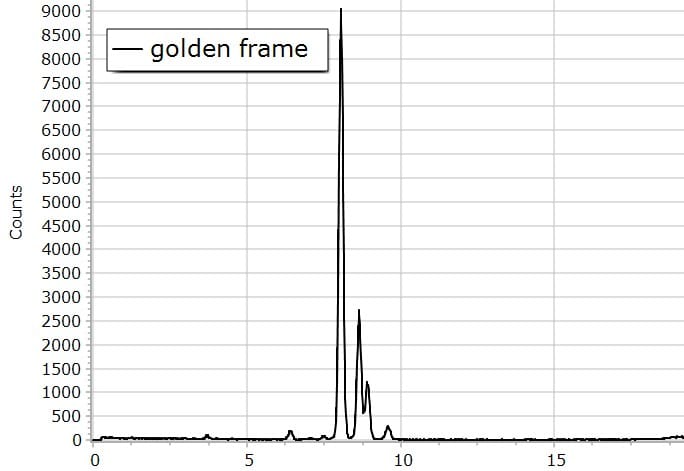
Another interesting finding is that the golden frame decoration contains copper and zinc, in the proportion typical of modern brass.
Learn Technical Photography for Art Examination
Technical Photography is one of the most powerful—and often overlooked—tools for the scientific examination of art and archaeology. If you are a conservator, scientist, or art collector and you are not yet familiar with this method, it is truly a missed opportunity. Using simple, affordable equipment and a clear methodology, Technical Photography allows you to reveal underdrawings, retouchings, material differences, and conservation issues in a completely non-invasive way. Far from being complex or inaccessible, it is an easy entry point into scientific analysis. In many cases, Technical Photography represents the first essential step toward a deeper understanding of artworks and archaeological objects.
Scientific Art Examination – Resources:
Getty Conservation Institute (GCI) – USA
The British Museum – Scientific Research Department – UK
Scientific Research Department – The Metropolitan Museum of Art, New York, USA
C2RMF (Centre de Recherche et de Restauration des Musées de France) – France
Rijksmuseum – Science Department – Netherlands