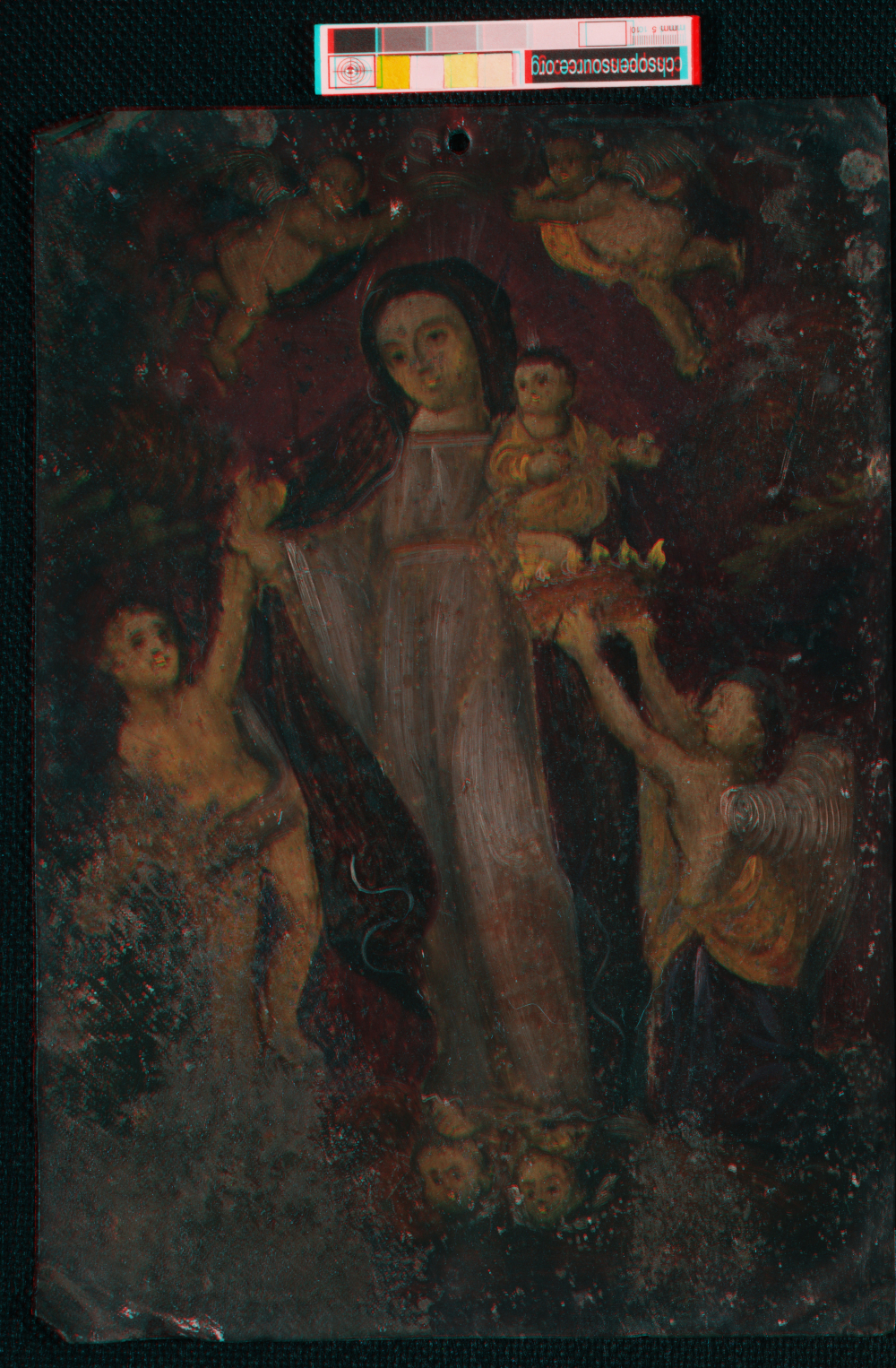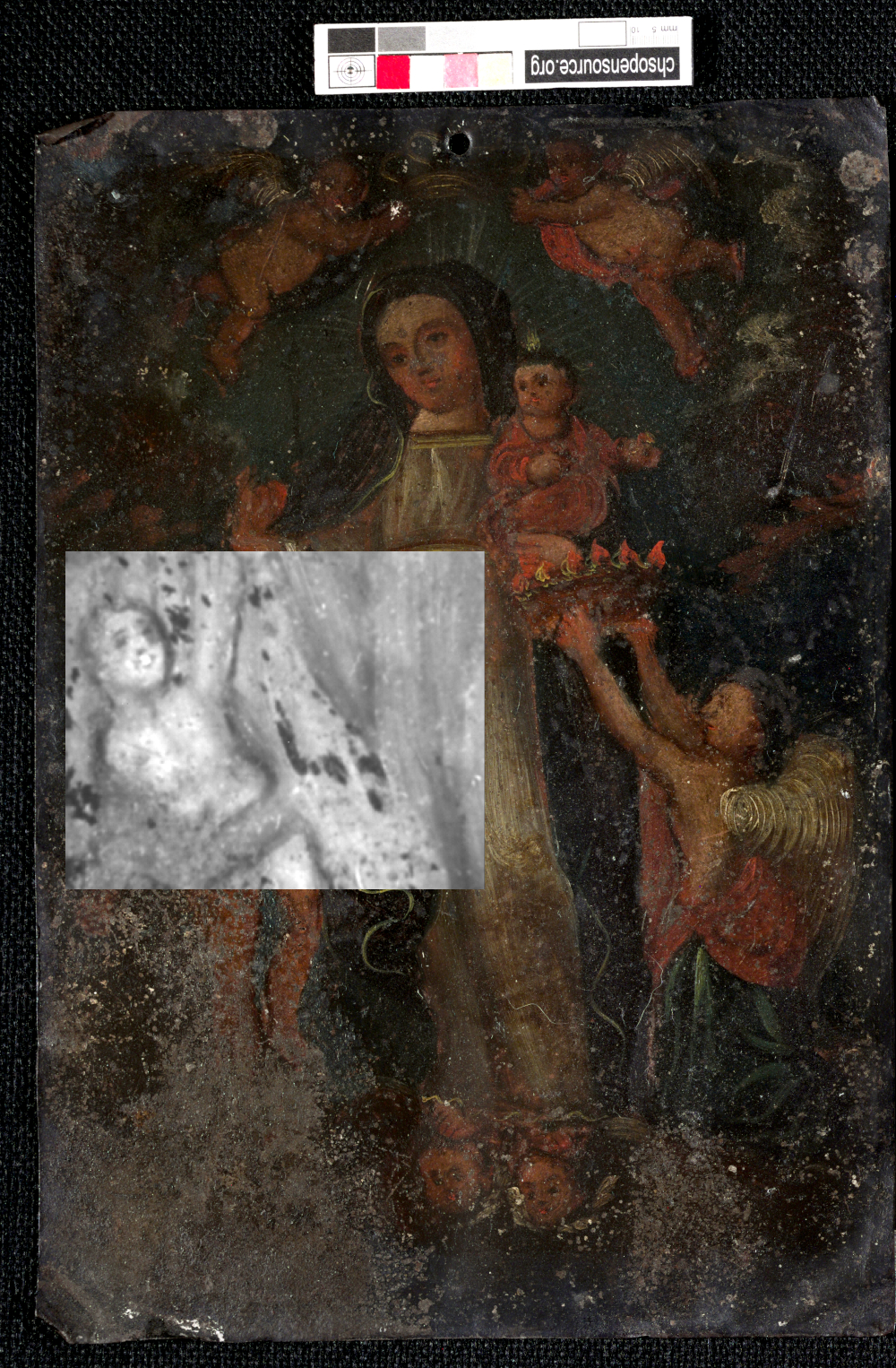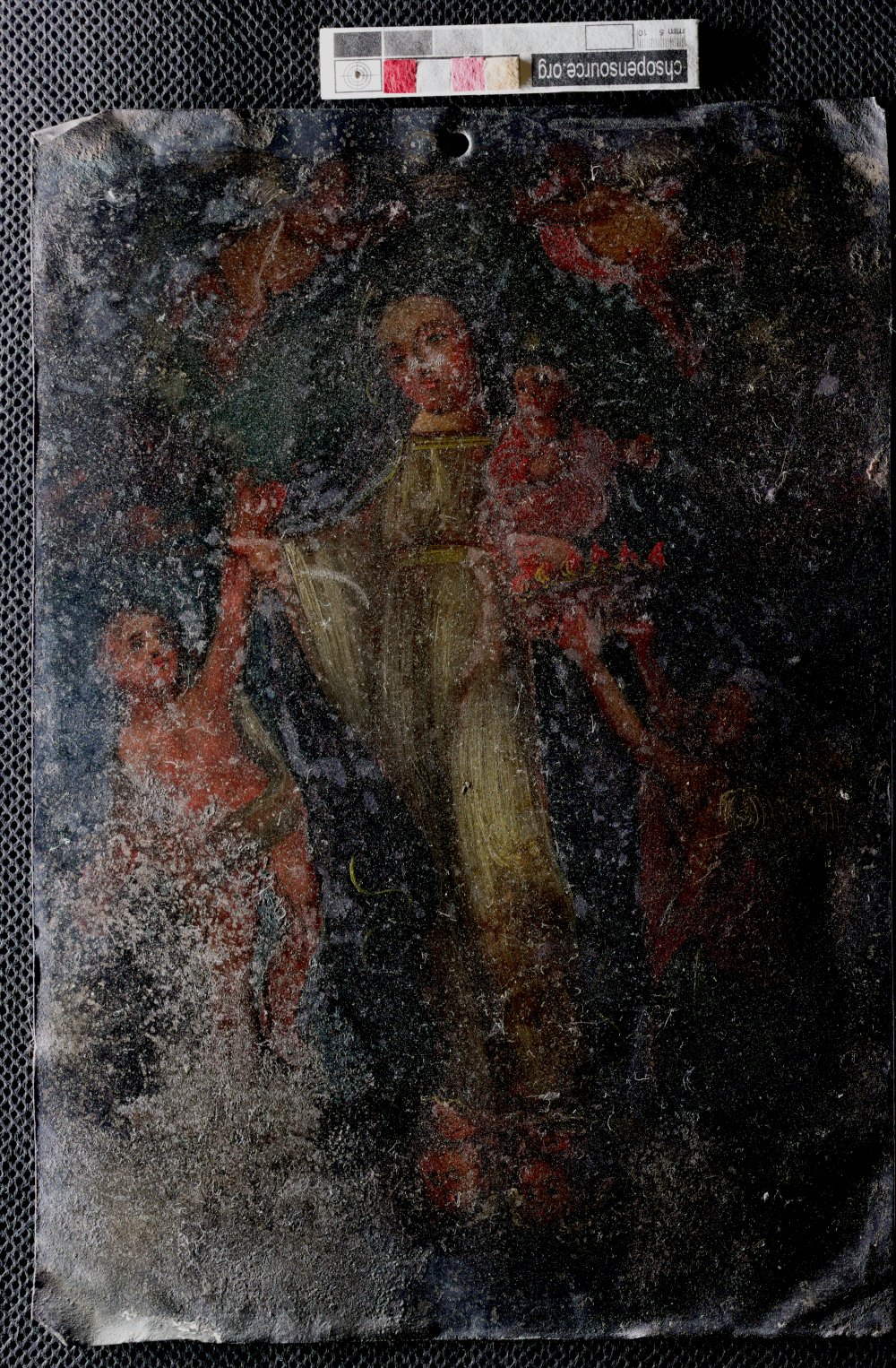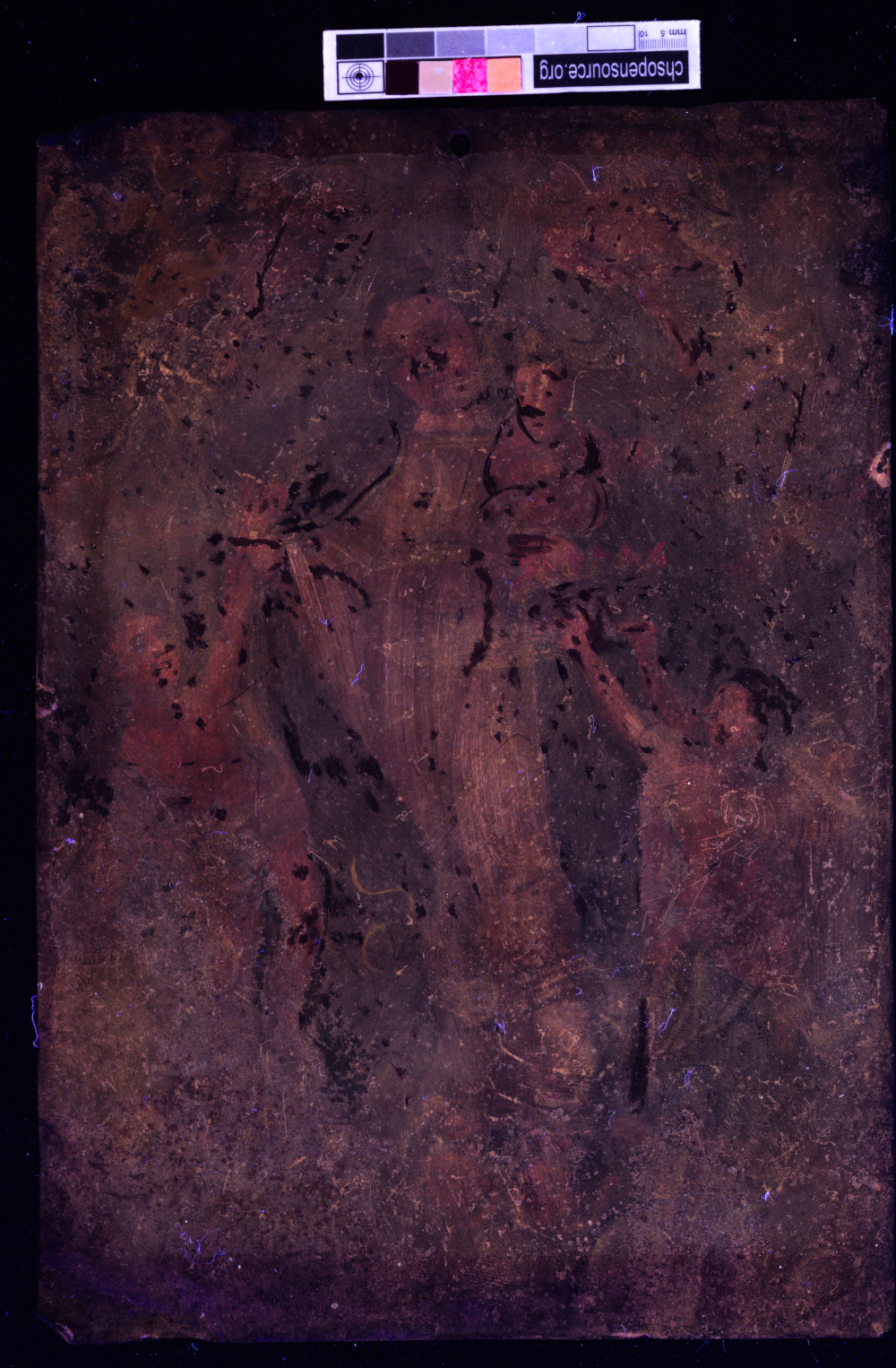
19th century Mexican painting on tin

Early Mexican devotional painting on tin
Mexican painting on tin

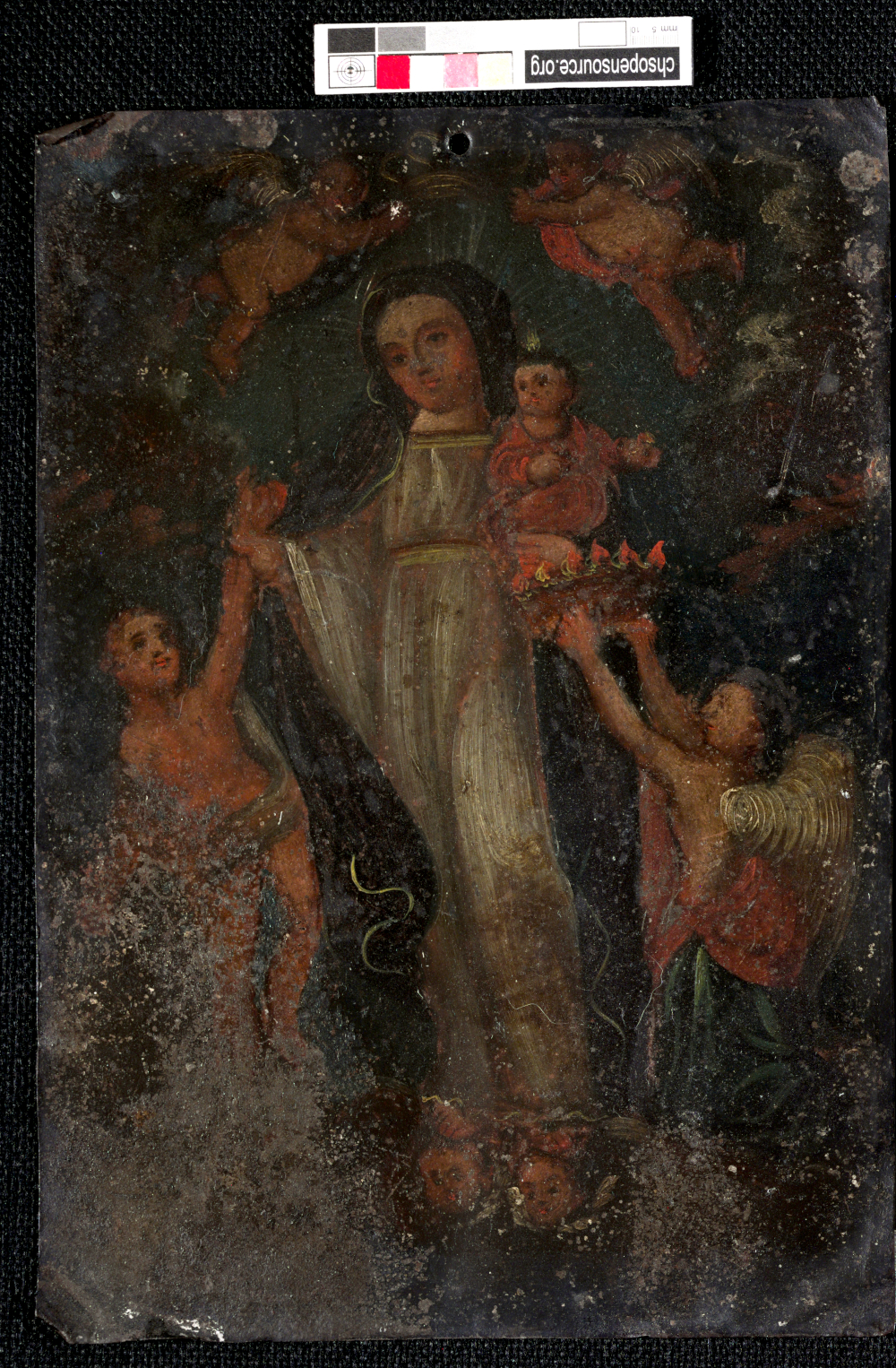
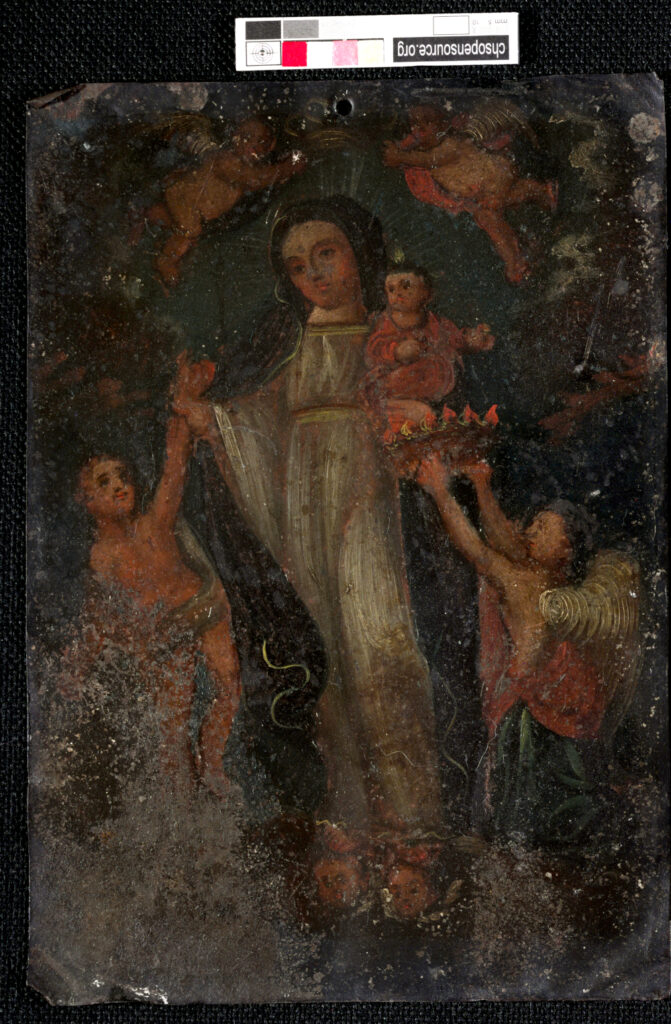
Devotional Mexican painting on tin depicting the Virgin Mary standing with the Christ Child, attended by angels and cherubs in a celestial setting. Executed in the popular retablo tradition of central Mexico, the work reflects the adaptation of European Marian iconography within local devotional practices. Characterized by simplified forms, expressive figures, and a dark background, the painting was likely intended for private worship. Extensive oxidation, paint loss, and surface wear attest to both the fragility of the tin support and the object’s long devotional use. Circa 19th century.

Nineteenth-century Mexican retablos, which are primarily devotional images painted on tin plates, have had little scholarly attention until recently. These retablos have their roots in European religious paintings dating from the sixteenth to the eighteenth centuries and can be traced back to images placed on Spanish Colonial church altars in diverse media. Painted by both academically trained and self-taught artists, primarily from Central Mexico, these devotional works provide intimate insights into the religions and spiritual lives of people in Mexico, Central America, and Southern New Mexico. Their material production is often region specific. 

CHSOS Collection – Training item #99

19th century Mexican painting on tin - VIS

Table of Contents

Training: Scientific Examination of a Mexican painting on tin

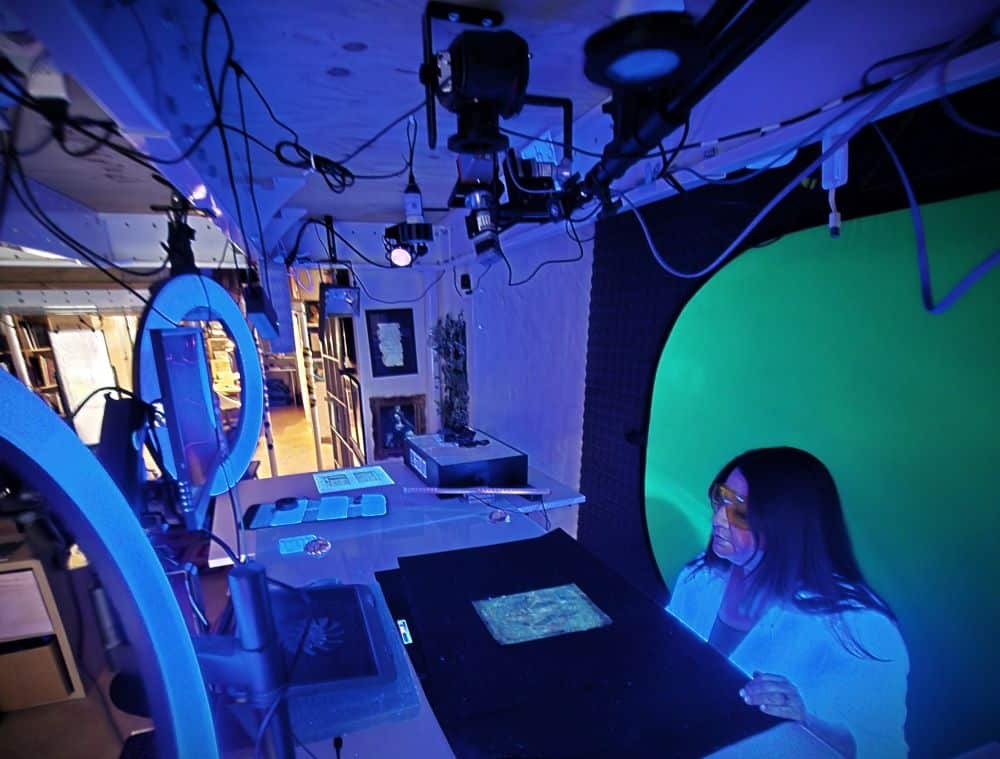
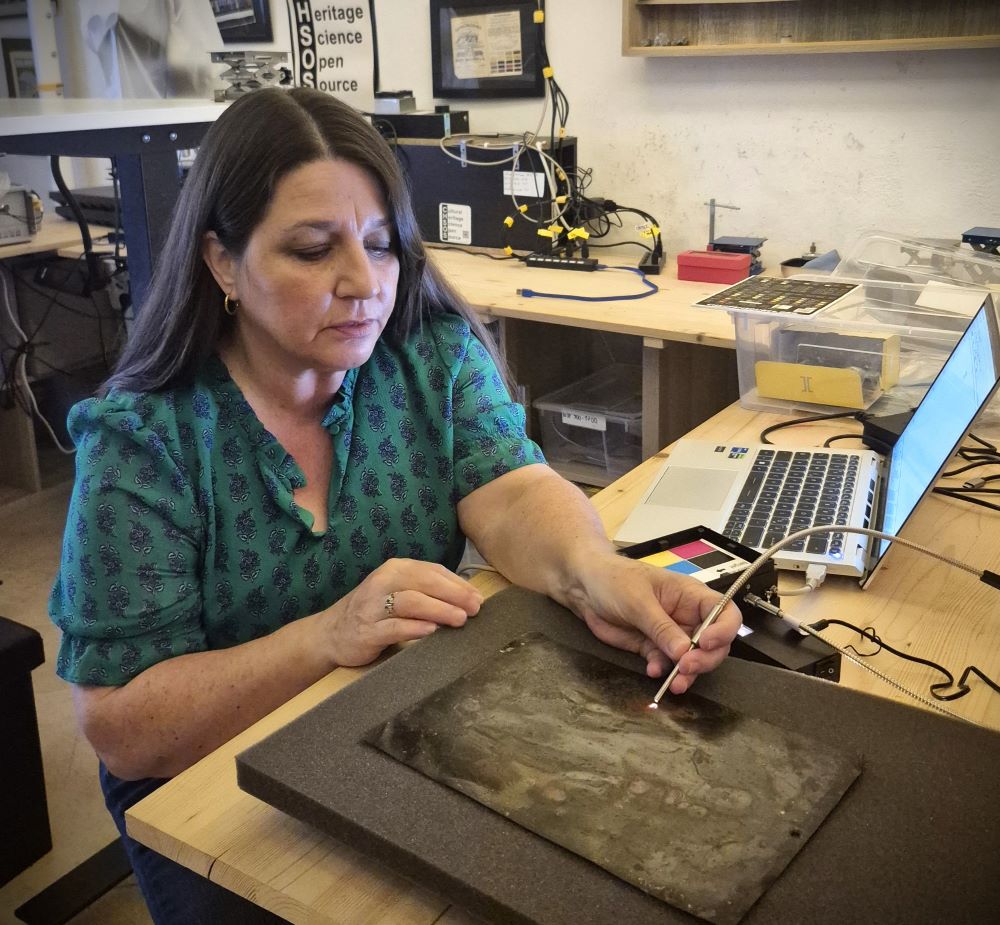
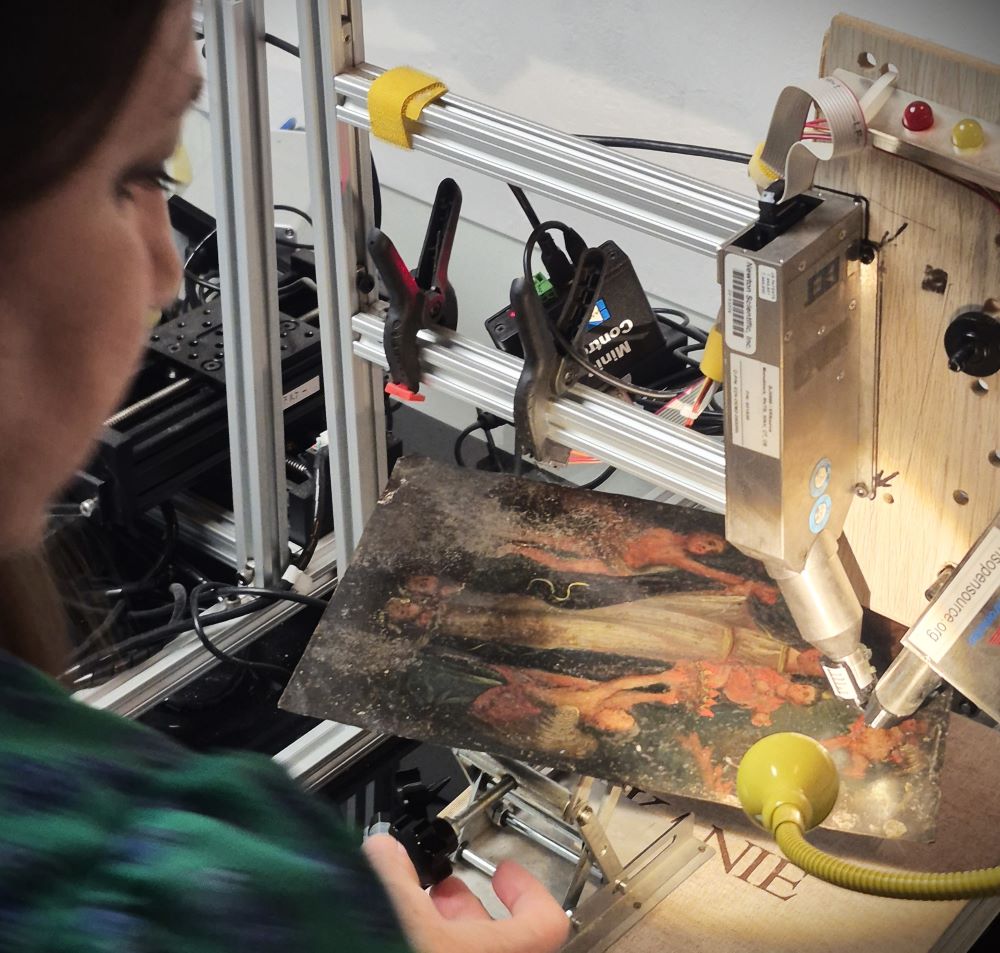
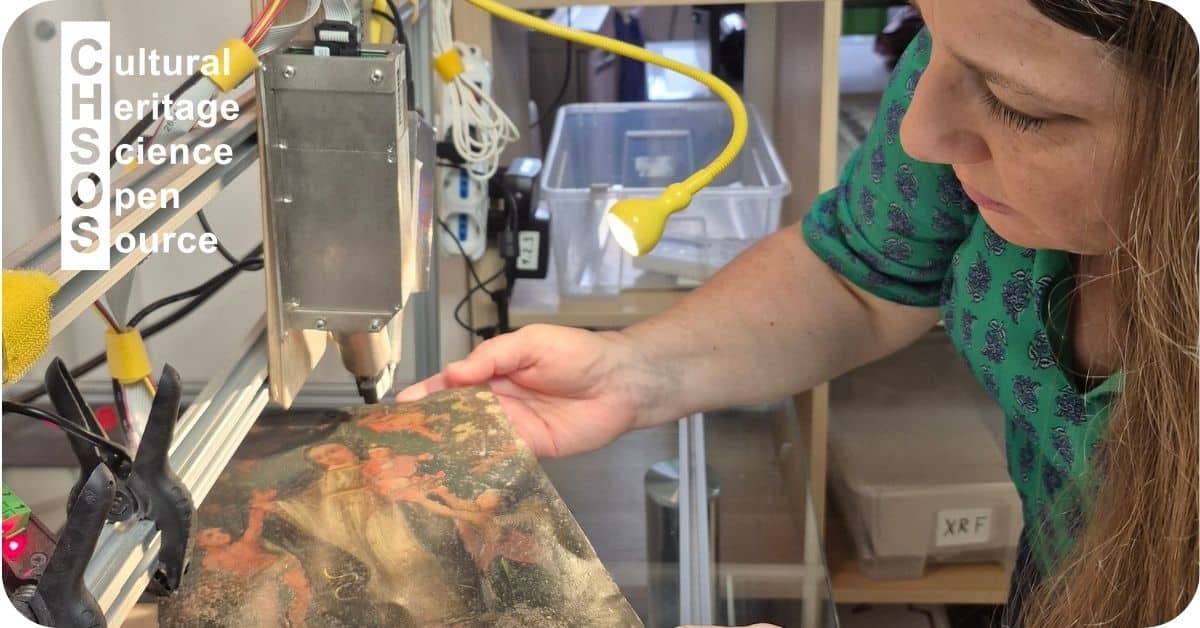
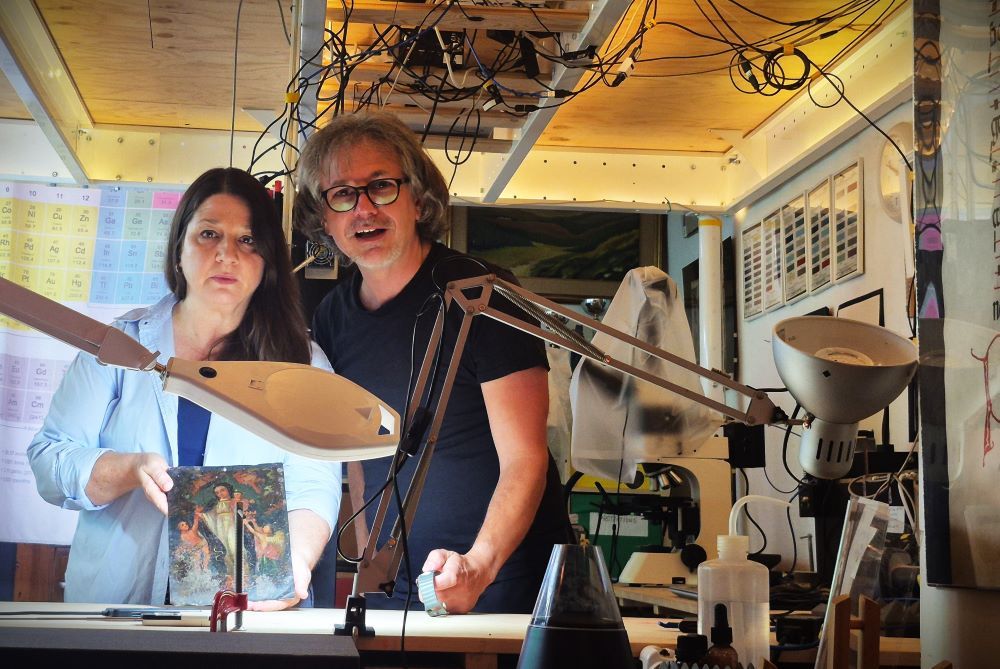
This item was analyzed as a case study during the 3-day Training Program on the Scientific Methods for Art Examination hold in May 2026. I would like to thank the participant, Eowyn Kerr-Di Carlo, for conducting the examination and for sharing her expertise in conservation while practicing the scientific analysis methods.

Eowyn oversees and teaches the undergraduate degree program in Museum Conservation at New Mexico State University. As part of research into the NMSU’s collection of Mexican Retablos, she is developing skills in technical analysis and imaging techniques to establish a protocol for the examination and materials study of the University’s paintings. 

Registration open for the Next Training Program!

19th century Mexican painting on tin

Condition Assessment

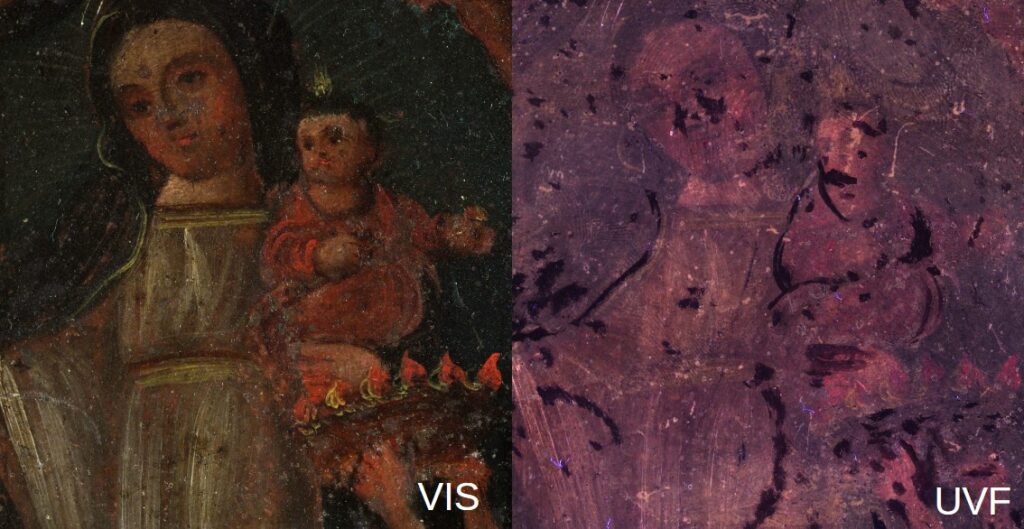
The UV-induced visible fluorescence (UVF) image provides valuable information about the condition and material history of the retablo. Comparison of the visible-light image (left) and the UVF image (right) shows that the composition of the Virgin and Child remains clearly discernible under ultraviolet excitation, despite extensive surface degradation. The paint layers exhibit generally weak and uneven fluorescence, suggesting the predominance of traditional pigments and aged binding media rather than extensive modern restoration materials.

  • Dark, non-fluorescent spots and patches distributed across the surface correspond to areas of paint loss, extensive modern overpainting or synthetic restoration varnishes.
  • The figures of the Virgin and Child remain visible beneath the degradation, indicating that the original paint layers survive over much of the composition despite significant deterioration.
  • The diffuse purplish fluorescence across portions of the image is likely associated with aged natural resinous materials, oxidized binding media, or degraded surface coatings.

Overall, the UVF image indicates that while the painting has suffered substantial corrosion-related damage and surface alteration, the surviving original paint layers appear largely intact beneath the accretions. 

UVF photo - 19th century Mexican painting on tin
Technical Photography - 19th century Mexican painting on tin

Surface Condition through Technical Imaging

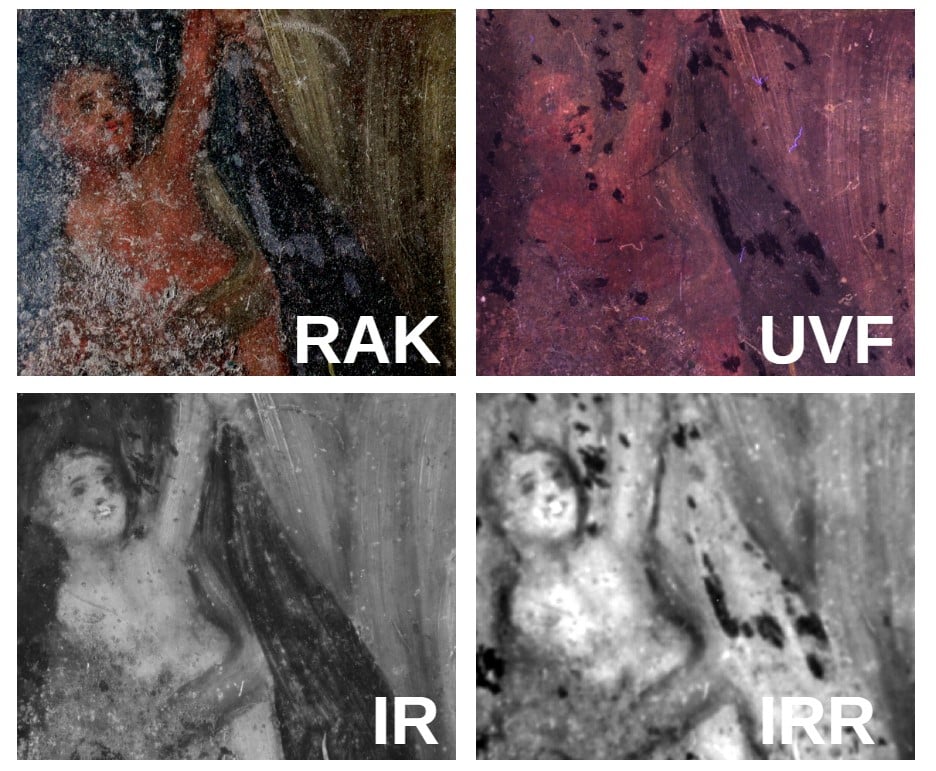
Raking Light (RAK)

The raking-light image (top left) reveals significant surface deterioration. The painting exhibits widespread abrasion, loss of the original paint layer, and a rough, uneven surface texture. Numerous scratches and accretions are visible, suggesting prolonged exposure to handling, environmental stress, or cleaning attempts. The raised appearance of some features indicates localized paint loss and corrosion-related surface irregularities.

Ultraviolet Fluorescence (UVF)

The UV fluorescence image (top right) shows a relatively uniform reddish-purple fluorescence, consistent with an aged natural resin or oxidized varnish layer. The numerous dark, non-fluorescing spots and streaks likely correspond to areas of retouching, overpaint, dirt deposits, or corrosion products that absorb UV radiation. The irregular distribution of these dark features suggests multiple localized interventions or deterioration phenomena.

Infrared photography (IR)

In the infrared photo (bottom left), the figure becomes more clearly visible despite the degraded surface. The flesh tones appear relatively transparent in the infrared region, allowing better visualization of the underlying modeling. No obvious underdrawing is visible in this detail, although the image suggests that the artist’s tonal construction remains largely intact beneath the surface damage.

Infrared Reflectography (IRR)

The IRR image (bottom right) enhances contrast between different materials. The dark spots visible in UVF remain prominent, indicating that they are likely associated with surface alterations rather than original pigments. Differences in infrared reflectance between the flesh tones, drapery, and dark background suggest the use of multiple pigment systems. The technique is particularly useful for distinguishing original paint from later restorations.

Technical Photography for Condition observations
This four-panel diagnostic montage (RAK, UVF, IR, and IRR) illustrates the condition and material complexity of this nineteenth-century Mexican tin retablo.
Reflectance Spectroscopy - 19th century Mexican painting on tin

The Tin support

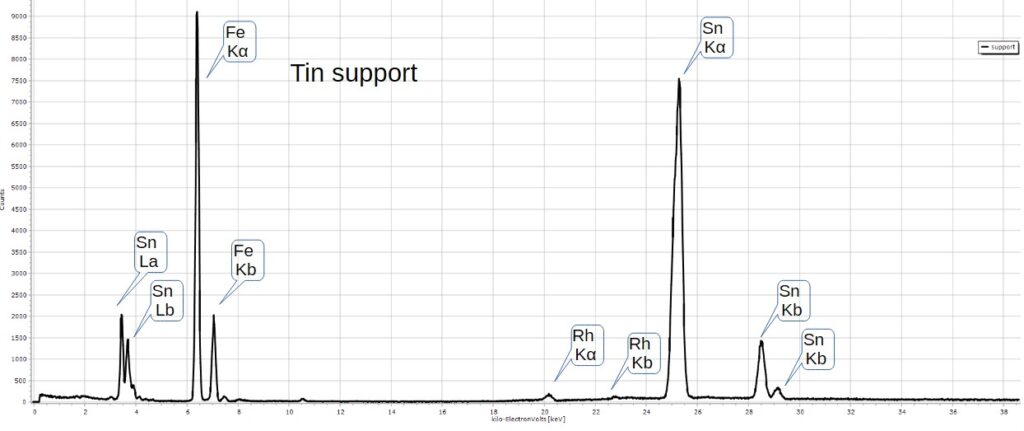
The XRF spectrum acquired from the reverse of the support, free of paint, confirms that the substrate is composed primarily of tin (Sn). Strong tin emission lines are observed at approximately 3.4–4.0 keV (Sn L-series) and 25.3 keV (Sn Kα), with a corresponding Sn Kβ peak near 28.5 keV. These peaks are characteristic of a tin-based sheet metal support and are consistent with the materials commonly used for Mexican retablos of the nineteenth century.

In addition to tin, significant iron (Fe) peaks are present, including Fe Kα at approximately 6.4 keV and Fe Kβ at 7.1 keV. The presence of iron suggests that the support is not composed of pure tin but rather consists of tin-plated iron (tinplate), a material widely employed in the manufacture of inexpensive devotional paintings. 
The substantial iron signal may also help explain the extensive corrosion observed on the object, as deterioration of the protective tin layer can expose the underlying iron substrate to oxidation.

XRF spectroscopy- 19th century Mexican painting on tin
XRF spectroscopy - support - 19th century Mexican painting on tin

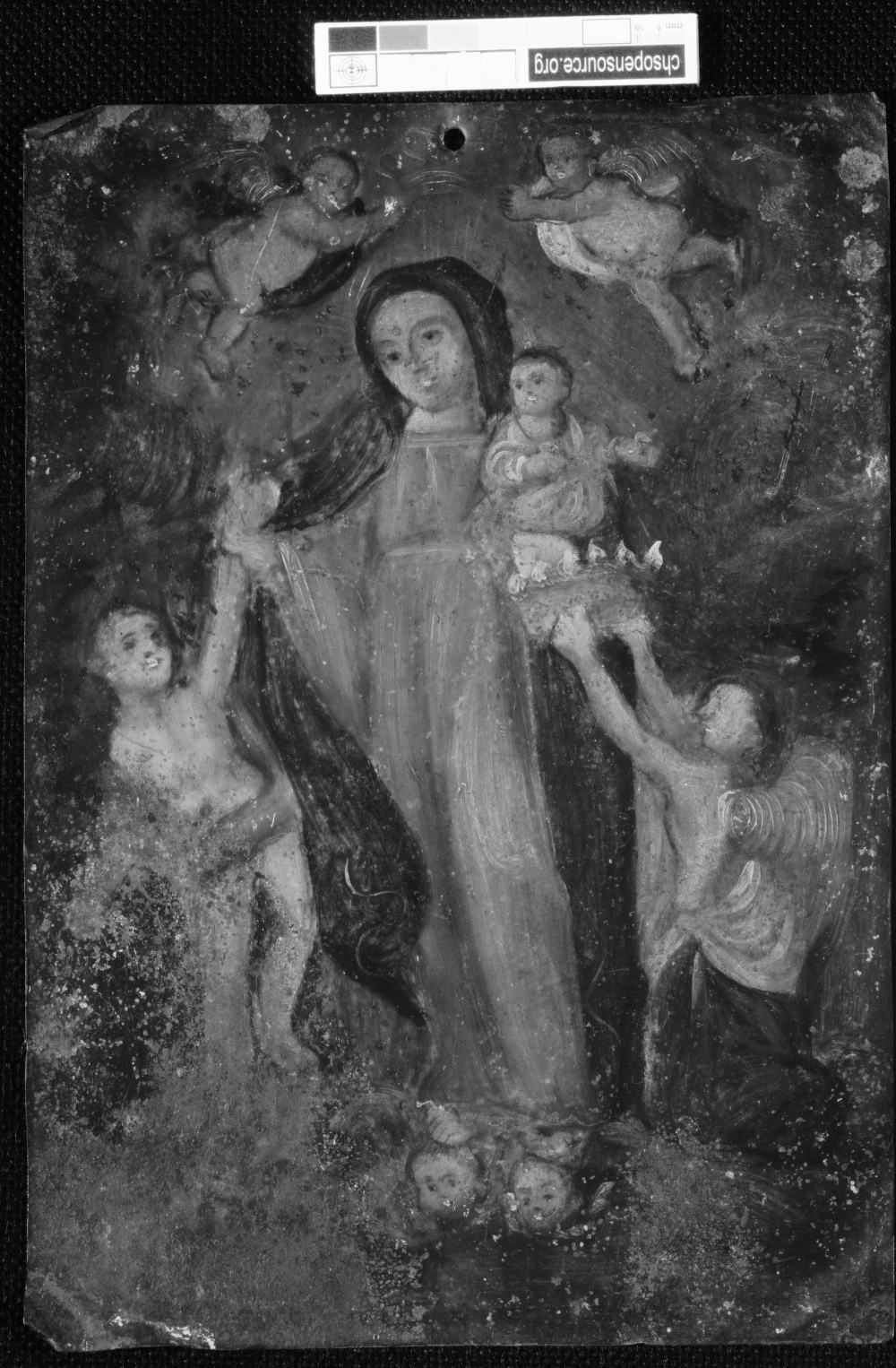
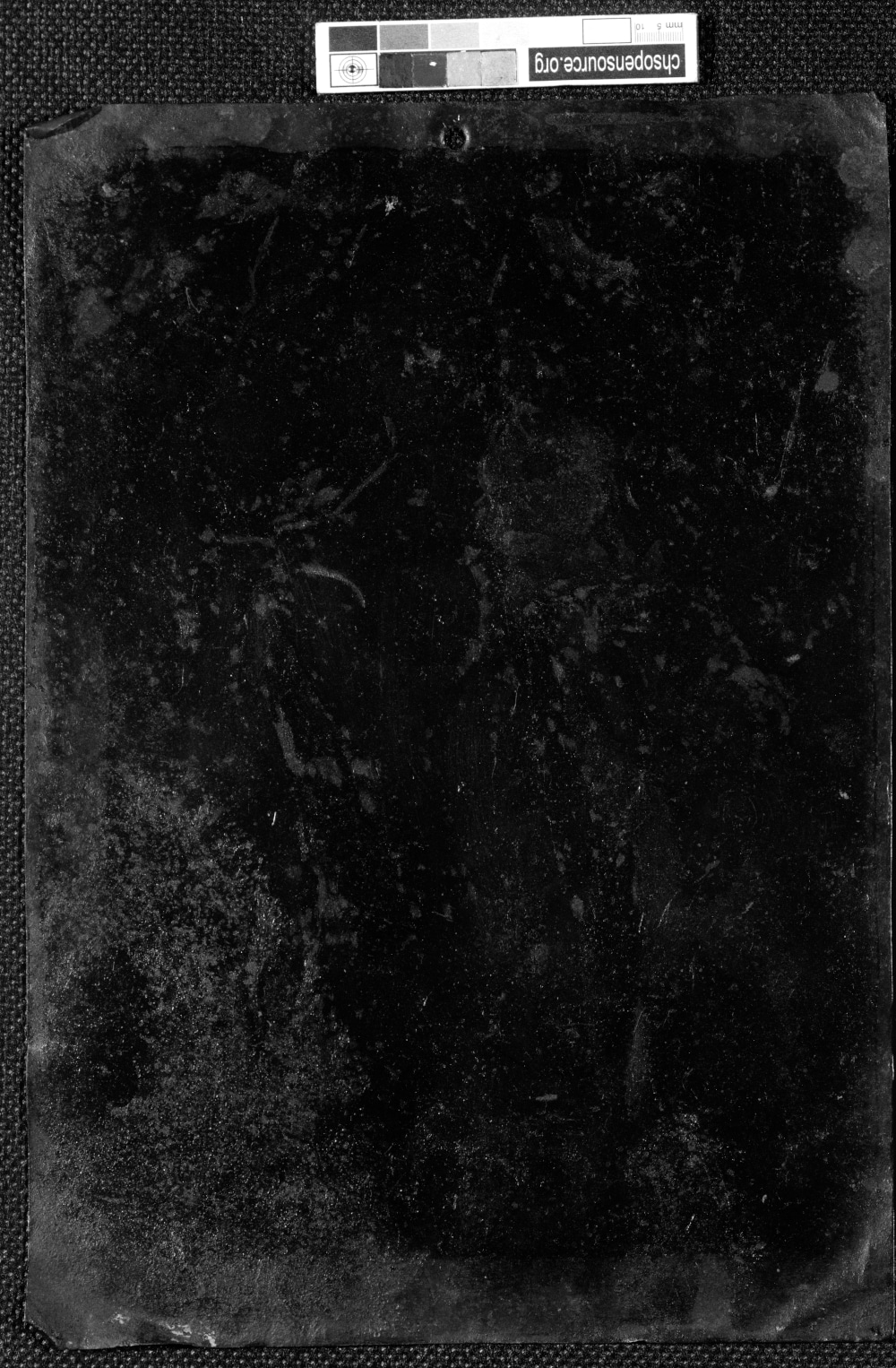
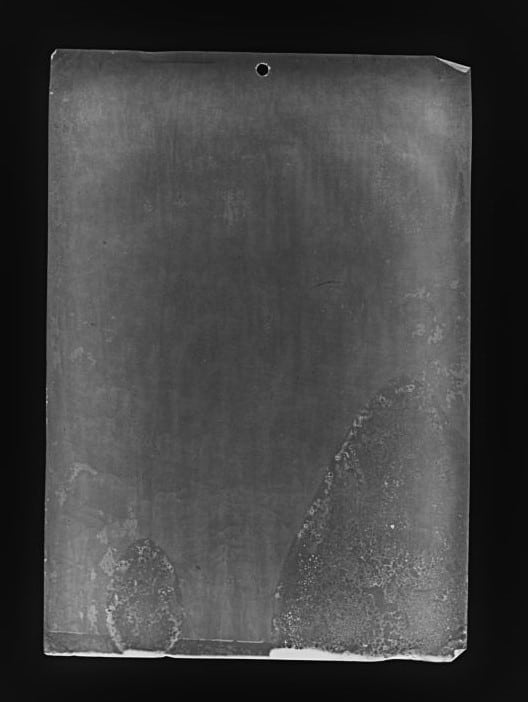
The X-radiograph reveals the metallic support with little visible contribution from the paint layer, a common characteristic of thinly painted tin retablos. The sheet appears generally homogeneous, confirming the use of a relatively thin metal substrate without major structural modifications.

Several features are noteworthy:

  • Corrosion and surface alteration: Areas of increased radiographic density and mottled texture are present along the lower edge, particularly in the lower-right quadrant and to a lesser extent in the lower-left corner. These features likely correspond to corrosion products, accumulated deposits, or remnants of earlier protective coatings associated with prolonged exposure to moisture.
  • Manufacturing marks: Subtle vertical streaks across the sheet may reflect rolling or finishing marks introduced during the industrial manufacture of the tin plate.
  • Absence of major repairs: No obvious patches, soldered repairs, joins, or structural reinforcements are visible in this radiograph.
X radiograph (40KV) of the tin painting.

The Pigments

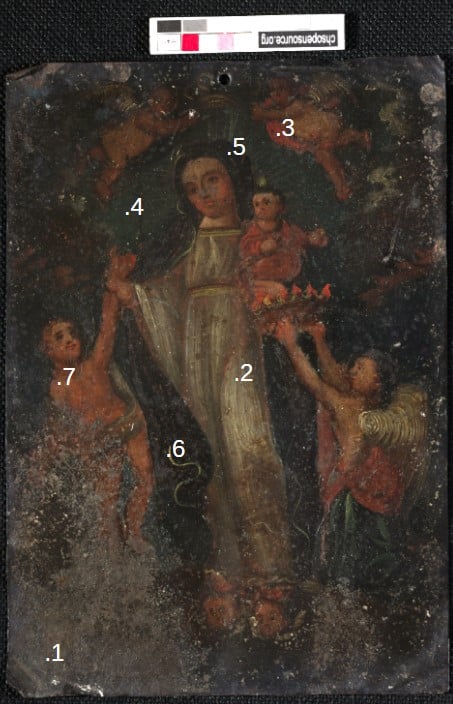
Seven points, selected on the basis of the imaging documentation results, were analyzed using reflectance spectroscopy (RS), X-ray fluorescence (XRF), and Raman spectroscopy.

Analysis points of the tin painting.
Spectroscopy Analysis points - RS, XRF, and Raman.

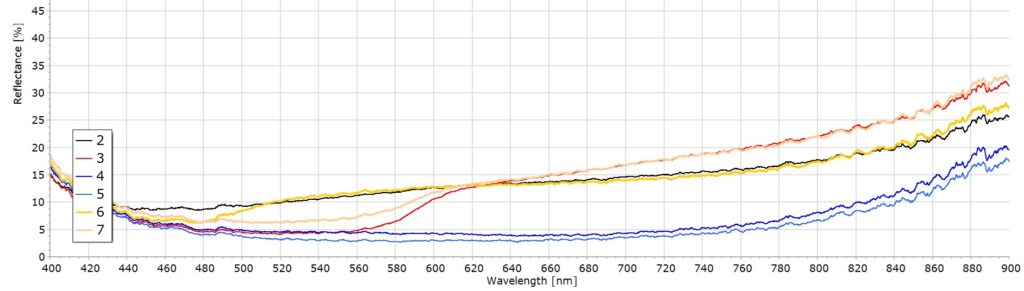
At Point 2, the XRF spectrum shows the presence of lead (Pb), while the reflectance spectrum is largely featureless, as expected for lead white.

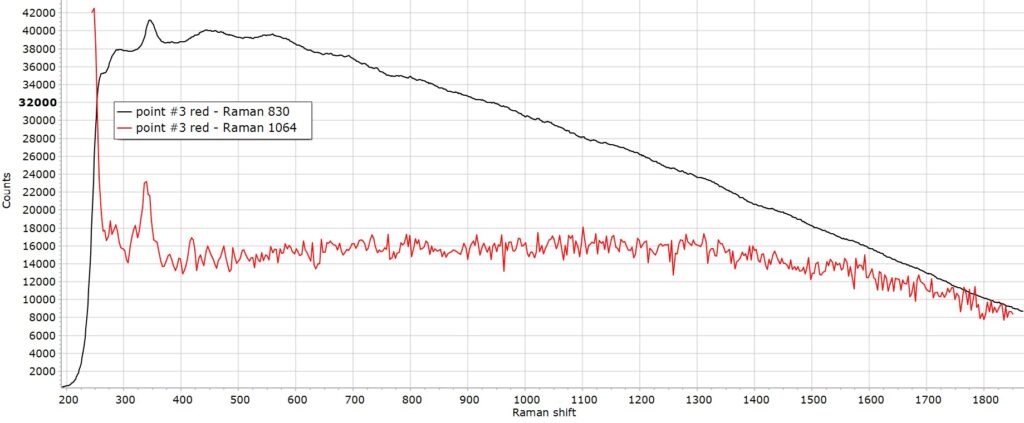
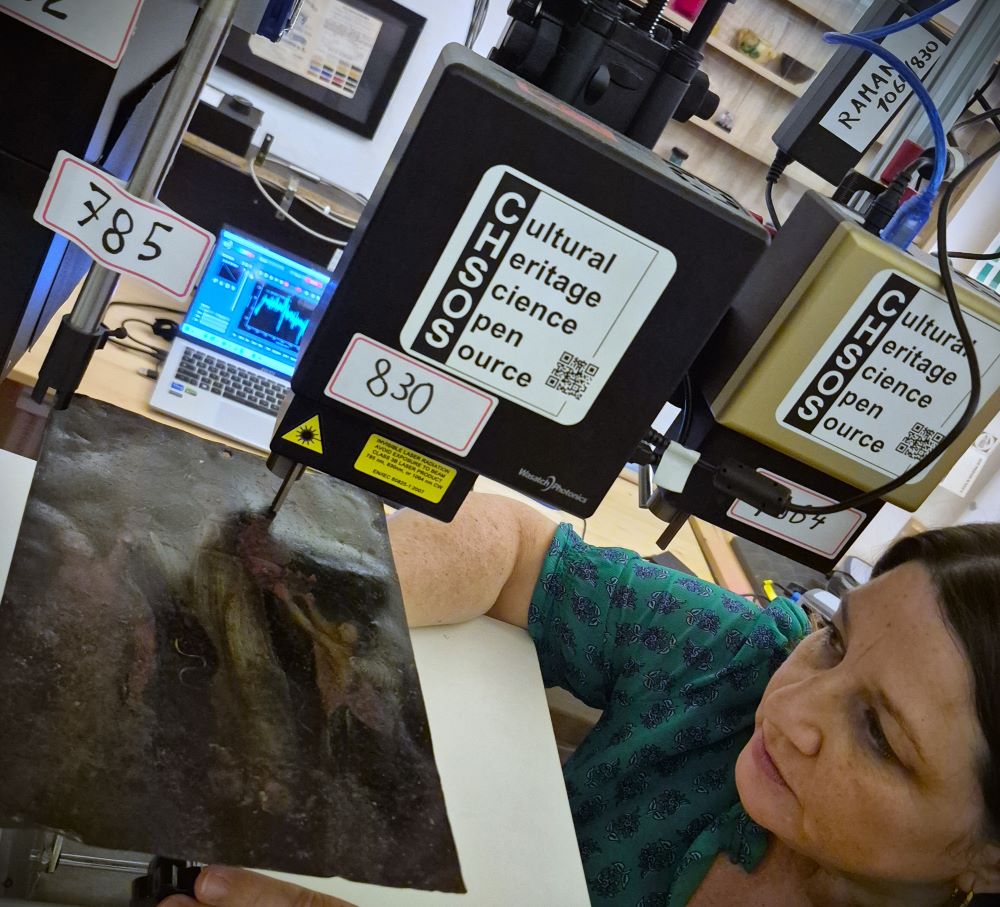
Raman spectroscopy using the 830 nm and 1064 nm systems confirmed vermilion as the red pigment (point 3). This identification is also consistent with the inflection point around 600 nm of the Reflectance spectrum and the mercury content of the XRF spectrum. 

Raman spectra with systems at 830 and 1064 nm of point #3 showing the peaks of vermilion.

Point 4, located in the dark background, shows the presence of lead (Pb) together with slightly elevated iron (Fe) levels compared to the other analyzed areas. This composition could be consistent with a mixture of Prussian blue and lead white. Point 5, corresponding to the blue veil, exhibits a similar elemental composition.

Both blue areas appear dark in the infrared image, and the absence of copper excludes common copper-based blue pigments such as azurite. Prussian blue therefore emerges as the most likely candidate. This interpretation is further supported by the infrared-reflected (IRR) image, in which the blue paint becomes relatively transparent, a characteristic behavior of Prussian blue. In addition, the reflectance spectra acquired at Points 4 and 5 show strong absorption in the near-infrared region, consistent with the presence of Prussian blue.

reflectance spectra 19th century Mexican painting on tin
Reflectance Spectra of the analysis points
Raman Spectroscopy - 19th century Mexican painting on tin


Learn Technical Photography for Art Examination

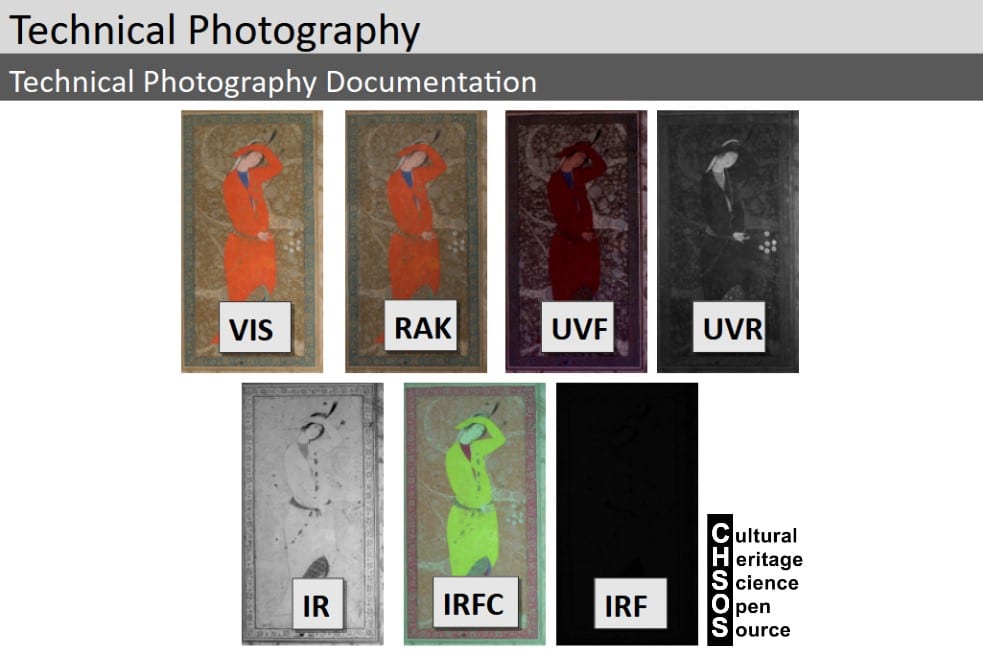
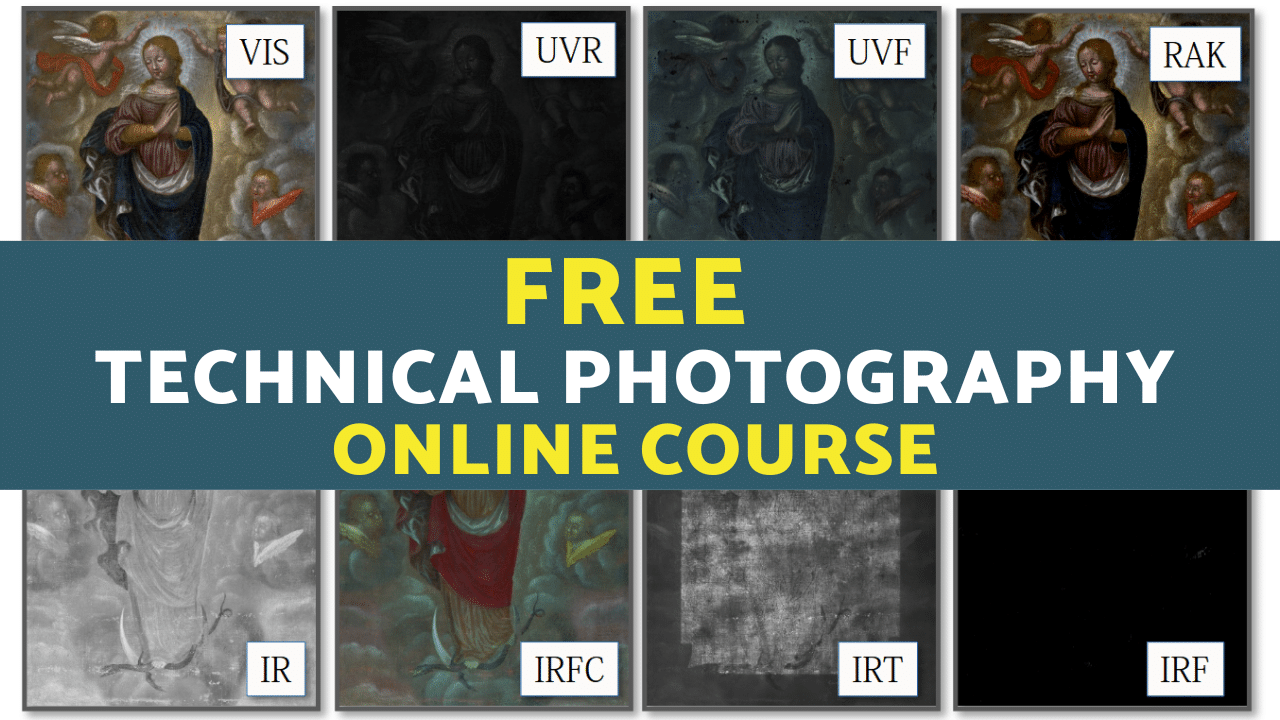
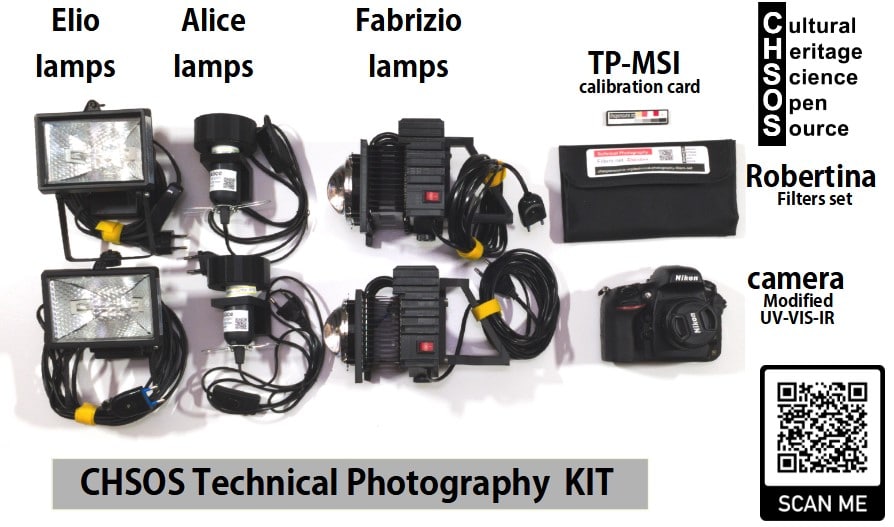
Technical Photography is one of the most powerful—and often overlooked—tools for the scientific examination of art and archaeology. If you are a conservator, scientist, or art collector and you are not yet familiar with this method, it is truly a missed opportunity. Using simple, affordable equipment and a clear methodology, Technical Photography allows you to reveal underdrawings, retouchings, material differences, and conservation issues in a completely non-invasive way. Far from being complex or inaccessible, it is an easy entry point into scientific analysis. In many cases, Technical Photography represents the first essential step toward a deeper understanding of artworks and archaeological objects.
Training 2026

Scientific Art Examination – Resources:
Getty Conservation Institute (GCI) – USA
The British Museum – Scientific Research Department – UK
Scientific Research Department – The Metropolitan Museum of Art, New York, USA
C2RMF (Centre de Recherche et de Restauration des Musées de France) – France
Rijksmuseum – Science Department – Netherlands