Home » Products » Pigments Checkers » IRR – Infrared Reflectography – Pigments Checker “Modern & Contemporary Art”
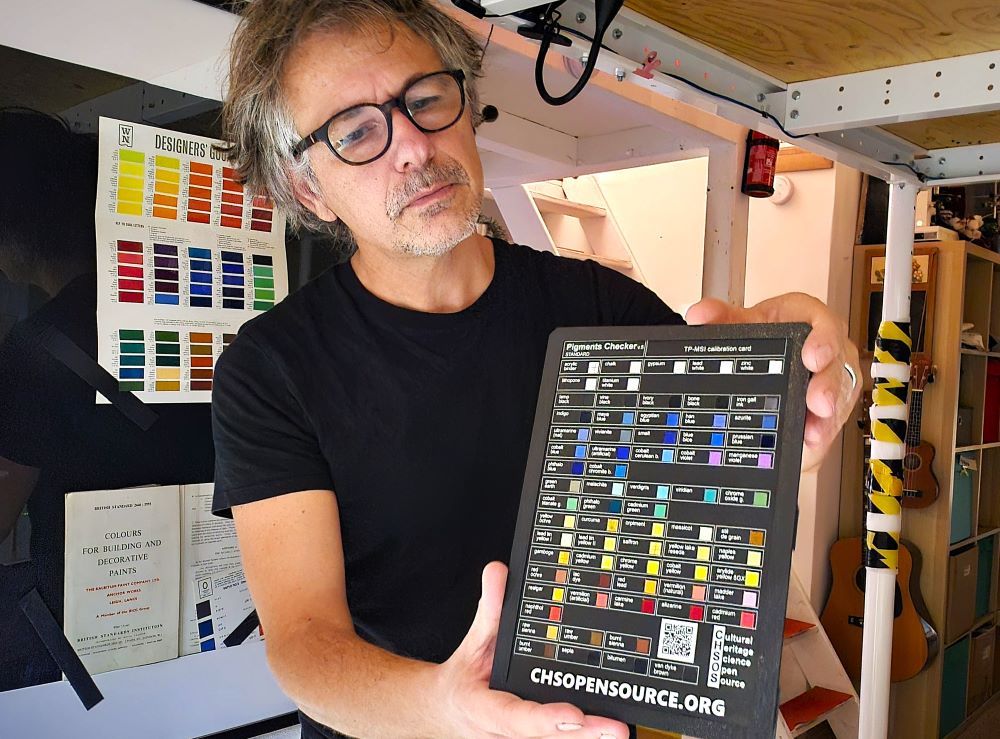
Infrared Reflectography on Pigments Checker – Modern and Contemporary Art
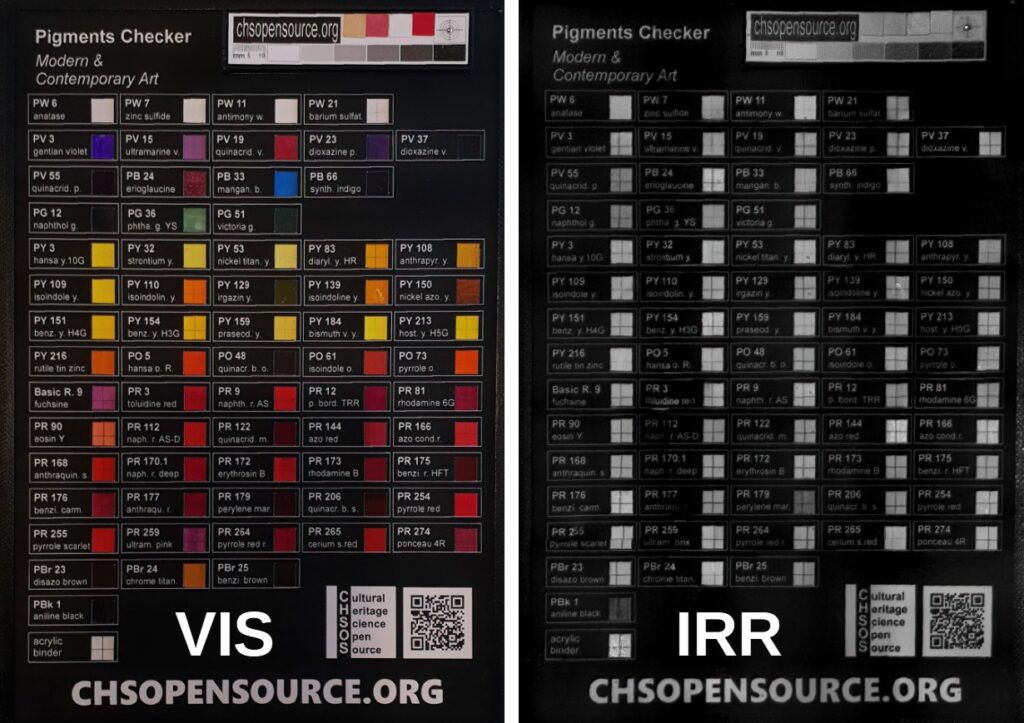
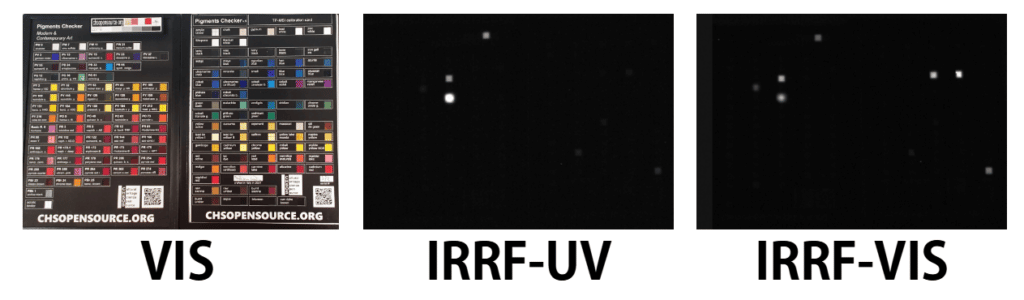
This page presents far-infrared imaging methods applied to the Pigments Checker – Modern and Contemporary Art. It includes both infrared reflectography (IRR) and the less common infrared reflectography fluorescence (IRRF), carried out with visible (IRR-VIS) and ultraviolet (IRR-UV) illumination. While IRR is traditionally used to reveal underdrawings and changes beneath the paint layers, IRRF has proven effective in mapping certain modern pigments.
IRR - Infrared Reflectography
IRRF - Infrared Reflectography Fluorescence
Manganese blue and Nickel Titanium yellow in Stamps and Art

IRRF-UV
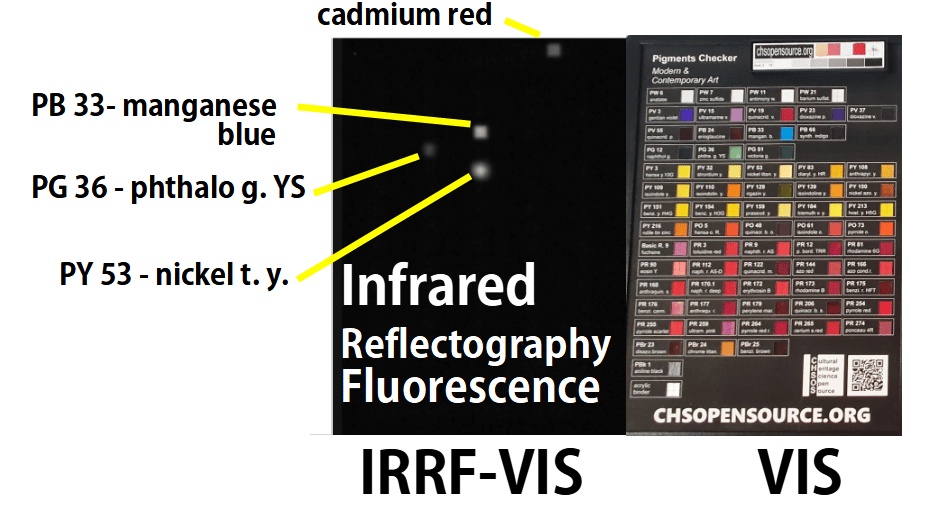
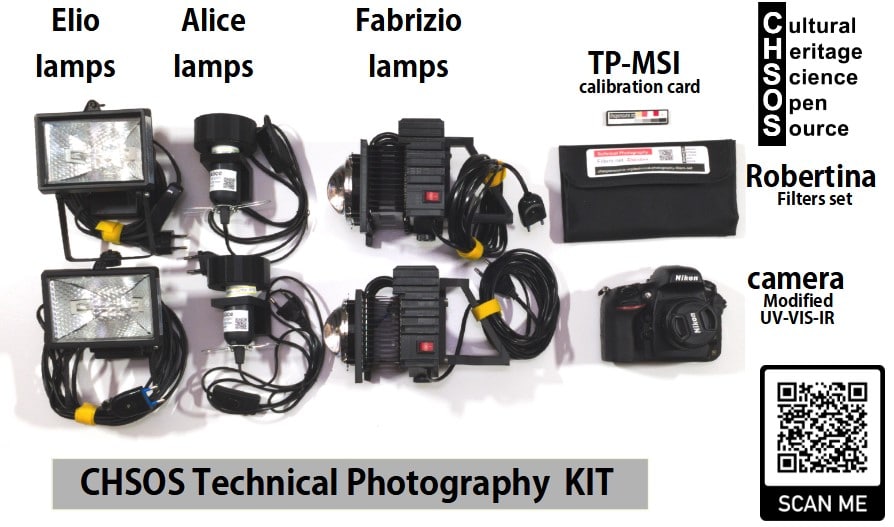
Pigments showing IRRF with the UV lamp Fabrizio (in descending emission-intensity order):
PY 53 – nickel titanium yellow
PB 33- manganese blue
cadmium red (TP-MSI calibration card)
PG 36 – phthalo green YS
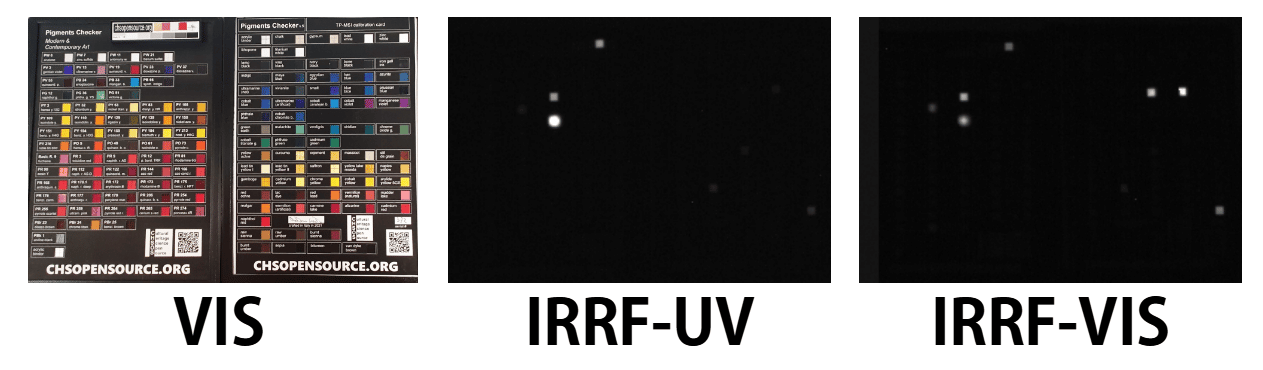
IRRF-VIS
Pigments showing IRRF with the VIS lamp Alice(in descending emission-intensity order):
PB 33- manganese blue
PY 53 – nickel titanium yellow
cadmium red (TP-MSI calibration card)
PG 36 – phthalo green YS
Manganese blue and Nickel Titanium yellow
Manganese Blue (barium manganate, PB33) and Nickel Titanium Yellow (nickel titanate, PY53) are modern inorganic pigments valued for their exceptional stability and purity of hue. Manganese Blue, introduced in the 1930s, produces a clear, luminous cyan that resists fading and chemical reaction. Artists prized it for skies, water, and transparent glazes, while printers used it as a stable alternative to Prussian or phthalocyanine blues. Nickel Titanium Yellow, developed in the 1960s, offers an opaque, greenish-yellow tone that replaced the more toxic cadmium and chrome yellows. Its heat and lightfastness made it ideal for industrial and printing applications. Both pigments entered stamp production in the mid to late twentieth century, reflecting the postal industry’s shift toward safer and more durable synthetic colors. In philately and conservation science, their detection by XRF or Raman spectroscopy reveals evolving pigment technologies in modern stamp printing. Manganese Blue and Nickel Titanium Yellow also mark a transition in material history—from mineral and organic colorants to engineered oxides designed for permanence and environmental safety. Their presence in artworks and stamps symbolizes modern chemistry’s impact on visual culture, uniting industrial innovation with aesthetic needs for brightness, stability, and non-toxicity across artistic and commercial printing practices.
-
Pigments Checker (TP-MSI calibration card included)
730,00€ Select options This product has multiple variants. The options may be chosen on the product page
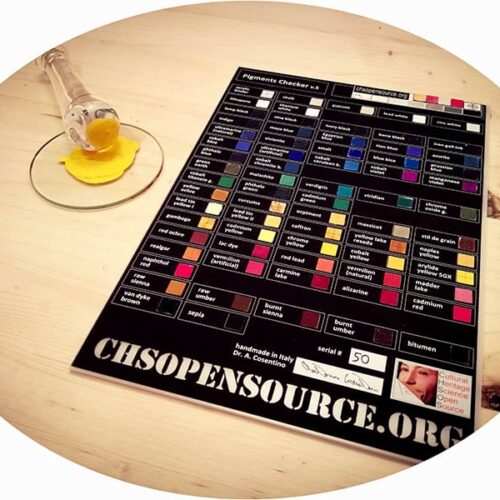
Learn Technical Photography for Art Examination
Technical Photography is one of the most powerful—and often overlooked—tools for the scientific examination of art and archaeology. If you are a conservator, scientist, or art collector and you are not yet familiar with this method, it is truly a missed opportunity. Using simple, affordable equipment and a clear methodology, Technical Photography allows you to reveal underdrawings, retouchings, material differences, and conservation issues in a completely non-invasive way. Far from being complex or inaccessible, it is an easy entry point into scientific analysis. In many cases, Technical Photography represents the first essential step toward a deeper understanding of artworks and archaeological objects.
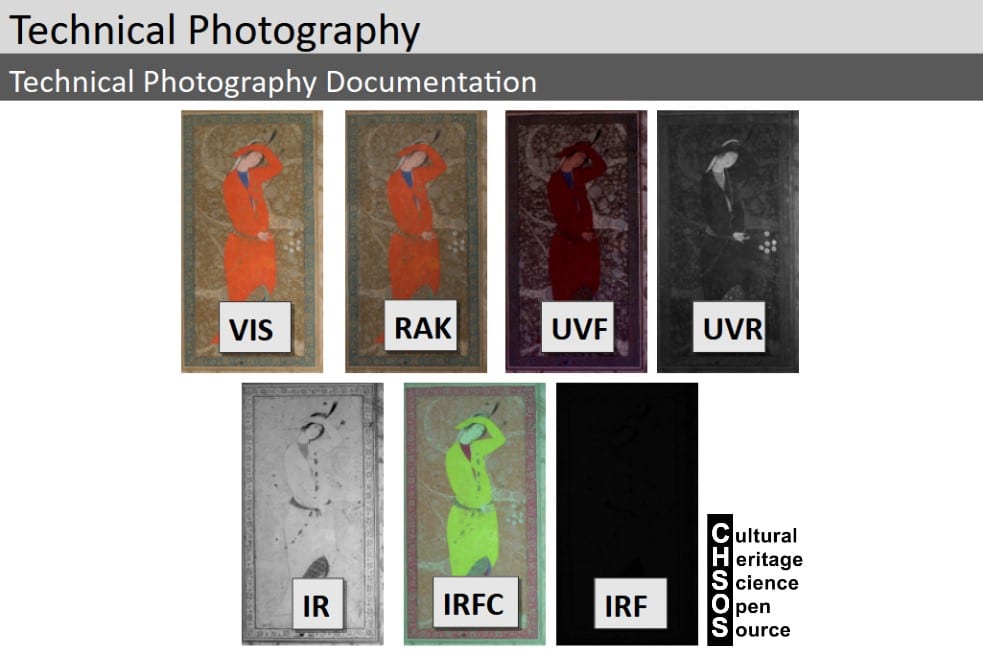
Scientific Art Examination – Resources:
Getty Conservation Institute (GCI) – USA
The British Museum – Scientific Research Department – UK
Scientific Research Department – The Metropolitan Museum of Art, New York, USA
C2RMF (Centre de Recherche et de Restauration des Musées de France) – France
Rijksmuseum – Science Department – Netherlands