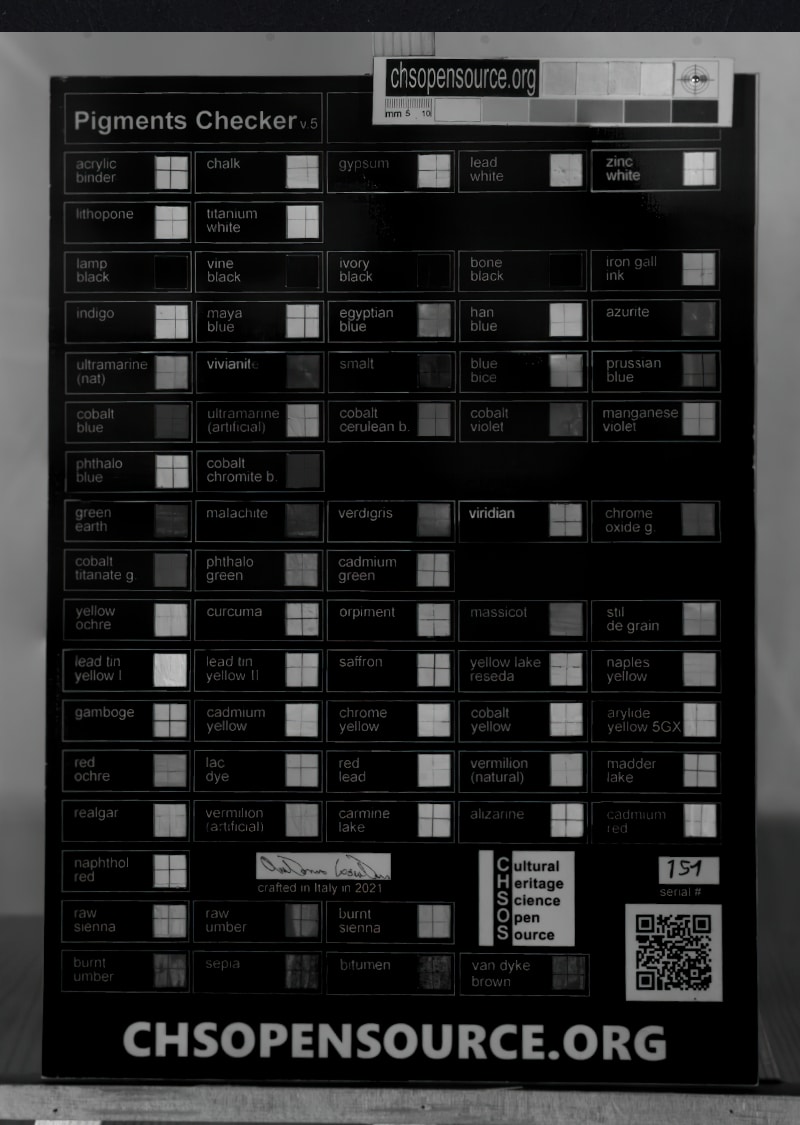
Home » Products » Pigments Checkers » Infrared Reflectography – Pigments Checker Standard
-
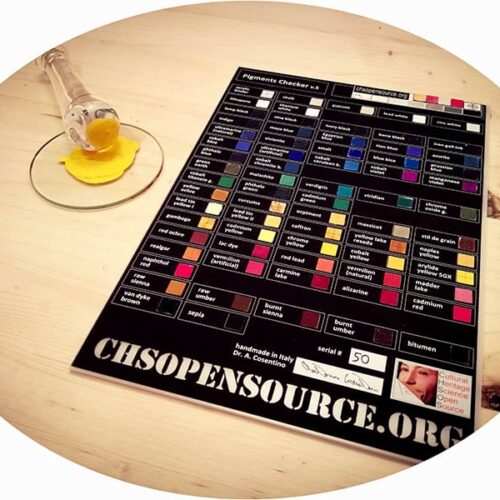
Pigments Checker (TP-MSI calibration card included)
730,00€ Select options This product has multiple variants. The options may be chosen on the product page -
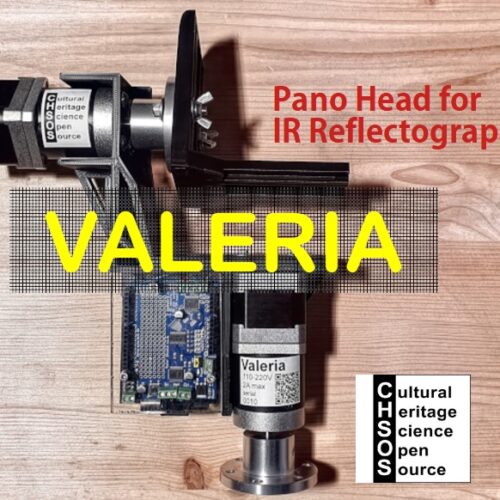
Valeria – Pano Head
1.320,00€ Add to cart
Infrared Reflectography (IRR) in the Examination of Pigments in Art
Infrared Reflectography (IRR) is a powerful and non-invasive imaging technique widely used in the scientific examination of artworks. By capturing images in the near-infrared region—typically between 900 nm and 1700 nm—IRR can penetrate certain layers of paint, thereby revealing hidden details beneath the visible surface. Consequently, this makes IRR invaluable for uncovering underdrawings, preparatory sketches, and compositional changes made by the artist during the creative process.
How IRR Interacts with Pigments
In pigment analysis, IRR plays a crucial role because many pigments become more transparent in the infrared range, allowing infrared radiation to pass through upper paint layers and reflect from the ground or lower layers. For instance, carbon-based underdrawings appear dark in IRR images due to their strong infrared absorption. In contrast, pigments such as lead white or ultramarine become partially transparent, thus exposing what lies beneath.
Applications in Art Conservation and Research
Furthermore, art conservators and heritage scientists often use IRR in combination with other imaging and analytical techniques. This integrated approach not only supports authentication but also informs conservation strategies and helps detect later additions or restorations. IRR proves especially effective for historical paintings, where understanding the artist’s working methods is essential for preservation and scholarly interpretation.
Portable Systems and Integrated Analysis
With the development of portable, high-resolution IRR systems, experts can now perform in-situ examinations in museums, galleries, and private collections. Since the method is contactless and sample-free, it is completely safe for delicate artworks. Moreover, when IRR data is combined with multispectral imaging and reflectance spectroscopy, pigment identification becomes more accurate, and material changes over time can be better documented.
In conclusion, Infrared Reflectography remains a cornerstone of cultural heritage science, offering a unique window into the hidden layers of art while deepening our understanding of historical painting techniques.
Learn Technical Photography for Art Examination
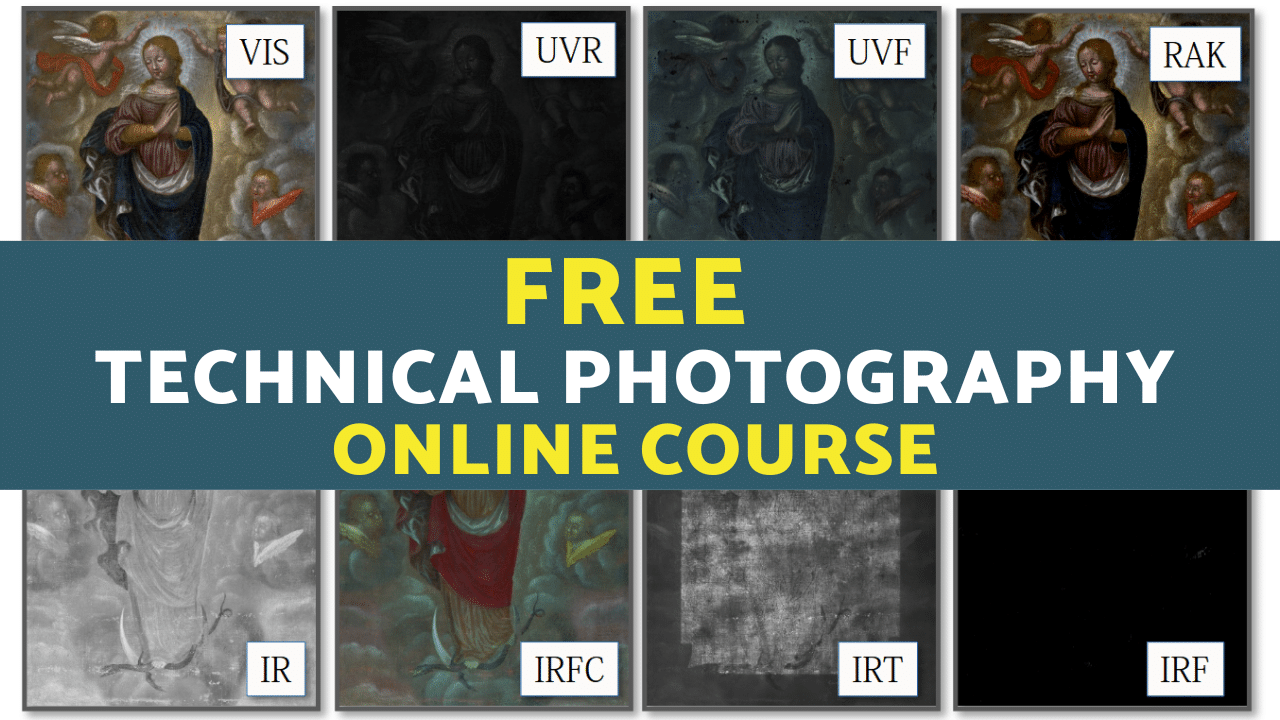
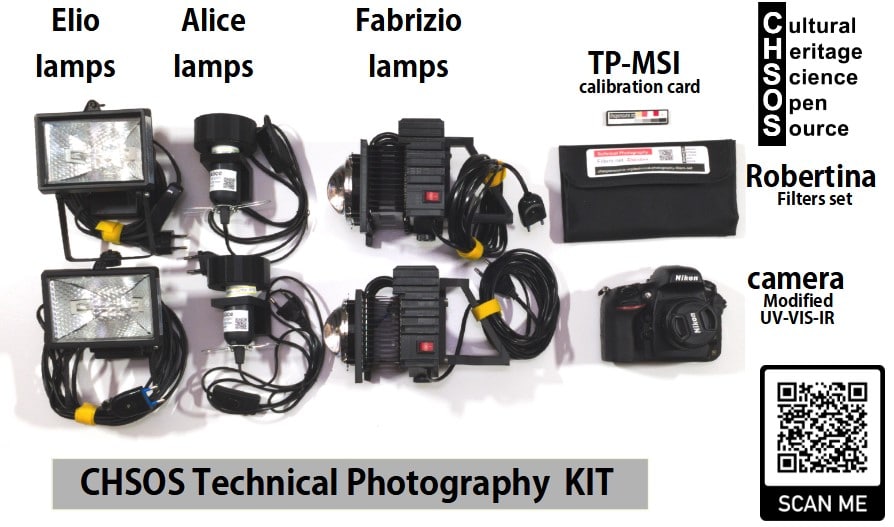
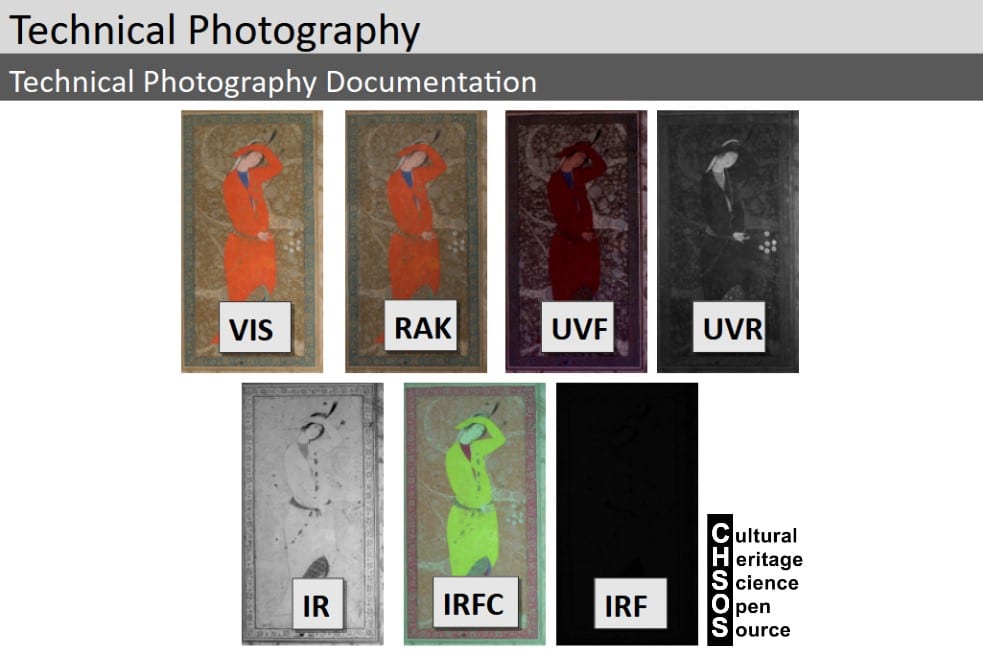
Technical Photography is one of the most powerful—and often overlooked—tools for the scientific examination of art and archaeology. If you are a conservator, scientist, or art collector and you are not yet familiar with this method, it is truly a missed opportunity. Using simple, affordable equipment and a clear methodology, Technical Photography allows you to reveal underdrawings, retouchings, material differences, and conservation issues in a completely non-invasive way. Far from being complex or inaccessible, it is an easy entry point into scientific analysis. In many cases, Technical Photography represents the first essential step toward a deeper understanding of artworks and archaeological objects.
Scientific Art Examination – Resources:
Getty Conservation Institute (GCI) – USA
The British Museum – Scientific Research Department – UK
Scientific Research Department – The Metropolitan Museum of Art, New York, USA
C2RMF (Centre de Recherche et de Restauration des Musées de France) – France
Rijksmuseum – Science Department – Netherlands