Fabrizio VS the Fluorescence World

Fabrizio Versus the Fluorescent World

Fabrizio VS the Fluorescent World

Welcome to the archive of “Fabrizio VS the Fluorescent World”, a growing collection of short, curious studies dedicated to materials that glow under ultraviolet light.

In this series, we step outside the familiar territory of Art Examination—no pigments, binders, or varnishes here. Instead, we explore the unexpected fluorescence of everyday and natural materials: chlorophyll shining red in leaves, minerals emitting vivid blues and greens, organic compounds revealing hidden optical behaviors, and synthetic materials surprising us with intense luminescence.

Each study is presented as a concise case study: a focused observation, a simple experimental setup, and a clear explanation of the photophysical principles behind what we see. The goal is not only to document fluorescence, but to cultivate curiosity and visual intuition about how matter interacts with light.

This page gathers all episodes of the series in one place—an open notebook of glowing experiments, bridging science, playfulness, and careful observation.

Table of Contents

In this first episode of Fabrizio Versus the Fluorescent World, we step beyond art materials and explore nature’s own glow. Starting with chlorophyll, we use a UV lamp to reveal its intense red fluorescence. From fresh spinach leaves to an ethanol extract, we uncover the hidden light within plants.

In this episode of the series “Fabrizio UV Lamp versus the Fluorescent World”, we explore a fascinating question: can ordinary drinks reveal hidden colors under ultraviolet light? The answer is yes. Many common beverages contain molecules that respond to ultraviolet radiation with striking Fluorescence. When illuminated with ultraviolet light, these molecules absorb invisible radiation and re-emit it as visible light, producing vivid glowing colors.

In this episode of “Fabrizio VS the Fluorescent World”, we take the Fabrizio UV Lamp and explore a place full of everyday materials: the kitchen. Fruits, spices, milk, honey, and eggs become unexpected subjects for ultraviolet fluorescence photography.

In this episode of “Fabrizio VS the Fluorescent World” we explore the UV fluorescence of minerals using the Fabrizio UV Lamp. By examining several mineral specimens under ultraviolet illumination, we can observe how different materials respond and understand why fluorescence occurs.


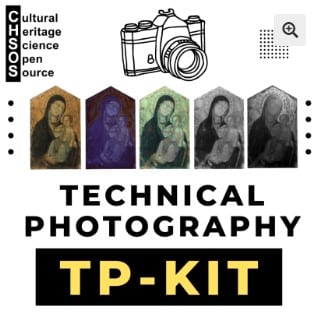
Learn Technical Photography for Art Examination

Technical Photography is one of the most powerful—and often overlooked—tools for the scientific examination of art and archaeology. If you are a conservator, scientist, or art collector and you are not yet familiar with this method, it is truly a missed opportunity. Using simple, affordable equipment and a clear methodology, Technical Photography allows you to reveal underdrawings, retouchings, material differences, and conservation issues in a completely non-invasive way. Far from being complex or inaccessible, it is an easy entry point into scientific analysis. In many cases, Technical Photography represents the first essential step toward a deeper understanding of artworks and archaeological objects.


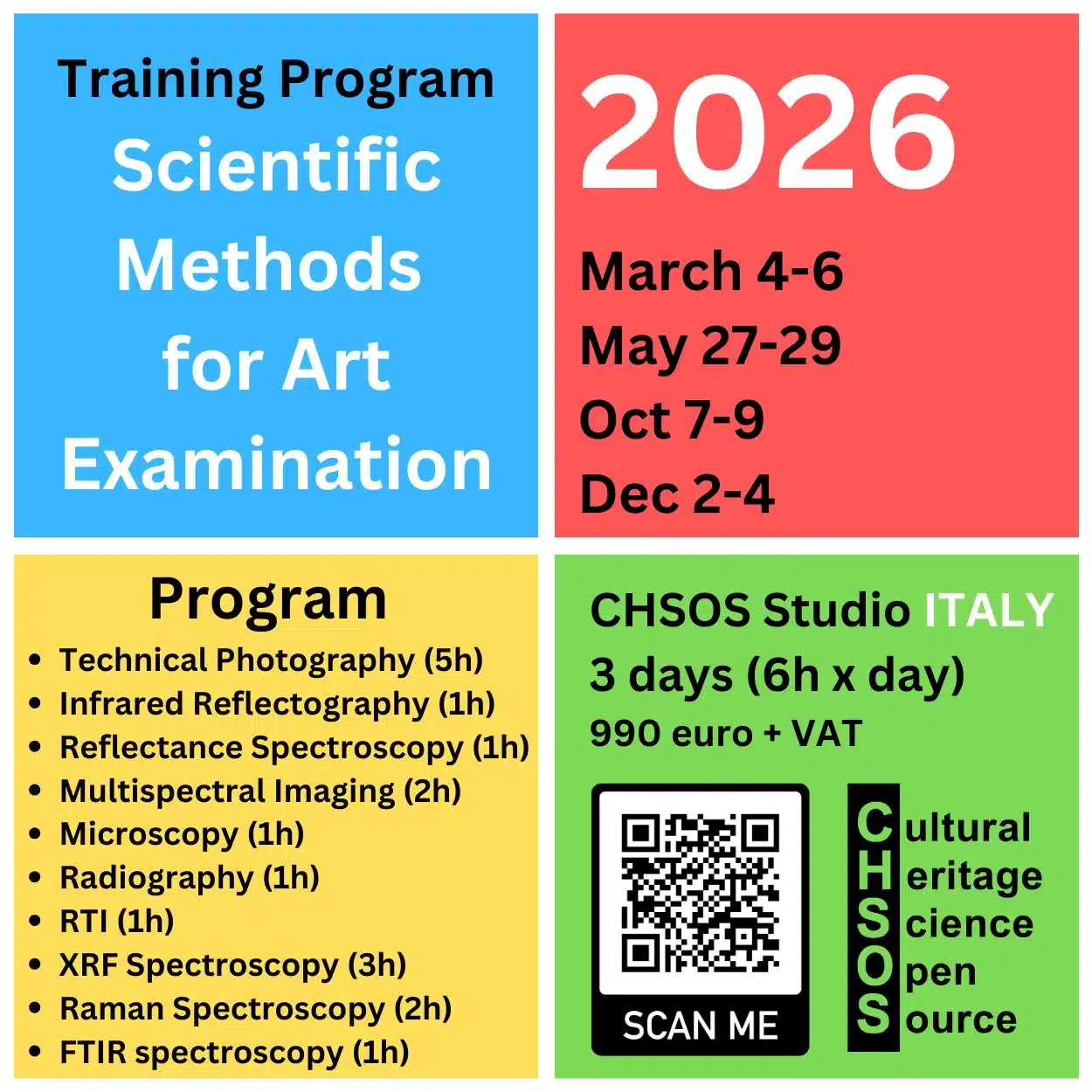
Training 2026

Scientific Art Examination – Resources:
Getty Conservation Institute (GCI) – USA
The British Museum – Scientific Research Department – UK
Scientific Research Department – The Metropolitan Museum of Art, New York, USA
C2RMF (Centre de Recherche et de Restauration des Musées de France) – France
Rijksmuseum – Science Department – Netherlands