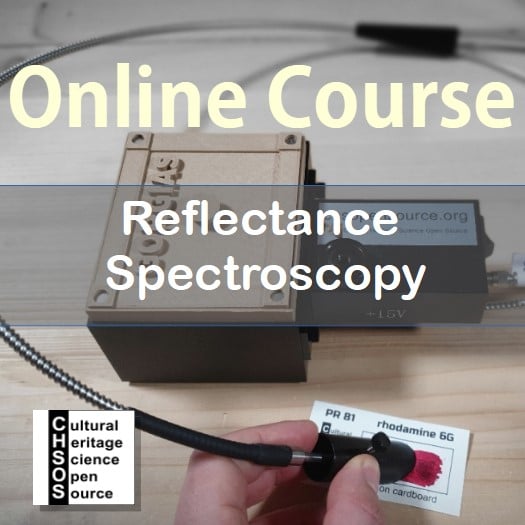
Gorgias spectrometer on a Indian Mughal manuscript

Reflectance Spectroscopy
Reflectance Spectroscopy Systems
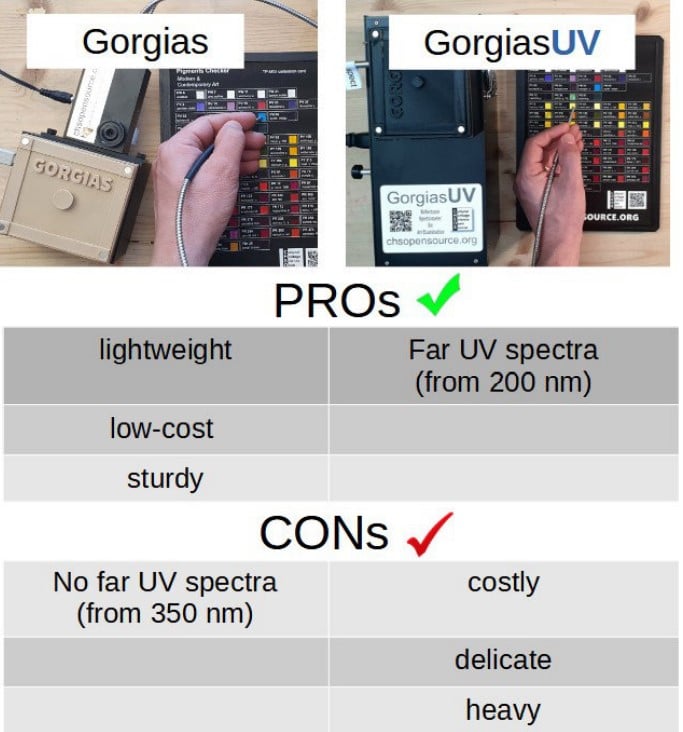
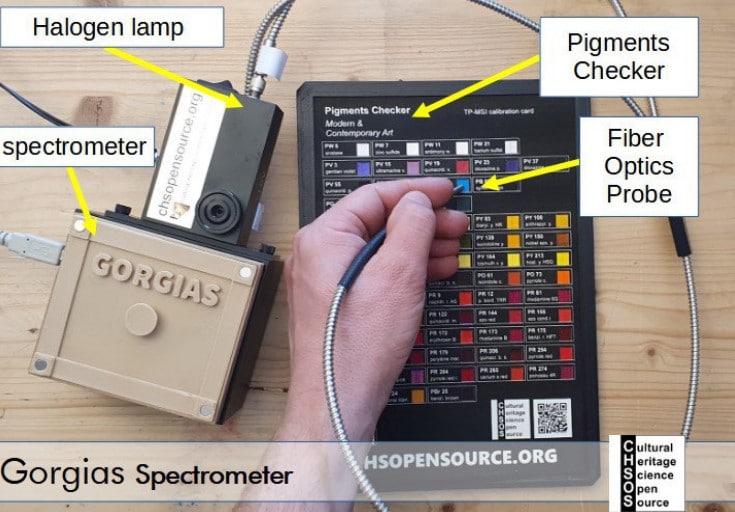
We propose 2 reflectance spectrometers. Gorgias is surprisingly portable and affordable. GorgiasUV provides better results in the UV range thanks to its Deuterium lamp, but because of this special lamp is bulkier. Also, it is more costly since it uses special fiber optics that must resist the UV radiation from the Deuterium lamp.

Table of Contents

gorgias vs gorgiasUV reflectance spectroscopy systems

Gorgias

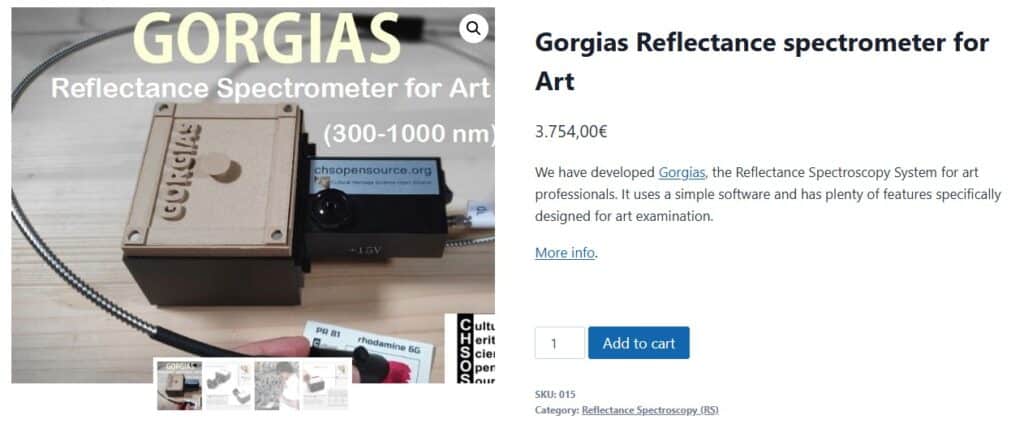
Gorgias   — the Reflectance Spectroscopy system designed for art and archaeology. Portable, affordable, and field-ready, it helps identify pigments and materials non-invasively from 300–1000 nm.
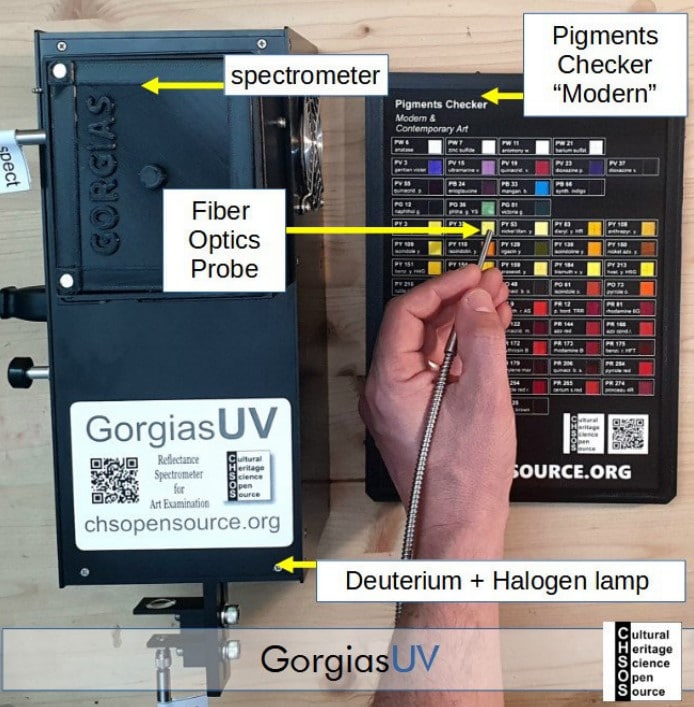
Gorgias Reflectance Spectroscopy system
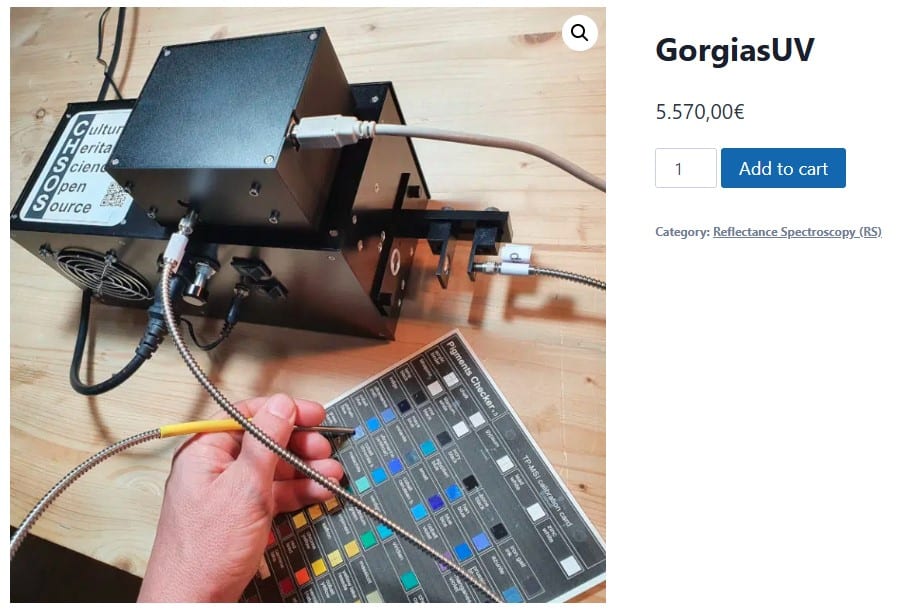

GorgiasUV

GorgiasUV expands Reflectance Spectroscopy into the ultraviolet range, enabling deeper analysis of pigments, binders, and materials from UV to NIR. Designed for cultural heritage, it is portable, affordable, and fully non-invasive.

GorgiasUV Reflectance Spectroscopy system

Reflectance Spectroscopy

Reflectance spectroscopy is a non-invasive analytical technique widely used in art history, conservation, and archaeology to investigate the optical properties of materials. By measuring the fraction of light reflected from a surface across a defined range of wavelengths—typically from the ultraviolet through the visible and into the near-infrared—it provides characteristic spectral signatures that can be linked to specific pigments, dyes, and surface treatments.

In the study of artworks, reflectance spectroscopy is particularly effective for the identification of colorants in paintings, manuscripts, polychrome sculpture, and decorative surfaces. Many historical and modern pigments exhibit distinctive absorption features related to electronic transitions or vibrational overtones, allowing them to be recognized even when applied in thin layers or mixed with binders. The technique is well suited to fragile or valuable objects, as it requires no sampling and minimal preparation.

In archaeology, reflectance spectroscopy supports the analysis of wall paintings, ceramics, lithic surfaces, and painted artifacts, helping to differentiate original materials from later interventions, weathering products, or burial alterations. Portable instruments enable in situ measurements, making the method applicable both in museums and in the field.

Reflectance spectroscopy is most powerful when used in combination with other diagnostic tools such as technical photography, X-ray fluorescence (XRF), and infrared reflectography. Together, these approaches provide complementary chemical and optical information, improving material interpretation and supporting informed conservation and research decisions while preserving the integrity of cultural heritage objects.