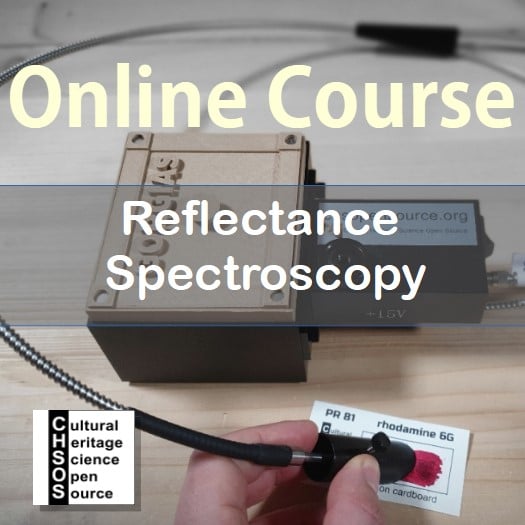
gorgias reflectance spectroscopy system

Gorgias – Reflectance Spectroscopy system
Gorgias - Reflectance Spectroscopy system
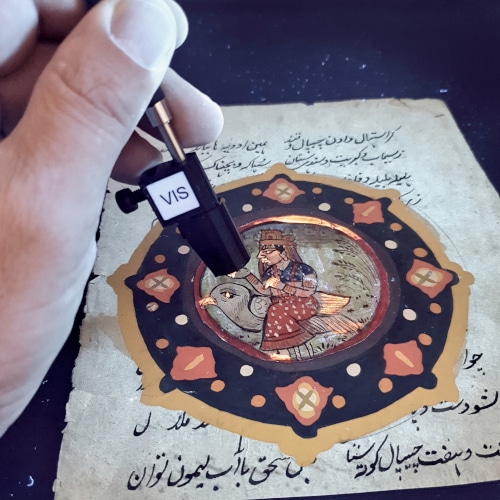
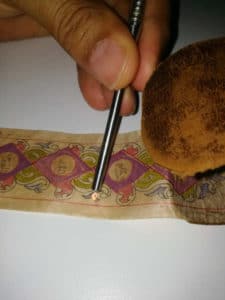
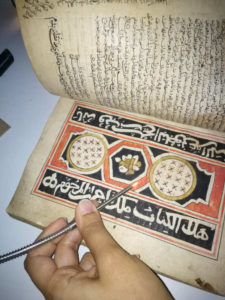
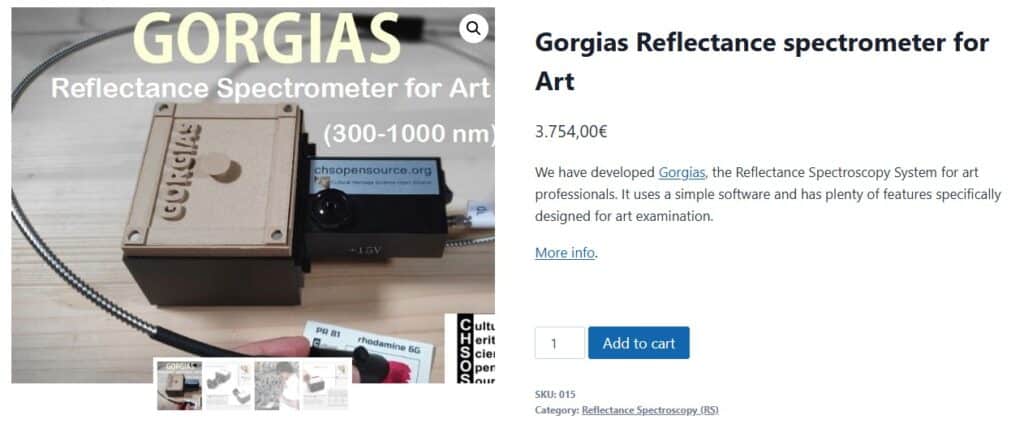
We have developed Gorgias, a reflectance spectroscopy system designed for art professionals. It features intuitive software and a range of tools specifically tailored for the examination of artworks.

In the analysis of polychrome artworks, Reflectance Spectroscopy (RS) has become a powerful portable technique for pigment identification. Compared to other commonly used methods, such as XRF and Raman, a key advantage of RS is that the instrumentation can be assembled using relatively low-cost components.

Reflectance spectroscopy measures, at each wavelength, the ratio between the intensity of reflected light and incident light relative to a standard white reference (reflectance). The resulting spectra provide characteristic information that is essential for the identification of pigments.

Table of Contents

Gorgias Reflectance Spectroscopy for scientific art examination

Intro to Reflectance Spectroscopy

Reflectance spectroscopy measures, at each wavelength, the ratio between the intensity of reflected light and incident light relative to a standard white reference (reflectance). The resulting spectra provide characteristic information for pigment identification.

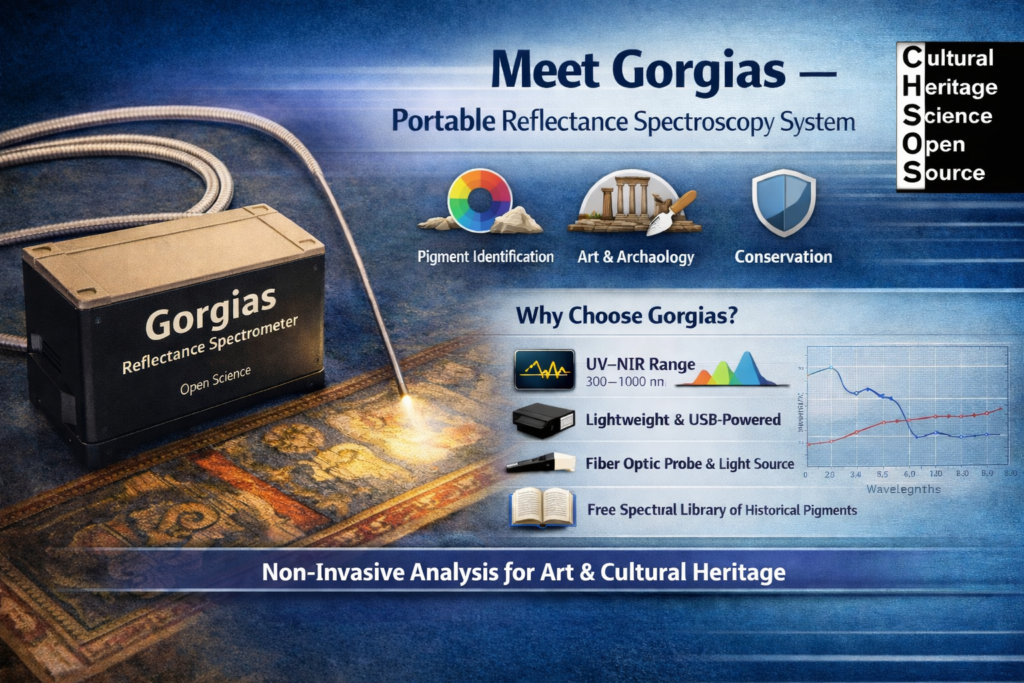
Gorgias is our reflectance spectroscopy system designed for the examination of art and archaeology.

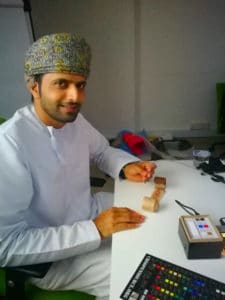
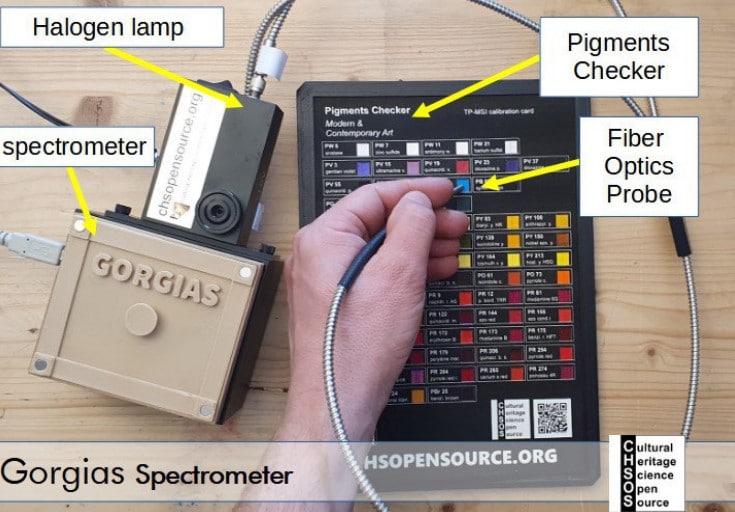
The Gorgias system consists of three main components: a professional reflectance spectrometer, a convenient fiber-optic reflectance probe, and a compact light source. The spectrometer operates over a spectral range of 300–1000 nm with 2 nm resolution and features 16-bit electronics for improved signal quality and reduced noise.

It connects directly to a laptop via USB, enabling immediate analysis. Compact and lightweight (just 430 g), it is ideal for fieldwork and fits in the palm of your hand. At its core is a 3648-pixel linear array, delivering high-quality reflectance spectra. The system also allows measurements in virtually any position thanks to its flexible fiber-optic probe.

Simple Software

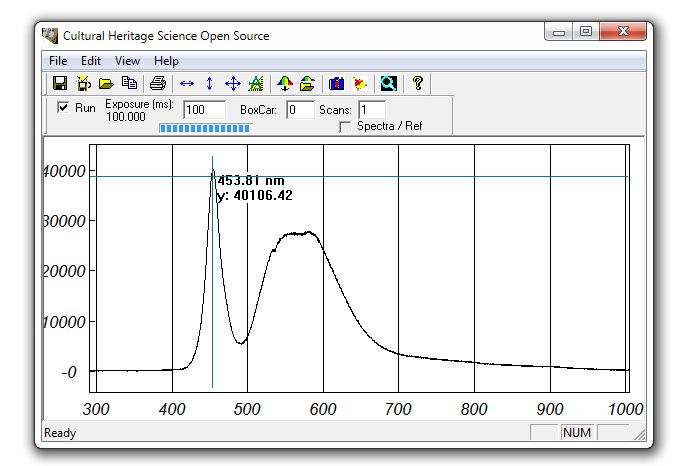
Acquire and interpret reflectance spectra with our intuitive, custom software designed for art professionals. With just a few essential controls, it ensures a fast and streamlined workflow—everything you need, nothing more.

A full-featured software suite is also included with Gorgias, allowing you to switch between simplified and advanced modes at any time.

reflectance spectroscopy CHSOS gorgias
Simple software, fast workflow. Acquire and interpret reflectance spectra with an intuitive interface designed for art professionals—switch anytime to the full-featured suite for advanced analysis.

Standards for calibration

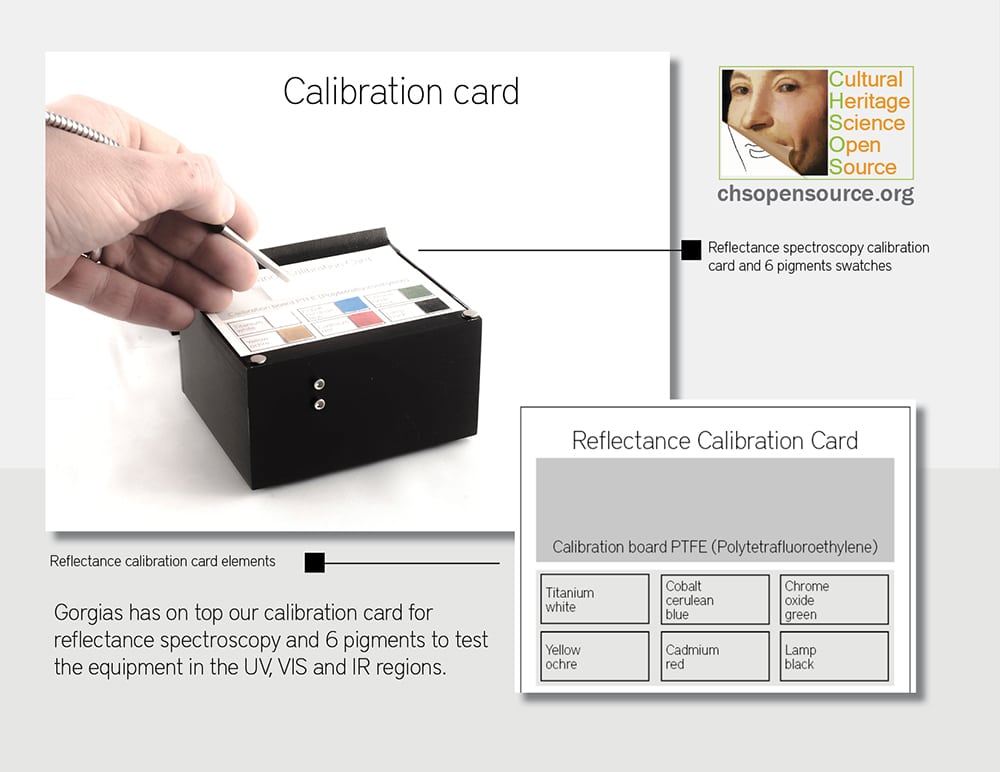
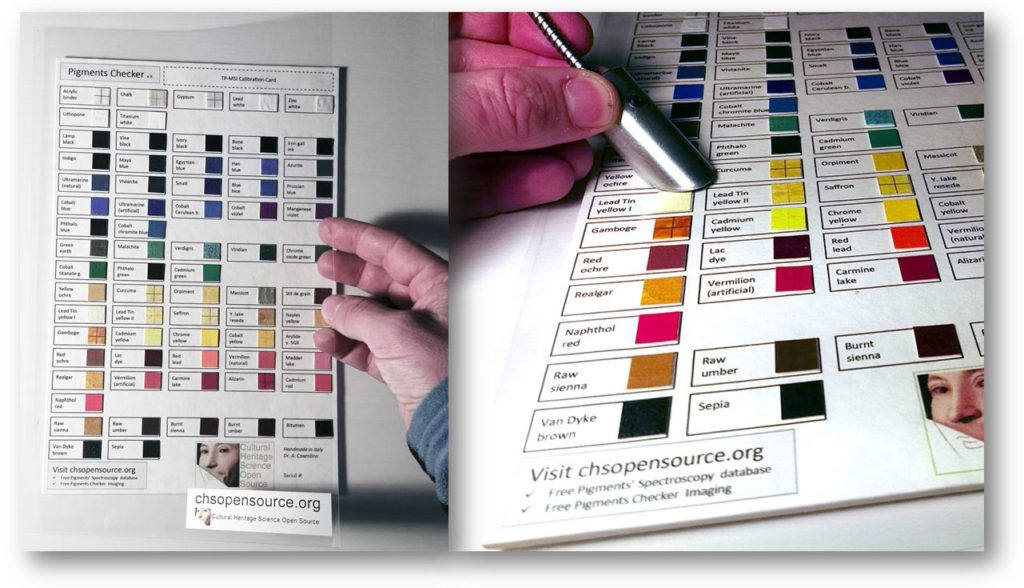
Gorgias features an integrated calibration card and a set of selected historical pigments, allowing quick verification that the system is operating correctly.

Gorgias calibration card
Built-in calibration, instant confidence. Gorgias integrates a calibration card and selected pigments to quickly verify system performance.

Free Pigments Spectra Database

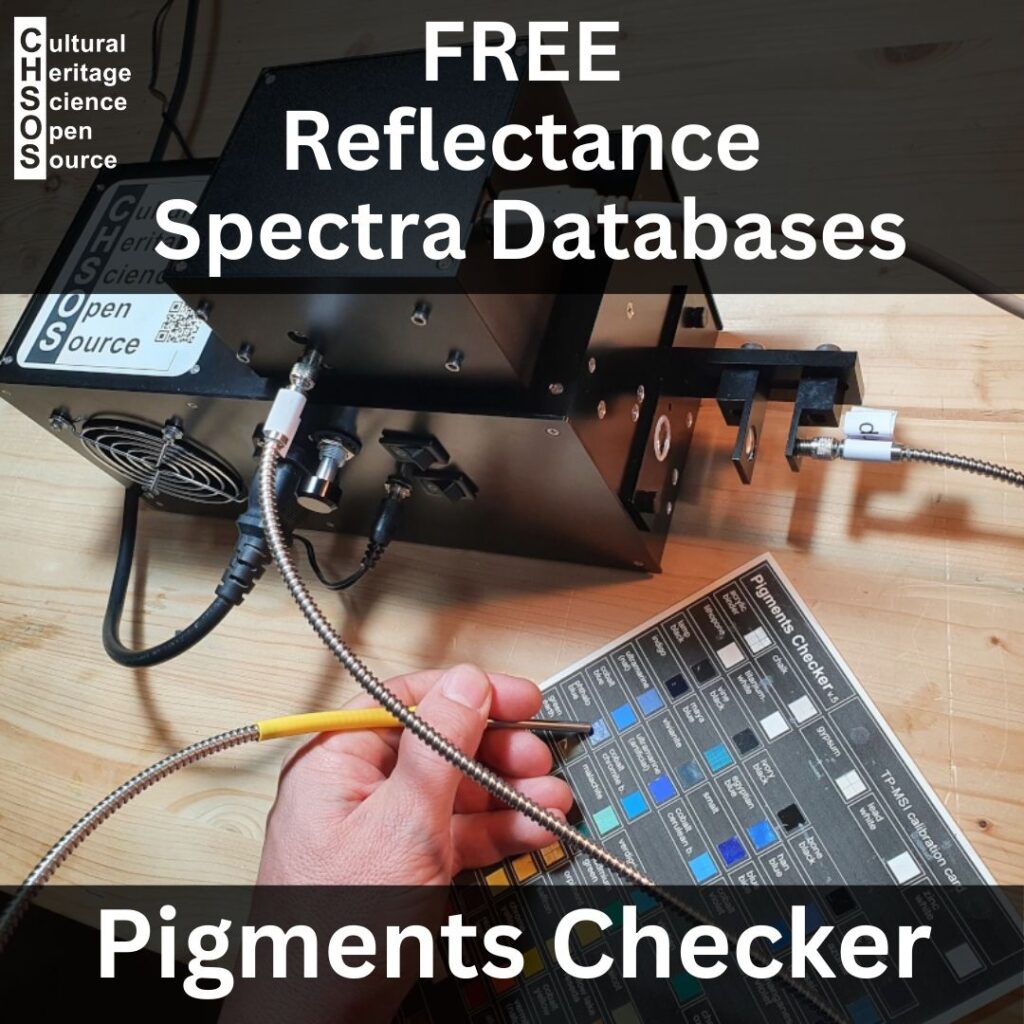
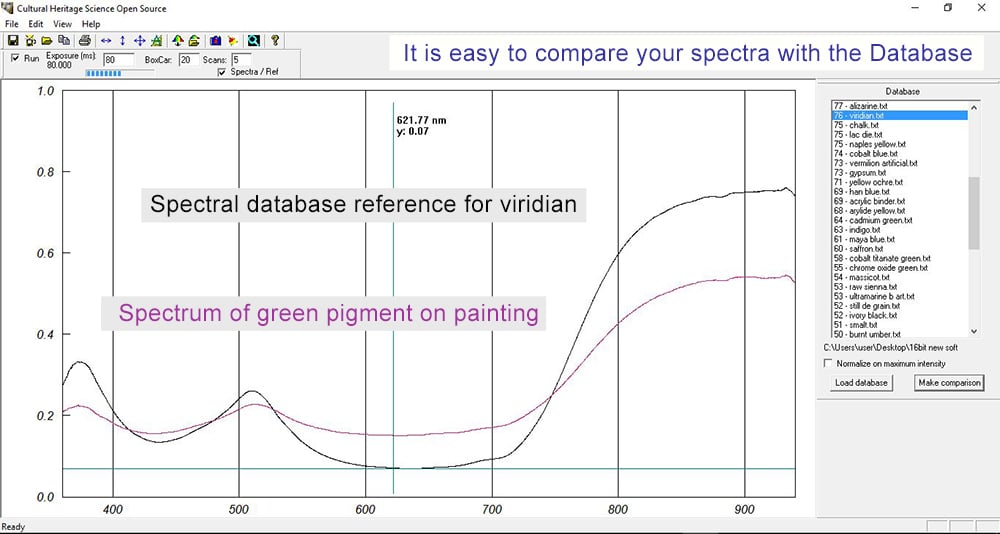
The system includes a reflectance spectra library of historical pigments selected in Pigments Checker, enabling immediate comparison with your acquired spectra. The database is continuously expanding, free of charge, and fully integrated into the Gorgias software.

FREE Reflectance Spectra Databases
Free Spectra Databases from Gorgias and GorgiasUV—download via Pigments Checker and instantly compare your measurements with certified historical and modern pigment references.
reflectance spectra database
Free Spectra Database. Instantly compare your spectra with curated historical references from Pigments Checker.

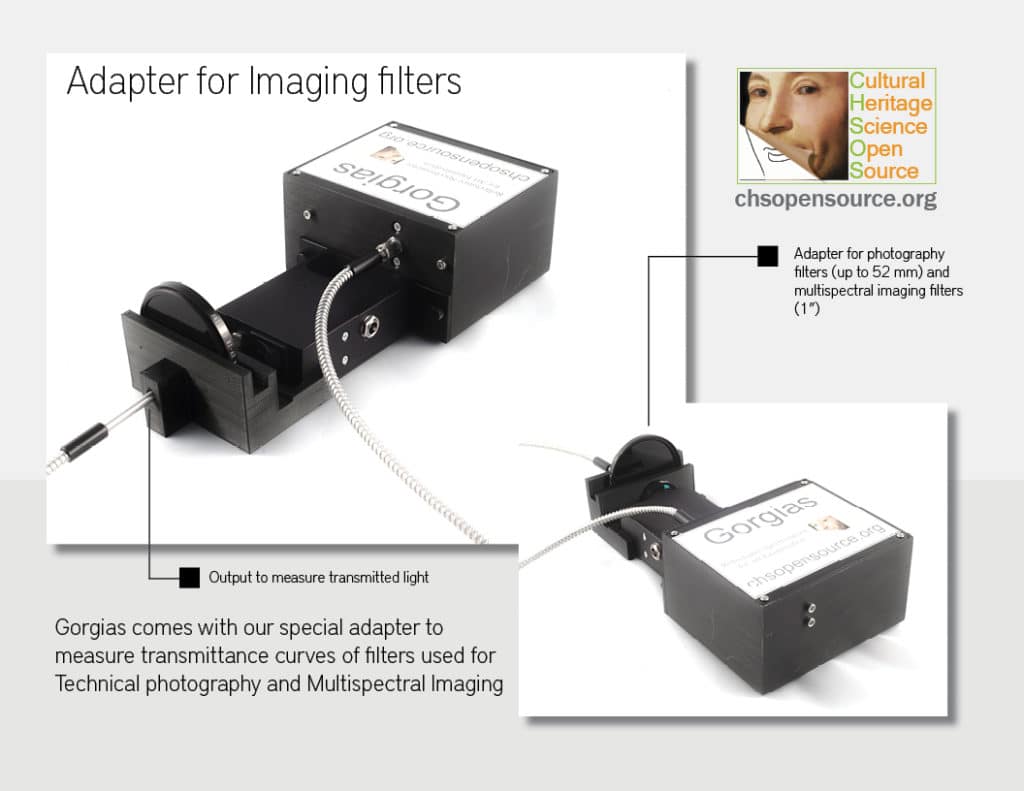
Adapter for Imaging filters 

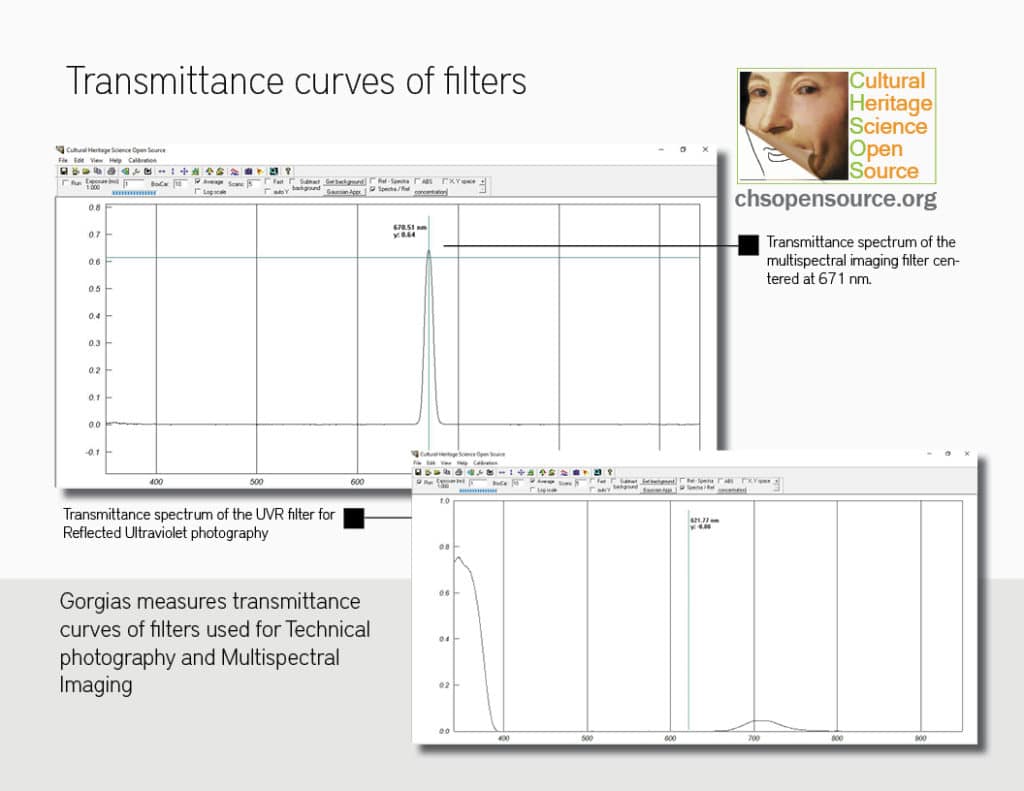
Measure your filters with confidence. Gorgias includes a dedicated adapter for acquiring transmittance curves of imaging filters, enabling art professionals to verify technical and multispectral bandpass filters with ease.

gorgias reflectance spectrometer for art filter adapter
Verify your imaging filters with ease. Gorgias includes a dedicated adapter to measure transmittance curves of technical photography and multispectral bandpass filters.
Gorgias adapter for Filters transmission spectra
Control your imaging filters with precision. Gorgias features a dedicated adapter for measuring transmittance curves of technical photography and multispectral bandpass filters, giving art professionals a reliable way to verify and validate their imaging setups.

Protective sheet

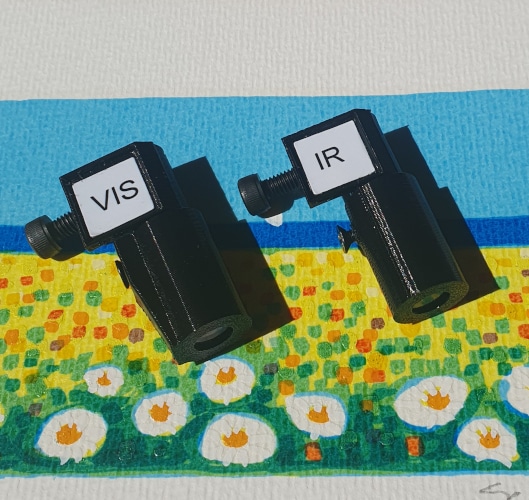
Protect the artwork, not the data. Use our special protective sheet to safeguard the surface while still acquiring accurate, high-quality reflectance spectra.

CHSOS protective sheet
Protect the artwork while capturing perfect reflectance spectra—our special sheet keeps surfaces safe without compromising results.

Technical specifications

Spectrometer
Weight: 430 grams
Dimensions: 102 mm x 84 mm x 59 mm
Detector: Toshiba TCD1304DG linear array (no interference pattern)
Detector spectral range: 300 – 1000 nm (100 microns slit)
Pixels: 3648
Pixel size: 8 um x 200 um
Pixel well depth: 100,000 electrons
Signal-to-noise ratio: 400:1 (10000:1 with averaging)
A/D resolution: 16 bit
Fiber optic connector: SMA 905 to 0.22 numerical aperture single-strand optical fiber.
Diffraction order sorting filter: included
Exposure time: 10 us – 60 s
CCD reading time: 14 ms
Power consumption: 100mA @ 5V from USB interface
Onboard memory capacity: 64 spectra
Data transfer speed: 200 ms / 100 ms (2 points binding)
Computer interface: USB 2.0, HID 2.0
Operational system: Windows 10 /Windows 8 / Windows 7 / Vista / XP ; 32/64b
Software: application software, driver,
Hardware: USB cable

Reflection fiber probe
Stainless steel tubing for extra strength. 7 x 600 microns core fibers (6 excitation fibers, 1 collection fiber). It is 1 meter long and it has a 45 degr. adapter for reflectance measures.

Light Source
Dimension (LxWxH): 90 mm x 80 mm x 31 mm
Weight: 70 g
Light source: 10W halogen lamp
Cooling: active, fan, 12 VDC, 25×10 mm
Power: AC-DC transformer, 100 – 240 VAC, Voltage output: 12 VDC
Spectral range: 300 – 1000 nm (halogen lamp)

Reflectance Spectroscopy for pigments, art and archaeology

Gorgias, who was him?

We name our tools after renowned scientists, artists, and writers who have enriched Sicily’s long history. Gorgias (c. 485 – c. 380 BC) was a Greek sophist, pre-Socratic philosopher, and rhetorician, native of Leontini in Sicily.

Alongside Protagoras, he belongs to the first generation of Sophists. He is credited with bringing the art of rhetoric from Sicily to Attica and is regarded as one of the founders of sophism—a movement that emphasizes the practical use of rhetoric in civic and political life.

Reflectance Spectroscopy for pigments, art and archaeology

Applications in Art Examination

Resources

Case Studies using Reflectance Spectroscopy

17th century Umbrian School Madonna and Child

FAQ

Q: I am worried about the light level and temperature rise at the surface of the object that you are getting using the 10W halogen source in the Gorgias. I think this can be of some concern, particularly with in-situ analysis of pigments on works on paper. Do you have measurements for light and temperature at the object surface that you could share?
R: The system uses a 10W halogen lamp and, as you observed, this lamp generates heat. Though, the system uses fiber optics for probing and so the hot lamp can be kept conveniently almost 1 meter from the subject. Furthermore, fiber optics do not transfer heat, just the radiation between the near UV and the near IR. This radiation is low because the fiber optics probe just collect a tiny fraction of the radiation emitted by the lamp and deliver it to the sample. We measure it and it is about 200 lux. To understand the magnitude of this value we can consider that standard Office illumination is around 300-500 lux.