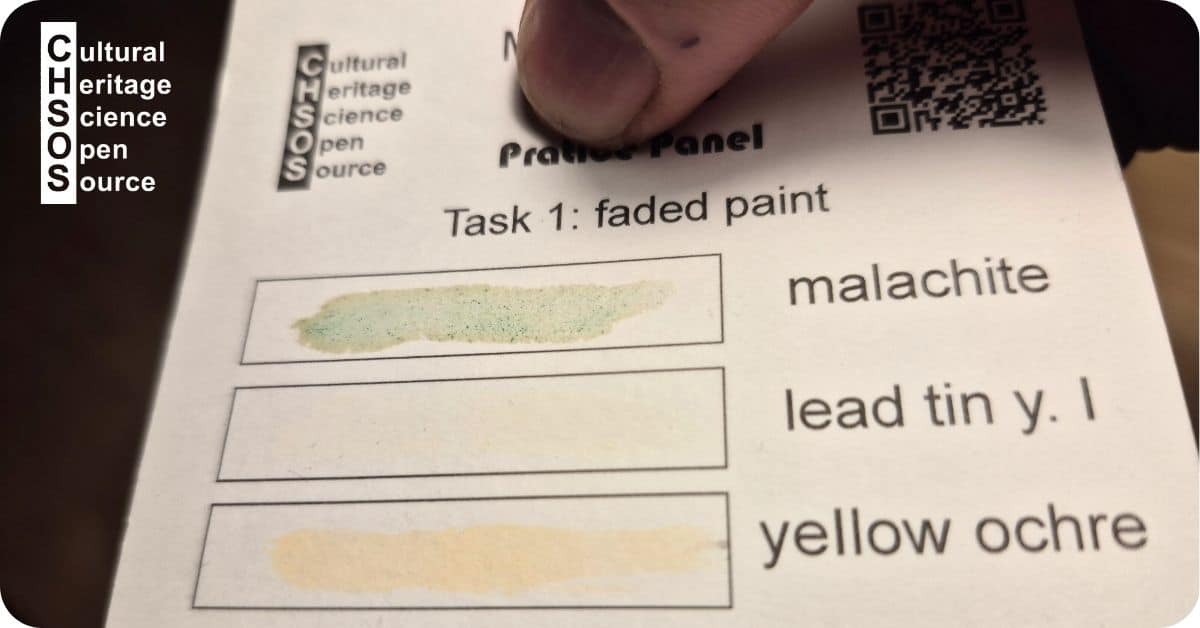
Technical Photography faded paint test artifacts

Technical Photography – faded paint
Task 1: faded paint

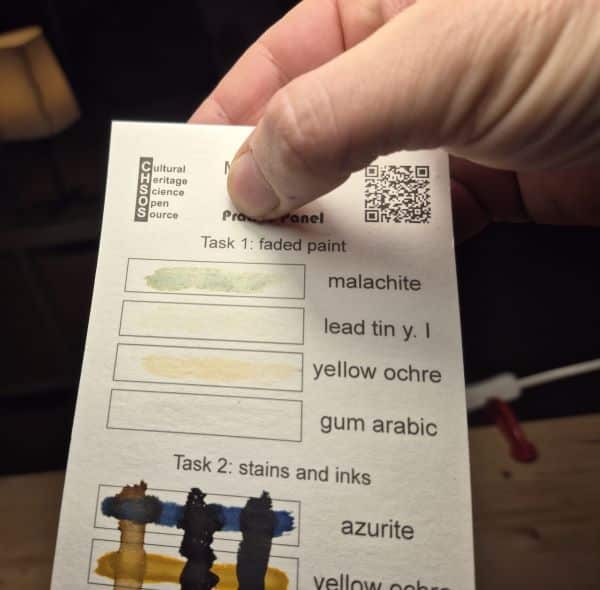
The Test Artifact Task 1 features three paints prepared with malachite, lead–tin yellow type I, and yellow ochre, all bound with gum arabic. These paints were intentionally made with a very low pigment concentration, resulting in swatches that are barely visible in standard visible-light photography. Their appearance simulates the effect of naturally faded paints.
The goal of this task is to apply imaging methods that can enhance the visibility of these faint swatches.
CHSOS Test Artifacts – item #1

TP faded paint

Technical Photography of faded paint

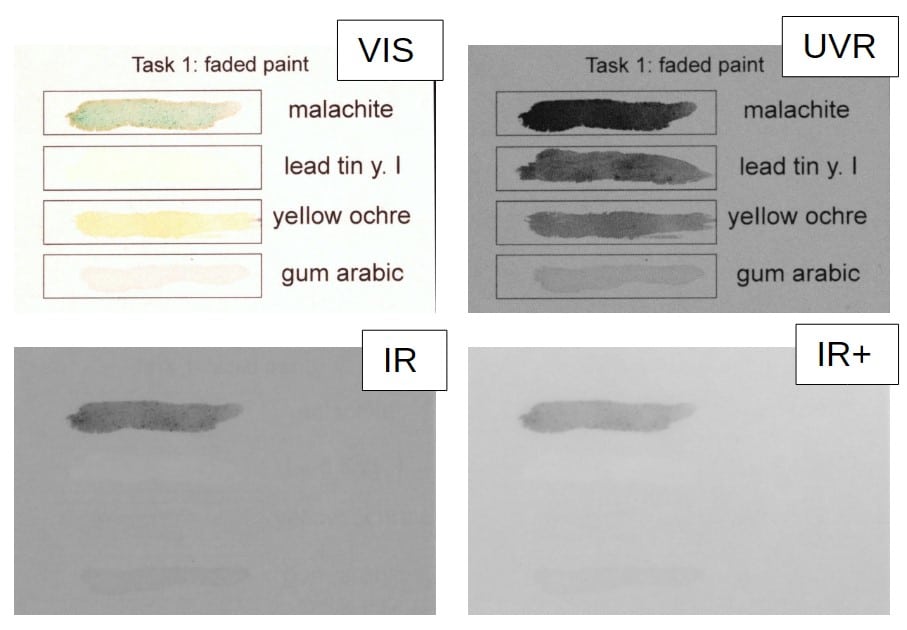
We can test technical photography to determine which of its photographic imaging method works best for this task. Reflected UV (UVR) is the most effective approach because most pigments absorb strongly in the ultraviolet range. As a result, UVR typically produces higher contrast, showing dark pigments against the bright reflective surface of the cardboard.

This method is particularly successful with lead–tin yellow, which appears the most faded in the visible image. Conversely, other imaging methods such as IR and IR+ (using the LIBERO filter) do not improve visibility, as expected, because the pigments become even more transparent in the infrared region.

Technical Photography faded paint test artifacts

While we could consider more advanced imaging approaches, such as multispectral imaging, the advantages of Technical Photography (TP) for faded paint are clear:

  • TP allows us to photograph and process a large number of items quickly — an essential feature when working with extensive objects such as multi-page illuminated manuscripts. The image editing required from the operator is also straightforward.

  • More complex techniques, like multispectral imaging, demand highly specialized equipment and personnel with advanced training, making them less practical for routine or high-volume documentation of faded paint.


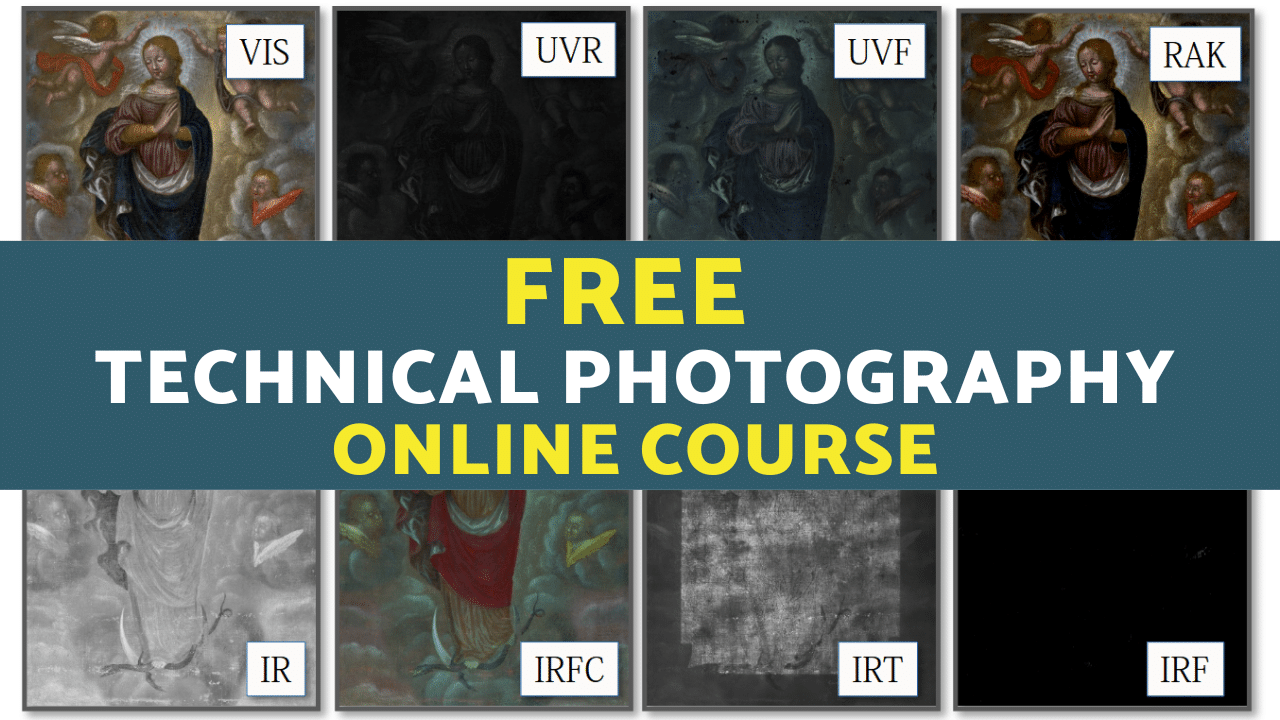
Learn Technical Photography for Art Examination

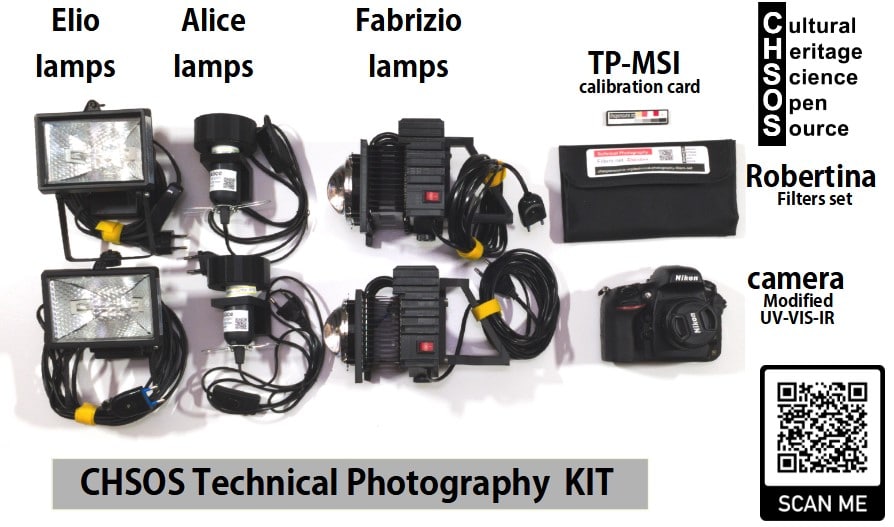
Technical Photography is one of the most powerful—and often overlooked—tools for the scientific examination of art and archaeology. If you are a conservator, scientist, or art collector and you are not yet familiar with this method, it is truly a missed opportunity. Using simple, affordable equipment and a clear methodology, Technical Photography allows you to reveal underdrawings, retouchings, material differences, and conservation issues in a completely non-invasive way. Far from being complex or inaccessible, it is an easy entry point into scientific analysis. In many cases, Technical Photography represents the first essential step toward a deeper understanding of artworks and archaeological objects.
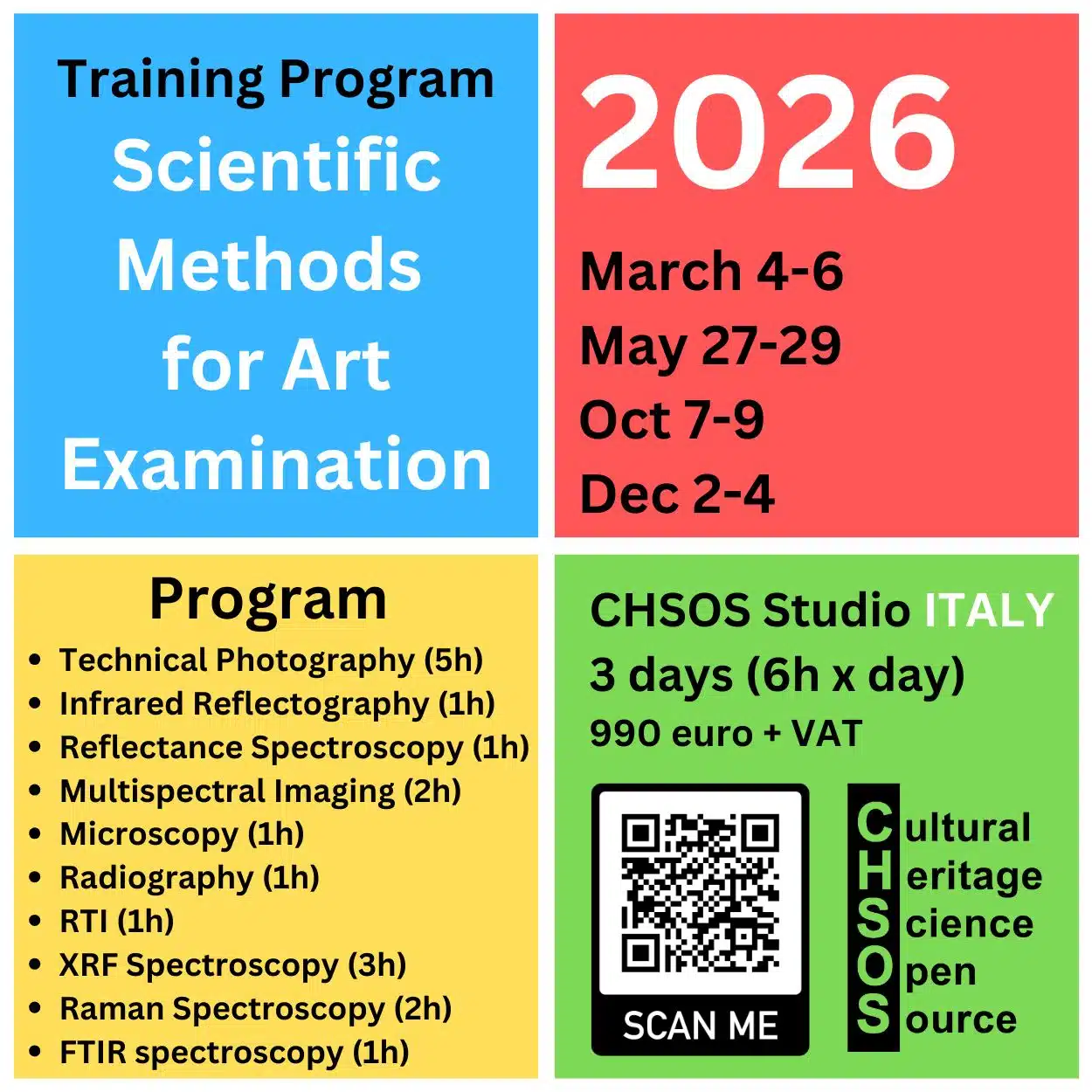
Training 2026

Scientific Art Examination – Resources:
Getty Conservation Institute (GCI) – USA
The British Museum – Scientific Research Department – UK
Scientific Research Department – The Metropolitan Museum of Art, New York, USA
C2RMF (Centre de Recherche et de Restauration des Musées de France) – France
Rijksmuseum – Science Department – Netherlands