A cheaper alternative (cobalt chromite) to cobalt cerulean blue (cobalt stannate) (PB35).
Manufacturer / product code: Kremer / Z-C0040
Chemical description: cobalt chromite
Color: blue
Color Index: PB36
More info:
Cobalt chromite blue-green spinel (Pigment Blue 36) represent an important option in the family of blue inorganic pigments. Cobalt chromite blue is a synthetic inorganic pigment formed by high-temperature calcination of cobalt, chromium, and related oxides, creating a spinell-structured material with a stable, mid-blue coloration that often shows slightly greenish undertones. It is commonly described as a more economical alternative to traditional cerulean blue (cobalt stannate, PB35) while retaining strong performance and durability.
Compared with other cobalt blues, cobalt chromite offers excellent lightfastness, chemical inertness, and resistance to heat and weathering, making it suitable for use in paints, coatings, and artistic media where long-lasting color is desired. Its moderate tinting strength and often semi-opaque character can contribute rich, nuanced blue tones in oil, acrylic, or watercolor applications. As part of the broader history of cobalt pigments—which have been prized for centuries for their brilliant and stable colors—cobalt chromite blues provide artists and manufacturers a reliable, vibrant blue option grounded in well-established inorganic chemistry.
Raman Spectroscopy 532 nm – ElviRa Spectrometer for Art
Raman Spectroscopy 532 nm (ElviRa spectrometer) Pigments-Checker Database (84729 downloads )

Raman spectroscopy 785 nm
Pigments (powder, no binder)

Raman Spectroscopy 785 nm Pigments (pure, no binder) (86317 downloads )
Pigments with acrylic binder (Pigments Checker)

Raman Spectroscopy 785 nm Pigments-Checker Database (87508 downloads )
Pure pigments (no binder, just powder)
DOWNLOAD paper: “Pigments Checker version 3.0, a handy set for conservation scientists: A free online Raman spectra database”

Raman spectroscopy 830 nm
Pigments (powder, no binder)

Raman Spectroscopy 830 nm Pigments-Checker Database (70725 downloads )
XRF spectroscopy
XRF Spectroscopy Pigments-Checker Database (102502 downloads )
DOWNLOAD previous database from Pigments Checker V.3 DOWNLOAD paper: R. Larsen, N. Coluzzi, A. Cosentino “Free XRF Spectroscopy database of Pigments Checker” Intl Journal of Conservation Science.

Reflectance Spectroscopy (200-1000 nm) – GorgiasUV Spectrometer
Reflectance Spectroscopy (200-1000 nm) (GorgiasUV) Pigments-Checker Database (105254 downloads )

Reflectance spectroscopy – Gorgias Spectrometer for Art
Reflectance Spectroscopy (350-950 nm) (Gorgias) Pigments-Checker Database (110857 downloads )

NIR Reflectance spectroscopy
NIR-Reflectance Spectroscopy (930-1690 nm) Pigments-Checker Database (99673 downloads )

FT-IR Spectroscopy (Non-invasive Diffuse Reflectance Probe)

FTIR Diffuse Reflectance Spectroscopy Pigments-Checker Database (88388 downloads )

FTIR non-invasive Spectroscopy Pigments (pure, no binder) Database (91262 downloads )
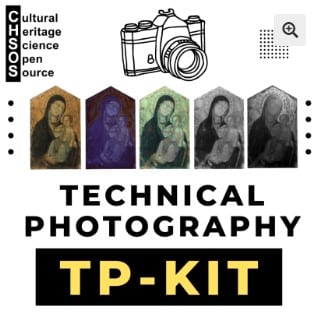
Learn Technical Photography for Art Examination
Technical Photography is one of the most powerful—and often overlooked—tools for the scientific examination of art and archaeology. If you are a conservator, scientist, or art collector and you are not yet familiar with this method, it is truly a missed opportunity. Using simple, affordable equipment and a clear methodology, Technical Photography allows you to reveal underdrawings, retouchings, material differences, and conservation issues in a completely non-invasive way. Far from being complex or inaccessible, it is an easy entry point into scientific analysis. In many cases, Technical Photography represents the first essential step toward a deeper understanding of artworks and archaeological objects.


Scientific Art Examination – Resources:
Getty Conservation Institute (GCI) – USA
The British Museum – Scientific Research Department – UK
Scientific Research Department – The Metropolitan Museum of Art, New York, USA
C2RMF (Centre de Recherche et de Restauration des Musées de France) – France
Rijksmuseum – Science Department – Netherlands