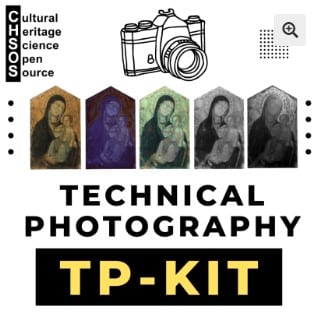
Once you acquire the images with the Technical Photography KIT, we can use tablets and apps for Technical Photography analysis and editing. Ensure the images are properly organized and labeled for easy reference. Bring your examination work to the Gallery, where you can present your findings and discuss them with your colleagues or visitors. This will allow for a thorough review and collaborative analysis, enhancing the overall understanding and appreciation of the examined pieces.
In modern imaging workflows, tablets and apps for Technical Photography have become valuable tools that complement specialized cameras, filters, and lighting systems. While this course focuses primarily on rigorous image acquisition techniques—such as visible, ultraviolet, and infrared photography—portable digital devices play an important supporting role throughout the entire process, from planning to documentation and review.
Technical Photography often takes place in studios, laboratories, museums, or field environments where flexibility and quick access to information are essential. Tablets can be used as portable viewers for image review, reference displays for calibration targets, or interfaces for tethered shooting and remote camera control. At the same time, mobile apps provide practical solutions for exposure checking, image annotation, basic processing, color reference, and workflow organization.
Rather than replacing dedicated imaging software, tablets and apps for Technical Photography enhance efficiency and decision-making during acquisition. They allow photographers and researchers to verify results in real time, compare spectral images, consult technical documentation, and manage data without interrupting the imaging session. In this lesson, we explore how tablets and mobile applications can be integrated into a professional technical photography workflow, highlighting their strengths, limitations, and best use cases within cultural heritage and scientific imaging contexts.
To reinforce the concepts discussed here, we also provide a video lesson that visually walks through the key points of this topic. Watching the video alongside the text can help you better understand and apply these ideas in practice.
Scientific Art Examination – Resources:
Getty Conservation Institute (GCI) – USA
The British Museum – Scientific Research Department – UK
Scientific Research Department – The Metropolitan Museum of Art, New York, USA
C2RMF (Centre de Recherche et de Restauration des Musées de France) – France
Rijksmuseum – Science Department – Netherlands