UVF Applications
Erased ink
Ultraviolet fluorescence photography was carried out using the Fabrizio UV lamp, specifically designed to emit pure ultraviolet radiation suitable for scientific examination. Under UV illumination, the parchment and residual ink compounds respond differently, producing fluorescence contrasts that are not visible in normal reflected light.
This imaging technique makes it possible to reveal traces of erased or abraded ink, likely associated with corrections, reuse of the parchment, or later modifications to the manuscript. Even when the ink has been mechanically removed, small amounts of pigment or metal ions often remain embedded within the parchment fibers. These residues can fluoresce or appear as dark features against the fluorescent background of the support. This video discusses the finding on an antiphonary parchment (16th century).
Finding invisible stains
Technical imaging (UVF) examination reveals the presence of stains that are no longer visible under normal lighting conditions. Through the use of specialized photographic methods, subtle material alterations and residues within the paper fibers become detectable, providing insight into the conservation history and past handling of the print. This video shows the results on a 16th-century copper engraving print.
Ultraviolet Fluorescence of Varnishes
This video demonstrates the ultraviolet fluorescence response of varnishes applied to 19th-century paintings. When illuminated with ultraviolet light, natural and synthetic varnishes emit characteristic visible fluorescence, allowing differences in composition, thickness, and aging to be observed. Variations in fluorescence color and intensity can indicate uneven application, areas of retouching, or later conservation interventions.
Ultraviolet fluorescence imaging is a non-invasive technique widely used in conservation and technical art history to study surface coatings and assess the condition of painted artworks.
Ultraviolet Fluorescence of Paint Retouches
Art conservators fill in losses in paintings with retouches. They do their best to make retouches undetectable, yet, we can still see them with FABRIZIO, the UV lamp for Art Examination. Retouches look darker than the rest of the original paint. Icon, 19th century, original paint shows a yellowish fluorescence, and retouches are dark. Oil painting, 19th century, original paint shows a greenish fluorescence and retouches are dark.
Lost details in paintings
Serigraph, modern art. Under normal illumination, the flowers appear to be without petals. Ultraviolet fluorescence imaging reveals that the petals are in fact present, but visually masked by surface layers and printing materials. This examination demonstrates how UV fluorescence can recover hidden details and clarify the original visual structure of modern artworks.
Identify Pigments
With Fabrizio, the UV lamp for art examination, it is possible to identify and compare the fluorescence behavior of selected pigments. By visually matching the fluorescence response of an artwork with the Pigments Checker—a reference collection of historical and modern pigments—preliminary pigment identification can be performed in a non-invasive way.
This comparative approach is particularly useful for distinguishing materials across different periods and techniques. The examples shown include a Sikh school miniature painting (19th century), an Indian miniature painting (20th century), and a contemporary serigraph. Variations in fluorescence color and intensity reflect differences in pigment composition, binders, and manufacturing methods.
UV fluorescence does not replace analytical spectroscopy, but it provides a fast and effective first step in pigment investigation and material mapping during art examination.
Fabrizio VS Cheap UV lamps
Our lamp is designed to emit true ultraviolet radiation, providing the spectral purity required for accurate and reproducible examinations. Unlike many low-cost lamps on the market, which emit a significant amount of violet visible light, our system minimizes unwanted visible contamination. This distinction is critical in ultraviolet fluorescence photography, where even small amounts of visible light can reduce contrast, alter fluorescence intensity, and compromise the interpretation of materials.
By delivering a controlled and stable UV output, the lamp ensures that the recorded fluorescence originates from the materials themselves rather than from reflected visible light. This leads to clearer images, improved material discrimination, and more reliable documentation for conservation, research, and technical analysis.
The system has been developed with the needs of scientific imaging and art examination in mind, prioritizing optical accuracy over marketing claims. For professionals seeking consistent and meaningful UV fluorescence results, this lamp provides a dependable tool for high-quality ultraviolet examination.
Learn Technical Photography for Art Examination
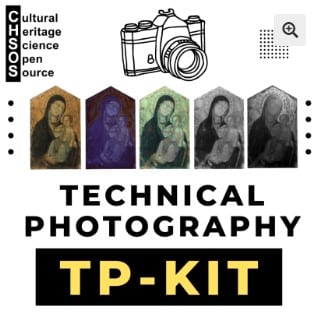
Technical Photography is one of the most powerful—and often overlooked—tools for the scientific examination of art and archaeology. If you are a conservator, scientist, or art collector and you are not yet familiar with this method, it is truly a missed opportunity. Using simple, affordable equipment and a clear methodology, Technical Photography allows you to reveal underdrawings, retouchings, material differences, and conservation issues in a completely non-invasive way. Far from being complex or inaccessible, it is an easy entry point into scientific analysis. In many cases, Technical Photography represents the first essential step toward a deeper understanding of artworks and archaeological objects.
Scientific Art Examination – Resources:
Getty Conservation Institute (GCI) – USA
The British Museum – Scientific Research Department – UK
Scientific Research Department – The Metropolitan Museum of Art, New York, USA
C2RMF (Centre de Recherche et de Restauration des Musées de France) – France
Rijksmuseum – Science Department – Netherlands