infrared transmitted photography irt intro

Transmitted Infrared Photography (IRT)

Transmitted Infrared Photography (IRT)

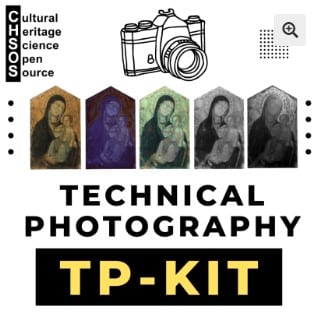
Transmitted Infrared photography (IRT) is part of technical photography documentation and enables the detection of underdrawings and pentimenti. It is a highly effective imaging method, as many pigments become more transparent than in standard infrared (IR) photography. The method can be readily implemented using our Technical Photography KIT.

IRT is applicable to artworks on translucent supports, such as canvas paintings, drawings on paper, and historical documents or manuscripts. In the standard setup, the infrared light source is positioned behind the object, while the camera—equipped with an infrared-pass filter—records the transmitted radiation from the front. The light source should be properly shielded so that only radiation passing through the support reaches the camera, and all other light sources in the room should be turned off to minimize stray illumination.

In some cases, it may be useful to test an alternative configuration in which the camera is positioned behind the artwork. However, the front-facing setup is generally preferred, as it produces sharper images: infrared radiation is less diffused after passing through the support before reaching the camera.

Compared to standard IR photography, IRT often provides more informative images for the study of underdrawings, underpainting, pentimenti, and the build-up of pictorial layers. This is particularly evident for white pigments such as lead white and titanium white—widely used before and after the early 20th century, respectively. These pigments strongly reflect incident infrared radiation and therefore remain largely opaque in reflectance imaging, limiting contrast with underlying features. In transmitted infrared, however, radiation passes through the paint layers, allowing hidden drawings and structures to become clearly visible in the resulting IRT image.

Table of Contents

Experimental setup

The experimental setup for infrared transmitted (IRT) imaging differs from standard infrared photography in that the radiation source, the ELIO halogen lamp, is placed behind the artwork, allowing light to pass through the support and pictorial layers before being recorded by the camera. The camera, equipped with the infrared-pass filter, is positioned on the front side (or, in some configurations, on the reverse, depending on the object and accessibility). Uniform and sufficiently strong illumination is essential to ensure adequate transmission through the material. This setup is particularly suited to thin or semi-translucent supports such as canvas, paper, or parchment, where transmitted infrared can reveal internal structures, underdrawings, and compositional changes that are not visible in reflected infrared imaging.

infrared transmitted photography irt setup
Experimental setup for infrared transmitted (IRT) imaging: the infrared light source is positioned behind the artwork, while the camera equipped with the infrared-pass filter records the transmitted radiation from the front.

 Applications in Art examination

Infrared transmitted (IRT) imaging enhances pigment transparency and allows the visualization of hidden features, such as underdrawings and structural details, by recording light passing through the artwork.

irt naples yellow
This image demonstrates the effectiveness of infrared transmitted (IRT) imaging compared to standard infrared (IR) in increasing pigment transparency. Naples yellow, which appears only weakly transparent in IR, becomes fully transparent in IRT. The setup labeled ‘IRT canvas’ indicates that the camera is positioned facing the reverse of the canvas rather than the painted surface. In some cases, this configuration can reveal otherwise hidden features; here, it makes visible lines extending beneath the cardboard cover.
infrared transmitted photography whites
This image presents additional examples highlighting the effectiveness of infrared transmitted (IRT) imaging. White pigments are particularly significant: due to their strong infrared reflectance, they appear highly opaque in standard infrared imaging, yet become among the most transparent in IRT. Similarly, pigments such as azurite, orpiment, green earth, and vermilion, which are relatively opaque in infrared photography, exhibit increased transparency when imaged using IRT.
infrared transmitted photography madonna
This image compares standard infrared (IR) and infrared transmitted (IRT) imaging of our mock-up Madonna and Child painting. Note that the right portion of the background sky appears completely opaque in the IR image. This area is painted with azurite, whereas the rest of the sky is executed in ultramarine, which is readily transparent in infrared. In contrast, the azurite-retouched area becomes transparent in the IRT image, revealing underlying features.
Transmitted infrared photography. Pigments become more transparent with transmitted infrared.
Example from a real painting: the IRT image reveals thick sketch lines and compositional changes.
Transmitted infrared photography. Pigments become more transparent with transmitted infrared.
Example from a real painting: with transmitted infrared (IRT), pigments become more transparent, allowing the construction of the figures to be clearly observed. Compared to standard infrared imaging, the IRT image is significantly more informative. For example, it reveals that the red drapery was applied after the arm had already been sketched.

IRT Photography using SALVO

SALVO is our UV–VIS–IR imaging panel designed for transmitted technical photography. This video demonstrates how to perform Infrared Transmitted (IRT) imaging of the Pigments Checker using SALVO.

Resources

Publications on Transmitted Infrared photography (IRT)
A. Cosentino “Infrared Technical Photography for Art Examination” e-Preservation Science, 13, 1-6, 2016.

Transmitted Infrared Photography (IRT) for scientific art examination


Learn Technical Photography for Art Examination

Technical Photography is one of the most powerful—and often overlooked—tools for the scientific examination of art and archaeology. If you are a conservator, scientist, or art collector and you are not yet familiar with this method, it is truly a missed opportunity. Using simple, affordable equipment and a clear methodology, Technical Photography allows you to reveal underdrawings, retouchings, material differences, and conservation issues in a completely non-invasive way. Far from being complex or inaccessible, it is an easy entry point into scientific analysis. In many cases, Technical Photography represents the first essential step toward a deeper understanding of artworks and archaeological objects.


Training 2026

Scientific Art Examination – Resources:
Getty Conservation Institute (GCI) – USA
The British Museum – Scientific Research Department – UK
Scientific Research Department – The Metropolitan Museum of Art, New York, USA
C2RMF (Centre de Recherche et de Restauration des Musées de France) – France
Rijksmuseum – Science Department – Netherlands